Product Description
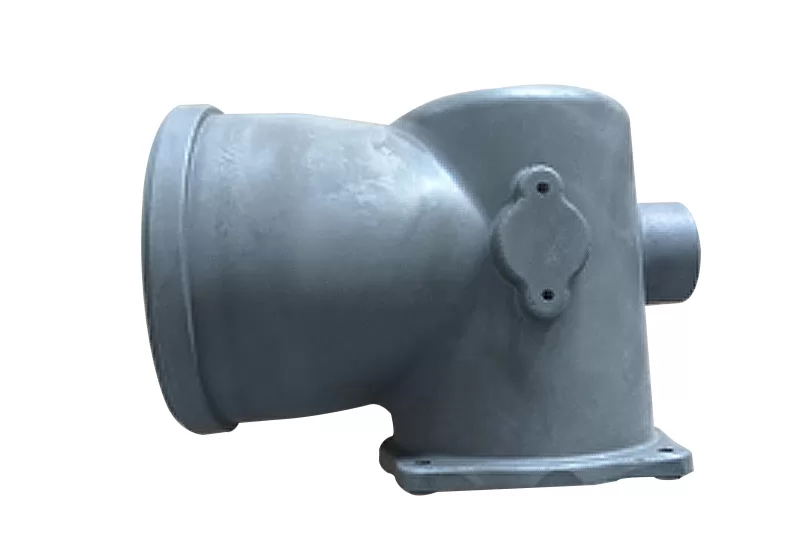
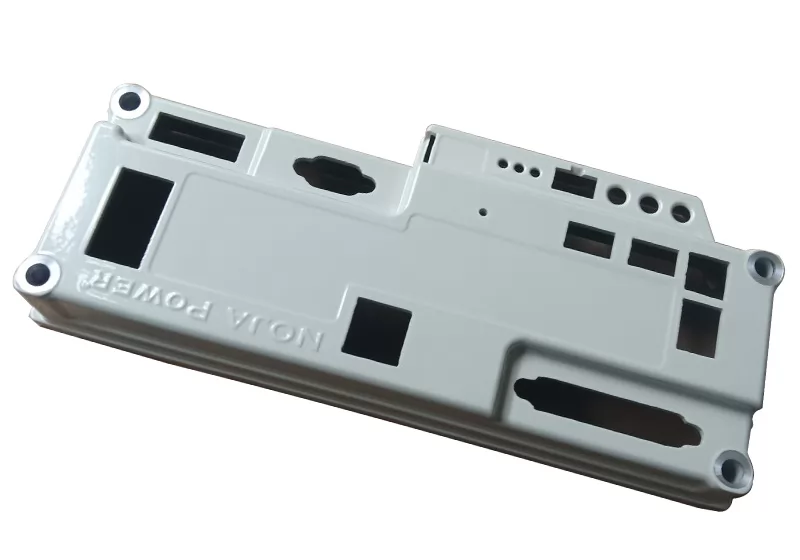
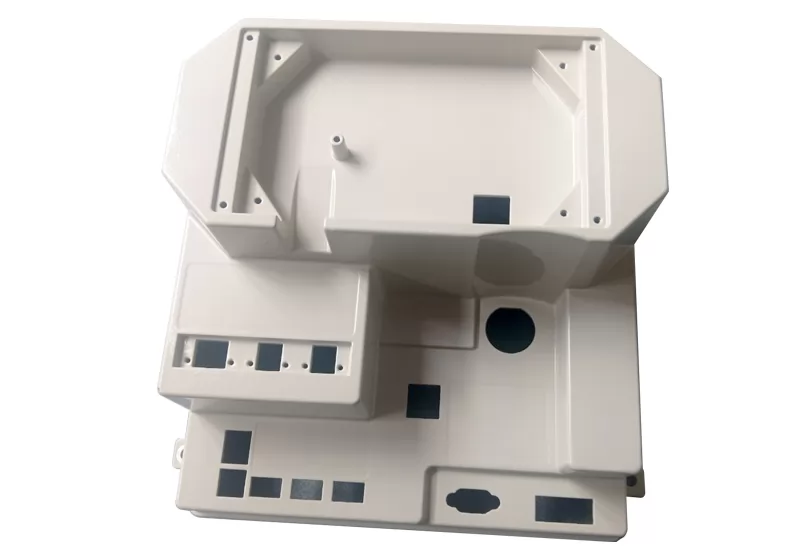
This is a customized water heater parts aluminum casting, the material is aluminum alloy, presumably for the water heater circulating pump connection housing. As the core component of the water heater system. Its main role is:
1. as a connection between the main water heater tank, heating pipes, circulation pump and other components, to guide the water flow in the water heater internal circulation.
2. as a structural support, to maintain the sealing and stability of the piping system.
3. as installation connection interface, connecting different accessories.
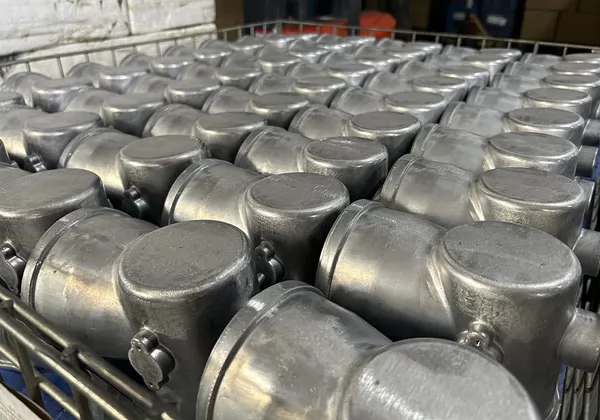
This water heater circulating pump connection housing aluminum casting finished product not only has excellent mechanical properties and good machining accuracy, but also has good thermal conductivity, corrosion resistance, lightweight, good protection characteristics, but also easy to install and maintain. The finished product fully meets the customer's design objectives, providing a higher performance and more reliable solution for the design of such water heater components.
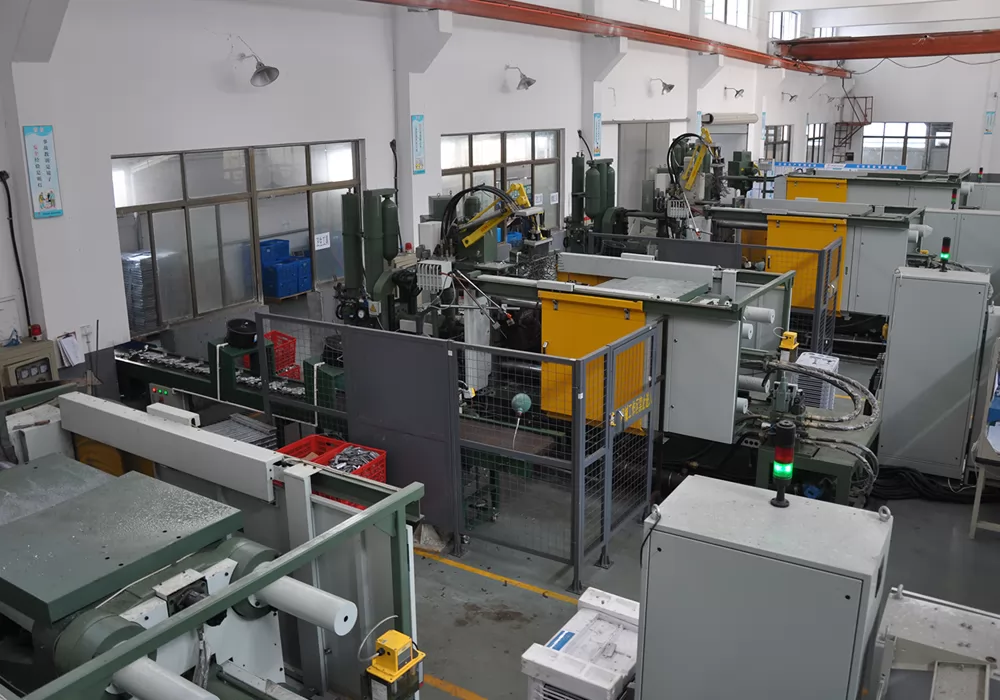
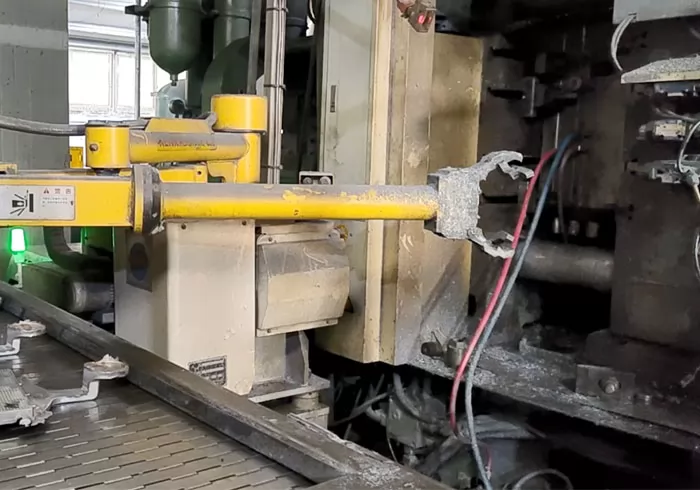
This water heater connection housingl aluminum casting adopts aluminum high-pressure die casting one-piece molding plus CNC machining process, surface oxidation treatment, compared with other aluminum casting process, it has the characteristics of high precision, small tolerance, small wall thickness, high production efficiency, low material loss, light weight but high strength, which is a perfect fit for the mass production needs of this shell cover.
Customized aluminum high pressure die casting, not only in this water heater circulating pump connection housing aluminum casting to get a good application embodiment, but also in other automotive industry, industrial automation control equipment, electric motors, instrumentation and other products can be widely used. No matter what kind of specification or design, you can get a good match for the application.
Production Process
Mould making→Pressure Die Casting→Cutting the sprue and riser→Grinding→CNC Machining→Anodizing→Packaging & inspection
Production Show
Product story
As a result of Innovaw's consistently high standard of service, this purchaser of water heater parts has been so satisfied with Innovaw's technology and quality control that it has entrusted us with the production of several lines of water heater parts for many years.
FAQs
Q1. What makes a pump connection housing a more demanding casting than a standard structural bracket?
A connection housing carries live water under pressure through multiple ports simultaneously—linking the main tank, heating pipes, and circulation pump in a single casting. Every port interface must be pressure-tight, precisely positioned, and dimensionally stable under thermal cycling. Unlike a structural bracket that only bears mechanical load, this housing must also maintain leak-free hydraulic connections at all pipe joints, which means internal porosity, surface defects at sealing faces, and any dimensional drift in port positions all directly translate into system leaks.
Q2. How do the multiple pipe connection ports on this housing affect mold design?
Each pipe port runs in a specific direction relative to the housing body, and ports in different orientations cannot all be formed by the main mold opening direction alone. The ports require core pins or sliders positioned at their respective angles, and the interaction between multiple sliders in a compact housing (160×100×110mm) creates tight spatial constraints on the mold layout. Each slider must retract in the correct sequence without interfering with adjacent sliders or the main ejection system—making the mold design significantly more complex than for a single-direction housing.
Q3. What CNC machining operations are critical for ensuring leak-free pipe connections?
The pipe port bores and their seating faces must be machined to precise diameter, roundness, and surface finish for O-rings or compression fittings to seal correctly. Any ellipticity in the bore, surface roughness beyond specification, or angular misalignment between ports prevents the sealing element from seating evenly and creates a leak path under pressure. The port face squareness relative to the bore axis is particularly critical—a tilted face causes uneven compression of the sealing ring and typically results in leakage at the high-pressure side of the joint.
Q4. Why does internal porosity matter more for a connection housing than for an external structural casting?
In a structural casting, subsurface porosity primarily affects mechanical strength. In a pressure-carrying connection housing, porosity voids can form interconnected pathways through the wall—even when the surface appears intact—allowing water to seep through under the sustained pressure of a circulating pump system. This type of leak is particularly difficult to detect before installation and can cause long-term corrosion damage to surrounding components. It is why internal soundness requirements for connection housings are stricter than for comparable structural parts.
Q5. How does producing multiple water heater housing types for the same customer affect quality consistency?
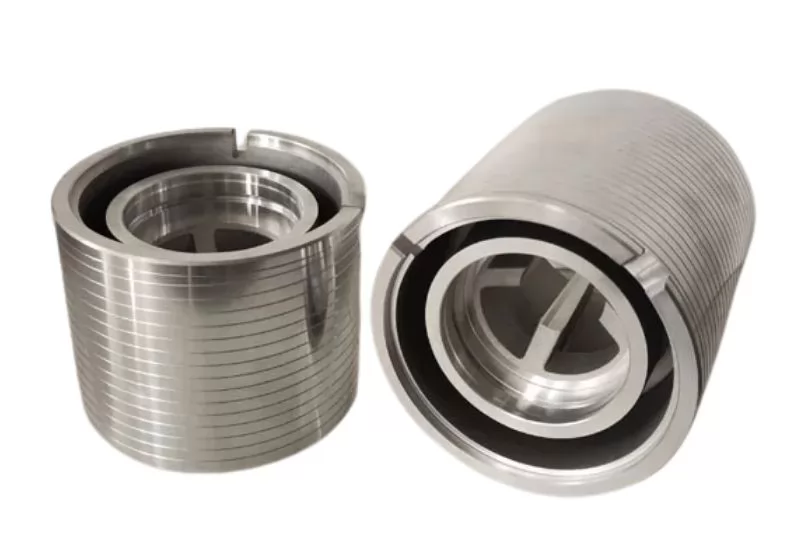
When a supplier manufactures the pump end cover, deflector shell, and connection housing for the same water heater system, all parts share the same material specification (A413), surface treatment (anodizing), and quality management framework. This means dimensional interfaces between mating parts are controlled within a single supplier's process variation rather than across multiple vendors—reducing assembly mismatch risk. It also allows shared PPAP documentation, aligned inspection standards, and coordinated production scheduling that supports the customer's assembly line flow.
Share your thoughts
Showing
6
of
0
reviews