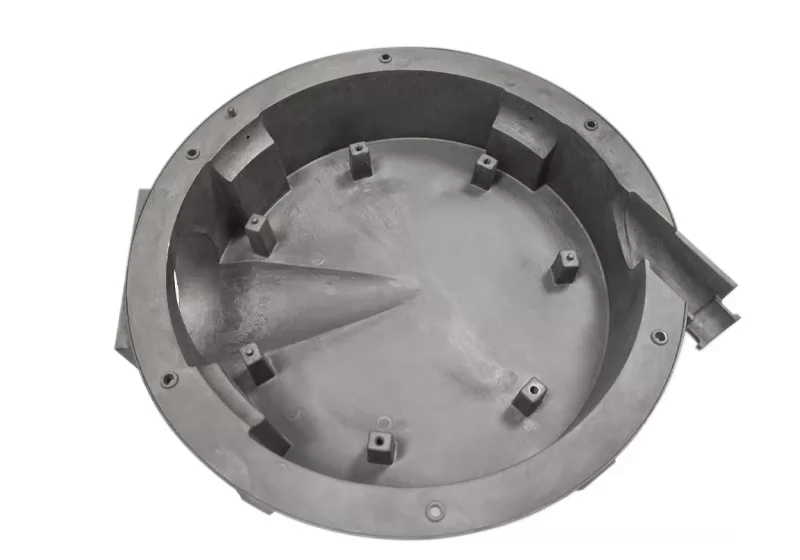
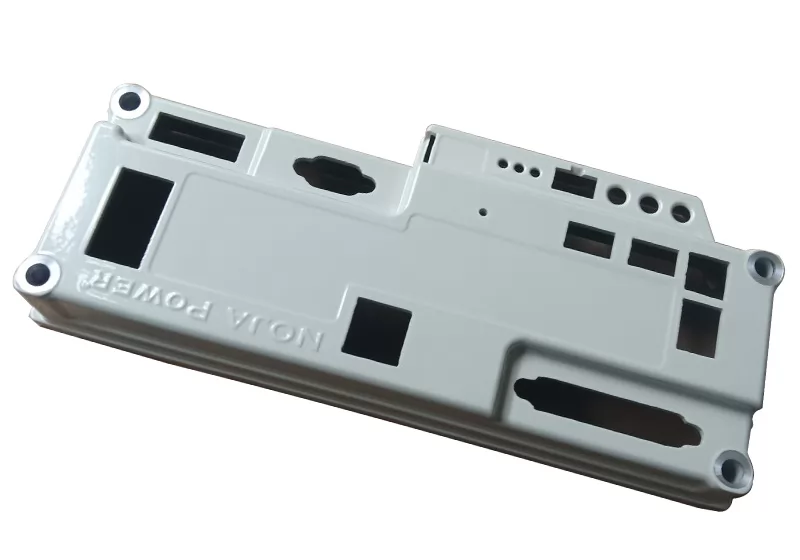
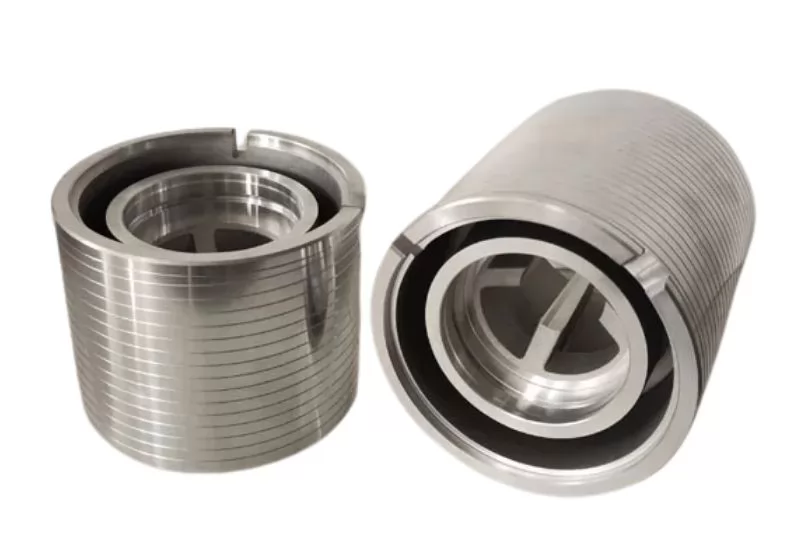
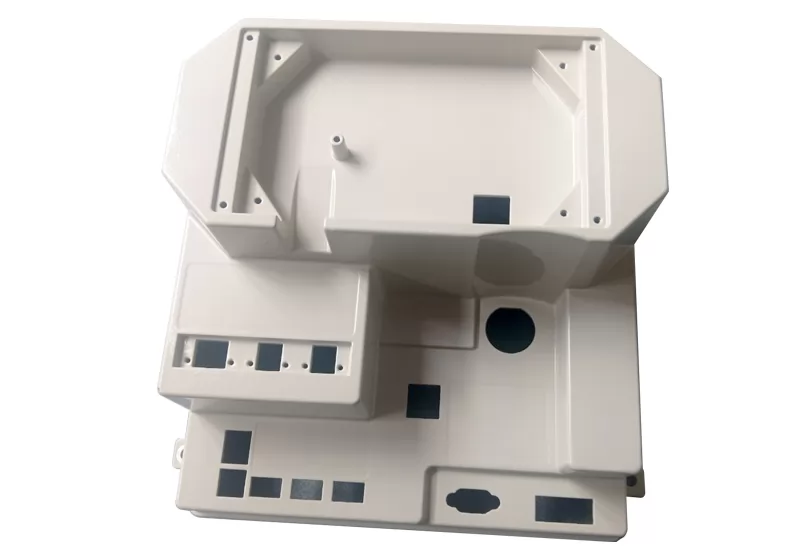
This is a customized aluminum casting of a water heater part housing, presumably a heating module base or deflector shell inside a particular water heater. As a core component of the important parts of the water heater system, its main roles are:
1. as a structural support and internal skeleton role, protection and installation of internal components.
2. control the distribution and flow of water, flow control, improve heat transfer efficiency.
3. Participate in thermal control.
4. Increase the overall sealing and protection of accessories and other groups.
This water heater part housing aluminum casting finished product not only has excellent mechanical properties and good machining accuracy, but also has good thermal conductivity, corrosion resistance, lightweight, good protection, but also easy to install and maintain. The finished product fully meets the customer's design objectives, providing a higher performance and more reliable solution for this type of water heater parts design.
This water heater part housing aluminum casting adopts aluminum high-pressure die casting one-piece molding plus CNC machining process, compared with other aluminum casting process, it has the characteristics of high precision, small tolerance, small wall thickness, high production efficiency, low material loss, light weight but high strength, which is a perfect fit for the mass production needs of this shell cover.
Customized aluminum high-pressure die casting, not only in this water heater part housing aluminum casting to get a good application embodiment, but also in other automotive industry, industrial automation control equipment, electric motors, instruments and other products can be widely used. No matter what kind of specification or design, it can get good matching application.
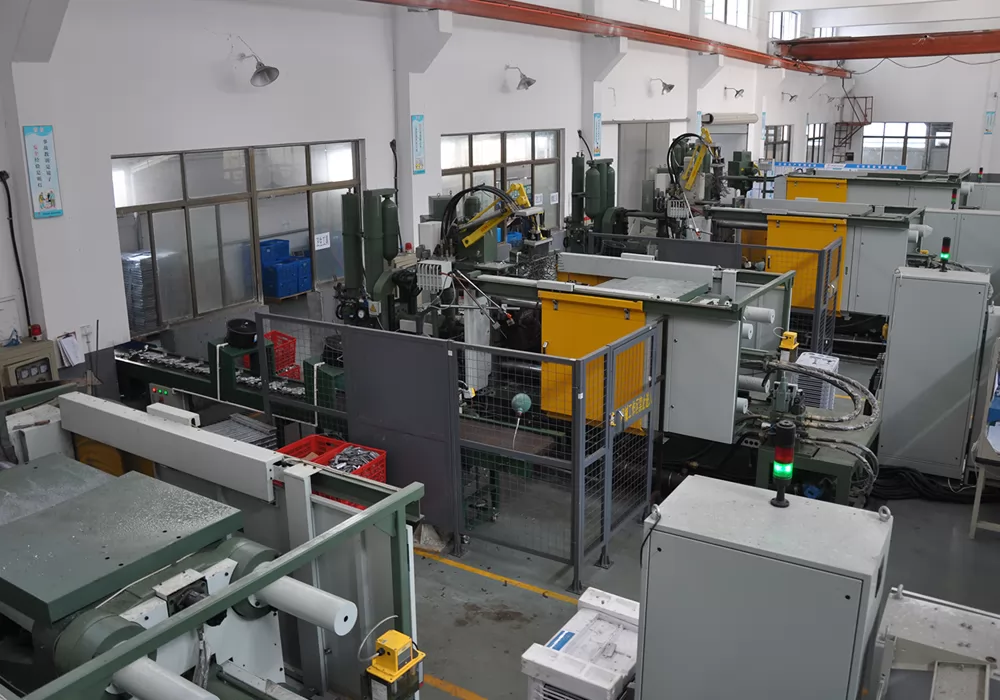
Production Process
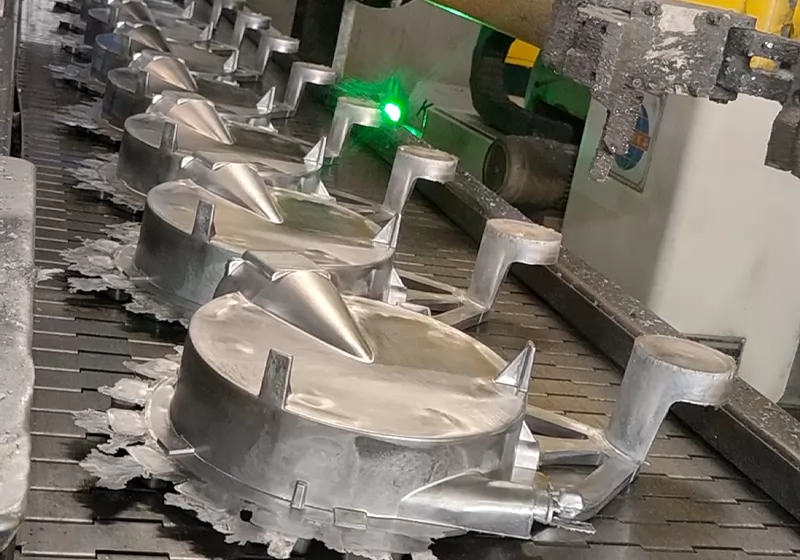
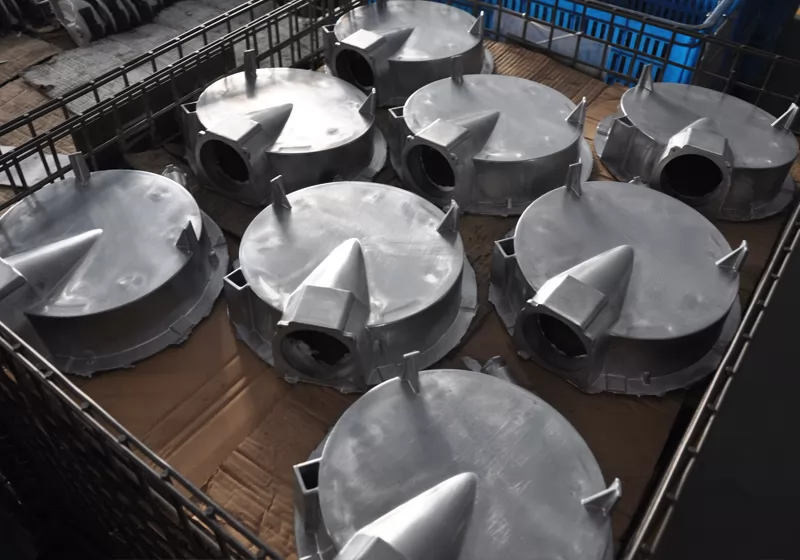
Mould making→Pressure Die Casting→Cutting the sprue and riser→Grinding→CNC Machining→Anodic oxidation→Packaging & inspection
Production Show
Product story
As a key device applied to water heaters, the internal aluminum casting shell is required to have the following key characteristics: Good sealing, high mechanical strength, structural stability, good heat dissipation ability, and adaptability to harsh working environments. Therefore, for this part, it is required to have the corresponding characteristics to meet the design requirements.
After receiving the customer's requirements and drawings, we first conducted a DFM analysis of the product design to ensure that the product design meets the functional requirements, while reducing costs, increasing productivity and minimizing defects during the manufacturing process.
During the analysis process, INNOVAW's professional engineers made an all-round analysis of the product design, from the mold layout, mold slider, ejector pin layout, part marking, etc., especially the thickness of the heat sink, and put forward reasonable opinions and solutions from the production point of view, and finally the customer accepted our opinions and made improvements, which led to the smooth production and delivery of the final product.
FAQs
Q1. How does this housing control water flow distribution to improve heat transfer efficiency?
As a presumed heating module base or deflector shell, the housing's internal geometry channels water flow across the heating elements in a controlled pattern—directing flow to maximize contact time and surface area between the water and the heat source. The aluminum casting's precise internal channels and sealing surfaces must maintain their geometry under thermal cycling and water pressure to ensure the designed flow path is maintained, since any deviation alters the heat transfer rate and creates uneven temperature distribution in the heated water.
Q2. What did DFM analysis change about the heat sink fin design on this housing?
During DFM review, INNOVAW's engineers specifically flagged the heat sink fin thickness as a manufacturability concern. Fins that are too thin relative to their depth risk cold shuts during HPDC and mold damage over time, while fins that are too thick reduce heat dissipation efficiency. The engineering team proposed adjustments to fin thickness and spacing to balance castability, mold longevity, and thermal performance—proposals the customer accepted and incorporated into the revised design before tooling commenced.
Q3. What sealing requirements does this housing need to meet as an internal water heater component?
Operating inside a water heater, this housing must maintain leak-free joints at all mating interfaces under sustained hot water pressure and repeated thermal cycling. The mating surfaces must be flat and free of porosity pathways that could allow water to bypass the intended flow channels or leak into the electrical or structural zones of the unit. This drives the requirement for zero internal defects, precise CNC-machined sealing faces, and the ISO 2768-mk dimensional tolerance grade to ensure gaskets and O-rings compress uniformly around the full interface perimeter.
Q4. Why does this housing's elongated form (310 × 100 × 190mm) present different challenges from the square pump end cover?
The 310mm length introduces significant metal flow distance from gate to the far end of the cavity, increasing the risk of premature solidification and incomplete filling at the extremities—particularly in thin-wall zones. It also means the blank is more susceptible to bow and twist after ejection compared to the more symmetric pump end cover, requiring careful control of ejection timing and mold temperature uniformity along the part's length. Fixturing for CNC machining must also span the full 310mm to maintain datum stability across the elongated profile.
Q5. What does "participate in thermal control" mean structurally for an aluminum housing inside a water heater?
Beyond simply containing water, this housing actively participates in the thermal system by conducting heat between the water circuit and the heater's structural frame. Aluminum's high thermal conductivity means the housing itself becomes part of the heat path—absorbing heat from the heating elements and distributing it to the water flowing through the internal channels, while also preventing localized overheating at hot spots. The casting's wall thickness, fin geometry, and material density directly affect how effectively it performs this thermal intermediary role.
0
Comments
Share your thoughts
Showing
6
of
0
reviews
Leave a Comment
Your email address will not be published. Required fields are marked *