Project Brief
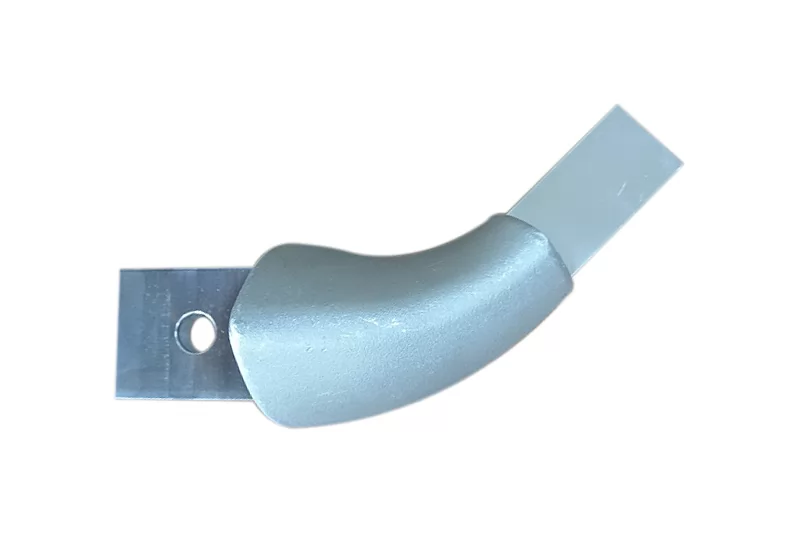
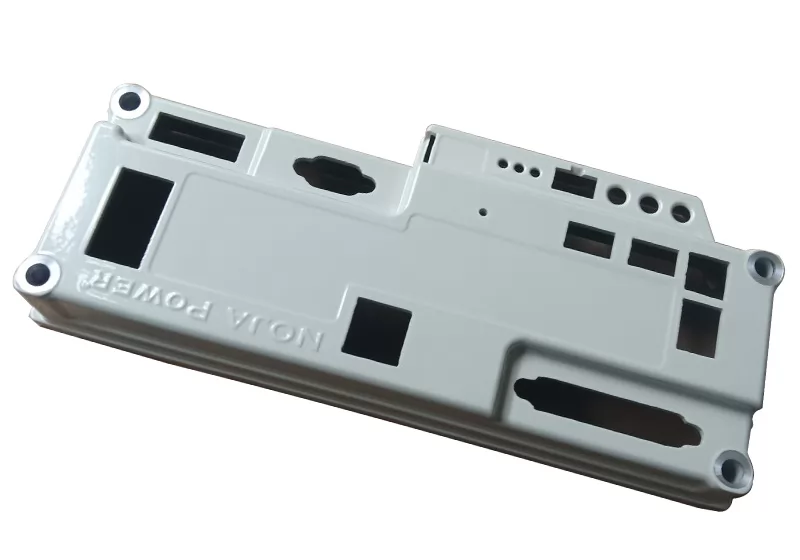
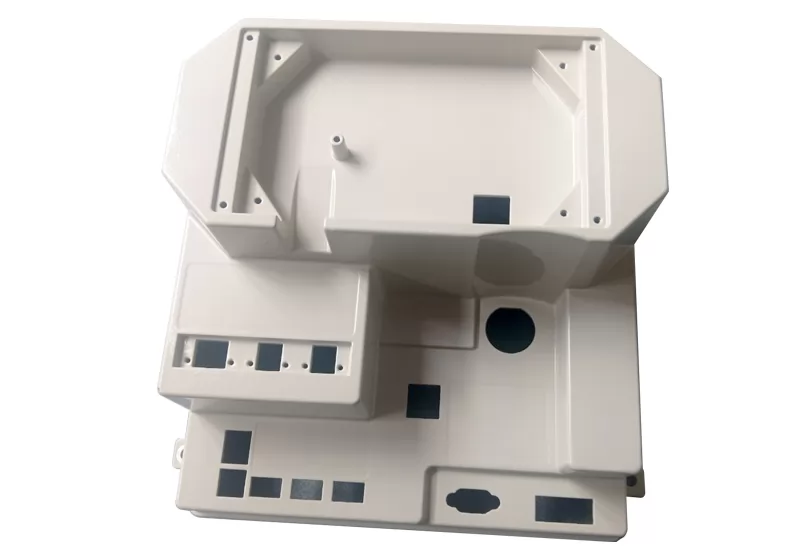
This is a customer-customized marine connector aluminum casting, serving as a critical component for connecting marine equipment.
1. Product Standards and Requirements: Material A356 T6, full-dimension tolerance grade ISO 2768-mk, minimum dimension tolerance ±0.05mm, surface defect-free (surface roughness Ra6.3µm), internally defect-free, and must pass international classification society certification. PPAP approval must be completed and passed prior to formal mass production.
2. Product Challenges: Requires international classification society certification.
The overall project presents significant difficulty, particularly testing our standardized product certification capabilities and quality control capacity.
This marine-grade aluminum casting not only delivers outstanding mechanical properties and machining precision but also offers excellent corrosion resistance, lightweight construction, superior protection, and ease of installation and maintenance. The finished product fully meets the customer's design objectives, providing a higher-performance and more reliable solution for marine component design.
Production Process
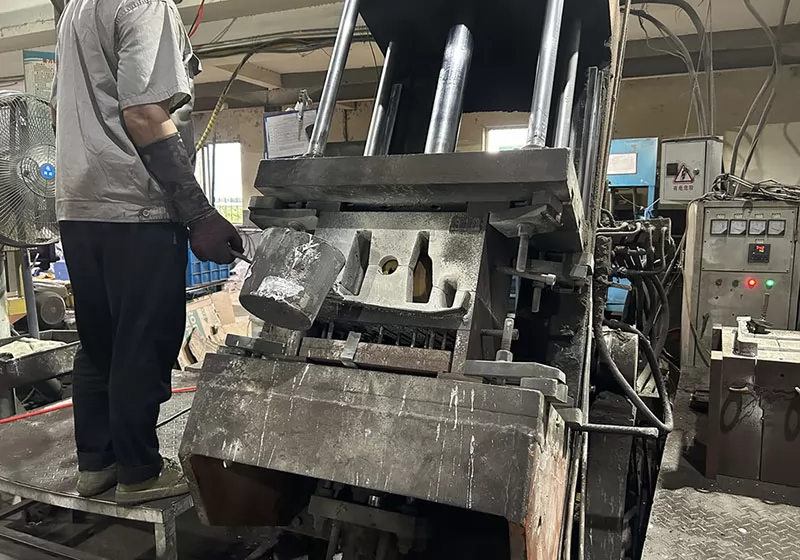
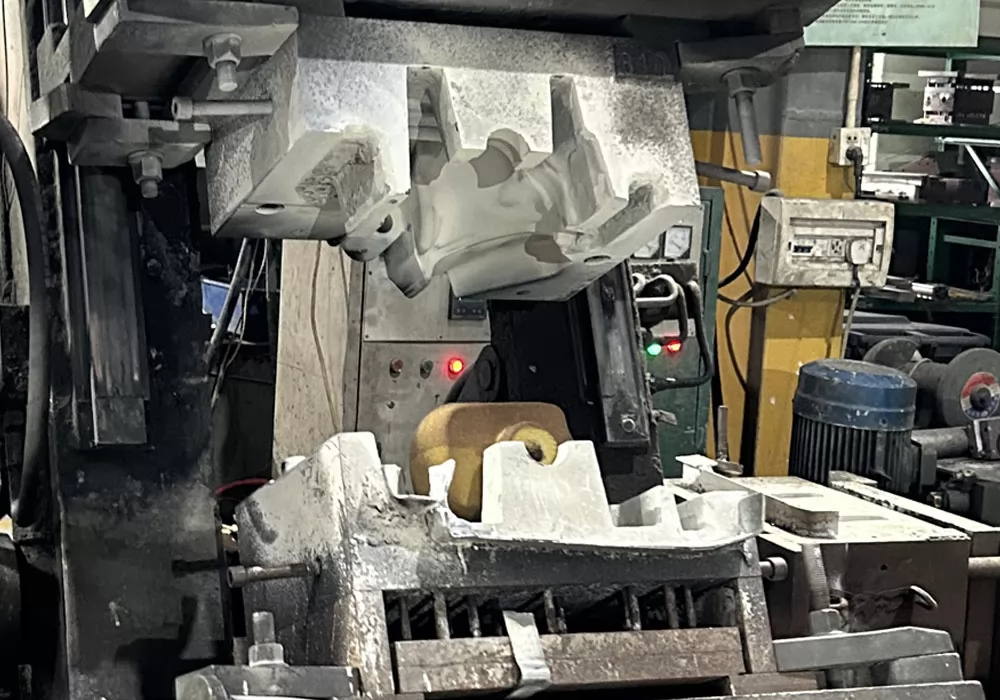
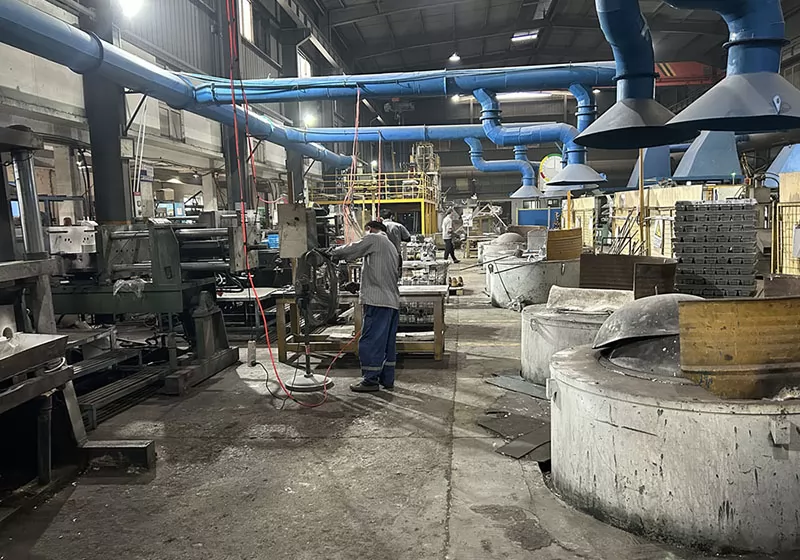
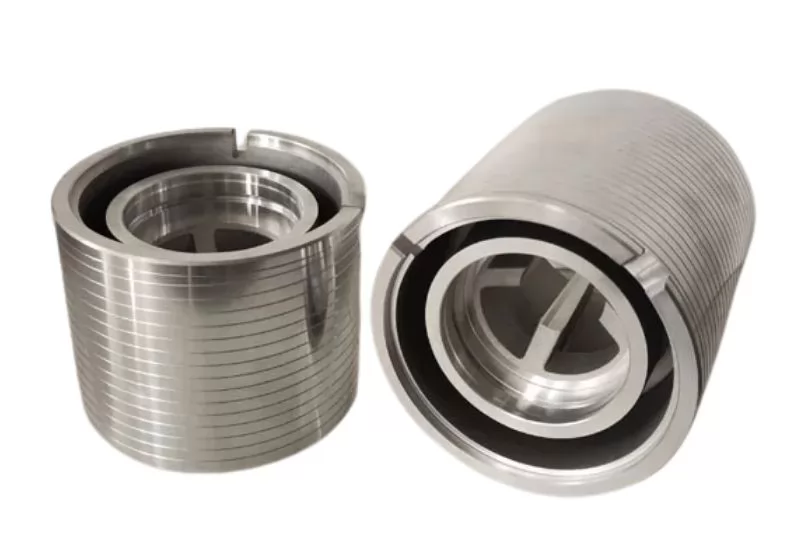
Mould making→Gravity Casting→Cutting the sprue and riser→Grinding→CNC Machining→Shot blasting→Packaging & inspection
Production Show
FAQs
Q1. Why is gravity casting used for this marine connector instead of high-pressure die casting?
Gravity casting fills the mold using only the metal's own weight, which produces a slower, less turbulent fill compared to HPDC. This results in lower porosity and better internal density—critical for a marine connector that must meet international classification society standards for structural integrity. It also makes the casting more compatible with T6 heat treatment on A356, which would be difficult to apply to HPDC alloys and is essential for achieving the required mechanical strength.
Q2. What does A356 T6 mean, and why is this material-treatment combination chosen for a marine connector?
A356 is a casting aluminum alloy with good corrosion resistance and weldability. T6 refers to solution heat treatment followed by artificial aging, which significantly increases yield strength and hardness compared to the as-cast state. For a marine connector bearing mechanical loads in a corrosive saltwater environment, the T6 condition provides the strength needed for reliable structural performance that untreated or HPDC alloys typically cannot match.
Q3. What does international classification society certification require for a casting like this?
Classification societies such as DNV, Lloyd's Register, or BV set mandatory standards for materials, manufacturing processes, and inspection methods used in marine components. For a connector casting, this typically covers material traceability and chemical composition verification, mechanical property testing (tensile strength, elongation), non-destructive inspection for internal defects, and dimensional compliance—all documented and audited by an independent surveyor. The requirement for zero internal defects and ±0.05mm minimum tolerance on this part directly reflects these standards.
Q4. Why is shot blasting chosen as the surface finish for this connector rather than anodizing or powder coating?
Shot blasting removes casting skin, oxide layers, and surface irregularities uniformly across the entire part—including recessed features—producing a clean, consistent matte surface. For a structural connector where mating surfaces and fastener interfaces are subsequently CNC machined, shot blasting provides the right preparation without adding a coating layer that could affect fit or dimensional tolerances at critical interfaces. It also improves surface adhesion should any secondary coating be applied later.
Q5. What makes achieving ±0.05mm tolerance on a gravity casting particularly demanding?
Gravity castings have inherently larger dimensional variation than HPDC parts due to slower solidification and greater susceptibility to shrinkage variation across thick sections. Achieving ±0.05mm on this connector—well beyond the general ISO 2768-mk envelope—relies entirely on CNC machining after casting, with tight control of fixturing datums, machining sequence, and temperature stability. The 7mm minimum wall thickness helps reduce distortion risk during machining, providing sufficient rigidity to maintain dimensional stability under cutting forces.
Share your thoughts
Showing
6
of
0
reviews