Project Brief
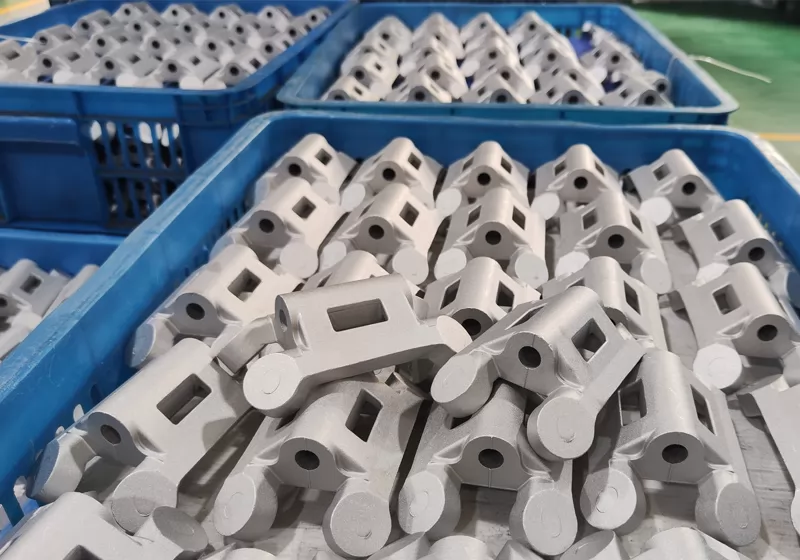
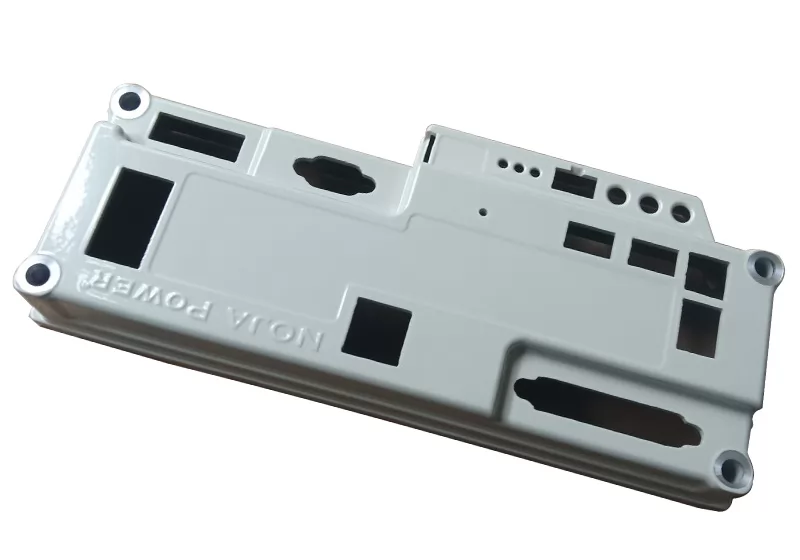
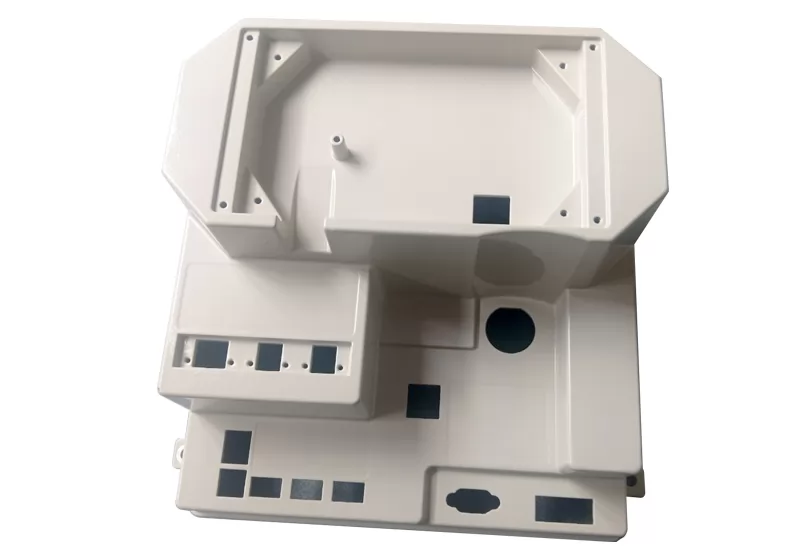
This is a custom-designed LED work light bracket, commonly used as a lighting assembly component on industrial machinery. The LED work light bracket not only protects the internal LED light assembly but also serves multiple functions including thermal management and mechanical support.
1. Product Standards & Requirements: Material ADC12. Customer requires full dimensional compliance with drawing tolerances (ISO 2768-mk grade), with minimum dimensional tolerance of ±0.1mm. Salt spray test for 240 hours must be completed and pass PPAP approval prior to formal mass production.
This aluminum casting for industrial machinery LED work light brackets delivers not only outstanding performance and precision but also features excellent thermal conductivity, corrosion resistance, lightweight construction, and robust protection. It is also easy to install and maintain. The finished product fully meets the customer's design objectives, providing a higher-performance and more reliable solution for such components.
Production Process
Mould making→Pressure Die Casting→Cutting the sprue and riser→Grinding→CNC Machining→Power Coating→Packaging & inspection
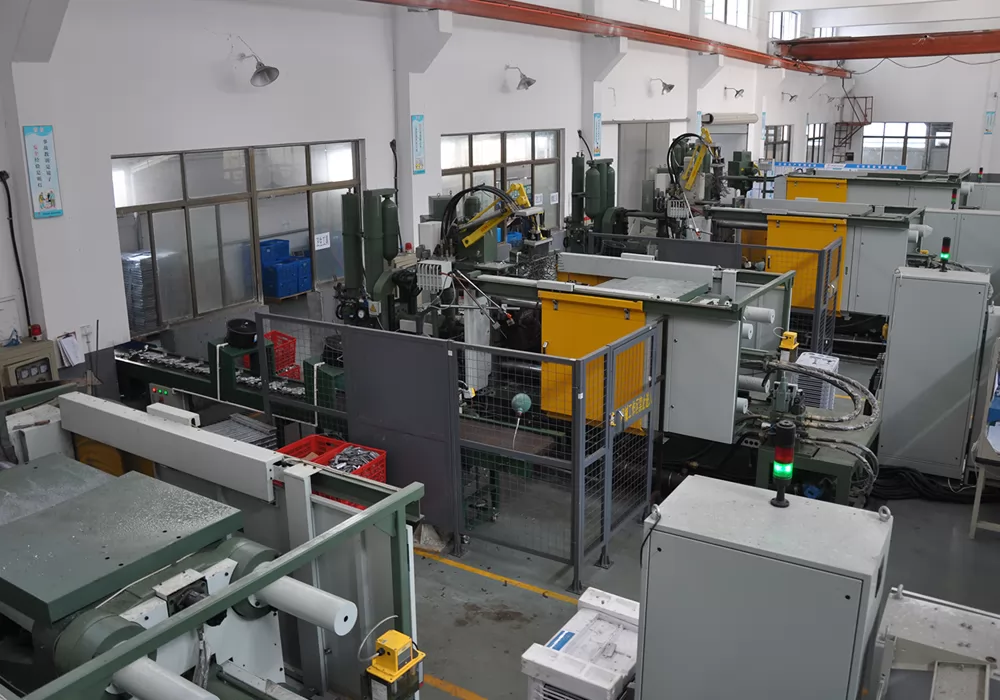
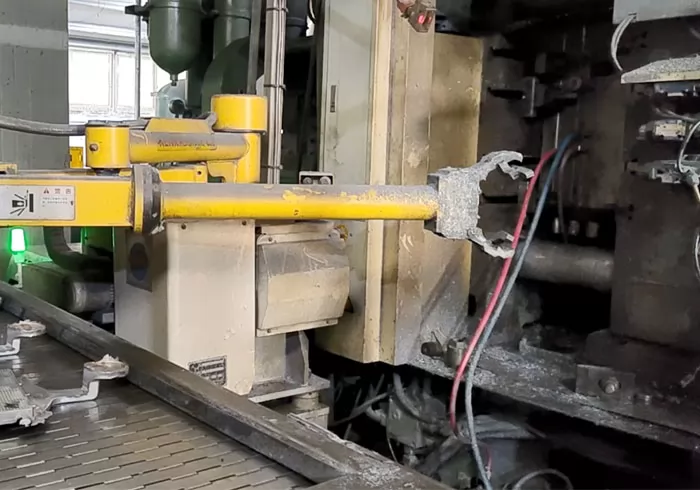
Production Show
FAQs
Q1. What is the structural role of this bracket in a LED work light assembly?
Unlike the housing which encloses and protects the LED assembly, the bracket serves as the primary mechanical interface—mounting the light unit to the industrial machinery and bearing the static and dynamic loads from vibration, impact, and the weight of the light. It also contributes to thermal management by conducting heat away from the housing mounting surface. This dual structural-thermal role is why the bracket requires both dimensional precision and sufficient wall thickness.
Q2. Why does this bracket use a 4mm minimum wall thickness, thicker than typical die cast housings?
As a structural mounting component on industrial machinery, the bracket must withstand sustained mechanical loads and vibration that a protective housing does not. The 4mm minimum wall provides the rigidity and fatigue resistance needed for this duty, while ADC12 aluminum keeps the overall part weight at 177g—light enough not to add unnecessary load to the mounting point on the machine.
Q3. Why is ADC12 selected over other aluminum alloys for this bracket?
ADC12 combines good castability with higher strength and hardness than near-eutectic alloys like ALSI12, making it better suited for load-bearing structural parts. Its copper content improves machinability for the CNC-machined mounting holes and interfaces, while its proven performance in industrial and automotive environments makes it a reliable choice for a component that must maintain dimensional stability under long-term mechanical stress.
Q4. What does the ±0.1mm tolerance requirement mean for the bracket's mounting holes?
The mounting holes on this bracket must align precisely with both the light housing and the machinery attachment points. A ±0.1mm tolerance ensures correct bolt fit, prevents assembly stress from misalignment, and maintains the designed angular position of the light. These holes are achieved through CNC machining after die casting, since HPDC alone cannot reliably hold this level of positional accuracy on hole features.
Q5. Why does a small bracket (65 × 80 × 31mm) still require powder coating and a 240-hour salt spray test?
Industrial machinery operates in demanding outdoor or semi-outdoor environments where even small brackets are exposed to moisture, mud, and chemical contaminants. Corrosion at the bracket is particularly critical because it is a structural component—surface degradation that compromises wall thickness or fastener engagement directly affects the safety and stability of the light assembly. Powder coating and the 240-hour salt spray requirement ensure the bracket maintains its structural and corrosion performance throughout its service life.
Share your thoughts
Showing
6
of
0
reviews