Heavy Equipment Work Light Housing Development Case
Project Brief
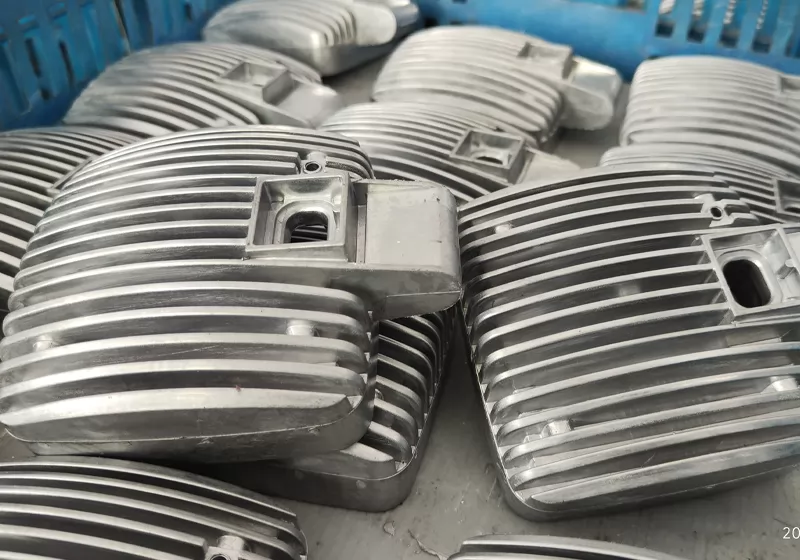
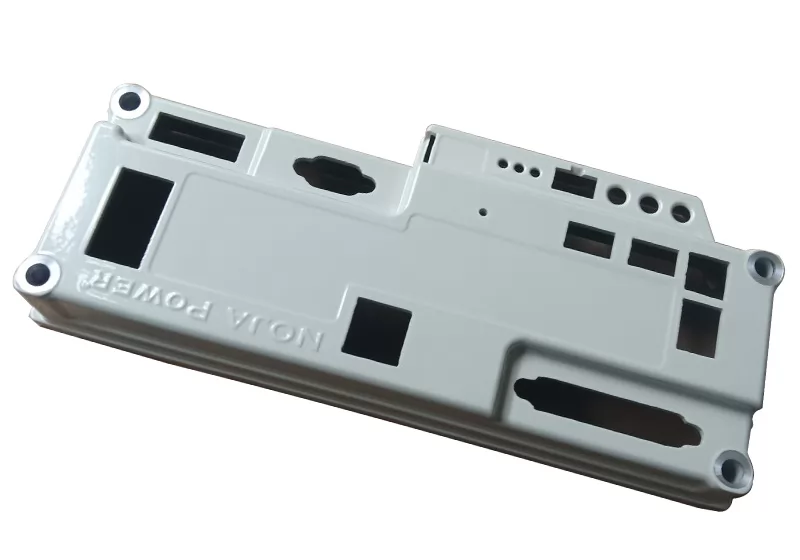
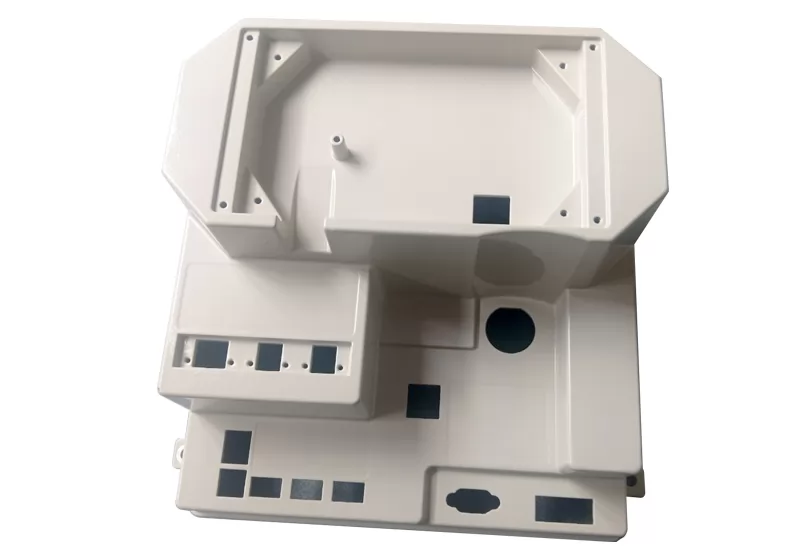
This is a custom-designed LED work light housing for heavy-duty equipment, such as trucks and bulldozers. The LED housing not only protects the internal LED components but also serves multiple functions including thermal management and mechanical support.
1. Product Standards & Requirements: Material: ALSI12; All dimensions must meet drawing tolerances (Grade ISO 2768-mK); Salt spray test: 600 hours; PPAP approval must be completed and passed before formal mass production.
2. Product Challenges: The heat sink surface of this heavy equipment work light housing is covered with cooling fins of varying depths, with a fin width of 2.2mm. The geometry leads to localized areas prone to carbon buildup and damages the mold core, placing high demands on die-casting parameters. The square hole design requires extremely high precision (3.6±0.1) and consistency.
Risk Keywords: Casting control difficulty, Blank precision, Carbon buildup risk, Special holes, Corrosion resistance
The overall project presented a significant challenge, particularly testing our capabilities in mold design and quality control.
Development Process
For this project, we formed a development team including mold designers, casting engineers, machining engineers, measurement engineers, quality engineers, and sales. The team applied the internationally advanced Advanced Product Quality Planning (APQP) methodology, entering a comprehensive product development process focused on quality.
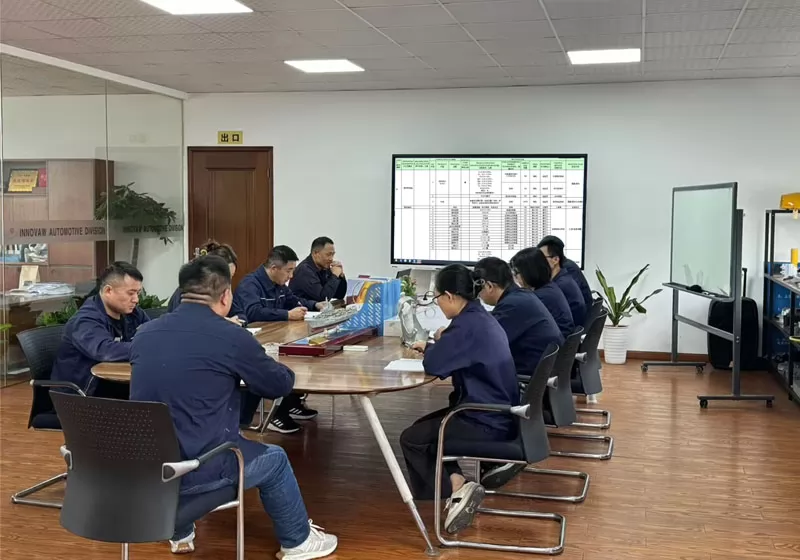
The first step involved DFM analysis to thoroughly understand and optimize certain product details for enhanced manufacturability, establishing mutually agreed-upon technical specifications and quality standards with the customer.
Considering the application environment and performance requirements, the housing material was confirmed as ALSI12. Based on the material properties and the core design elements of the product's typical heat dissipation fins, the process route of high-pressure die casting (HPDC) + CNC precision machining was ultimately determined, balancing technical feasibility, quality stability, and cost control.
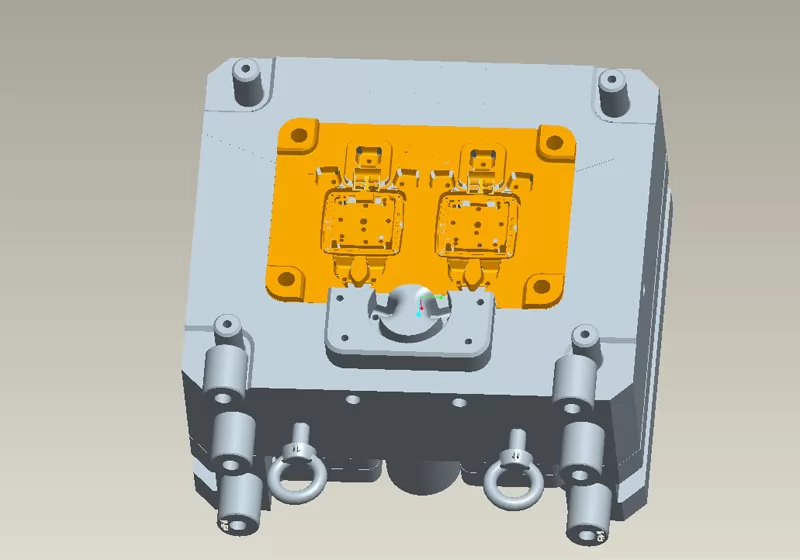
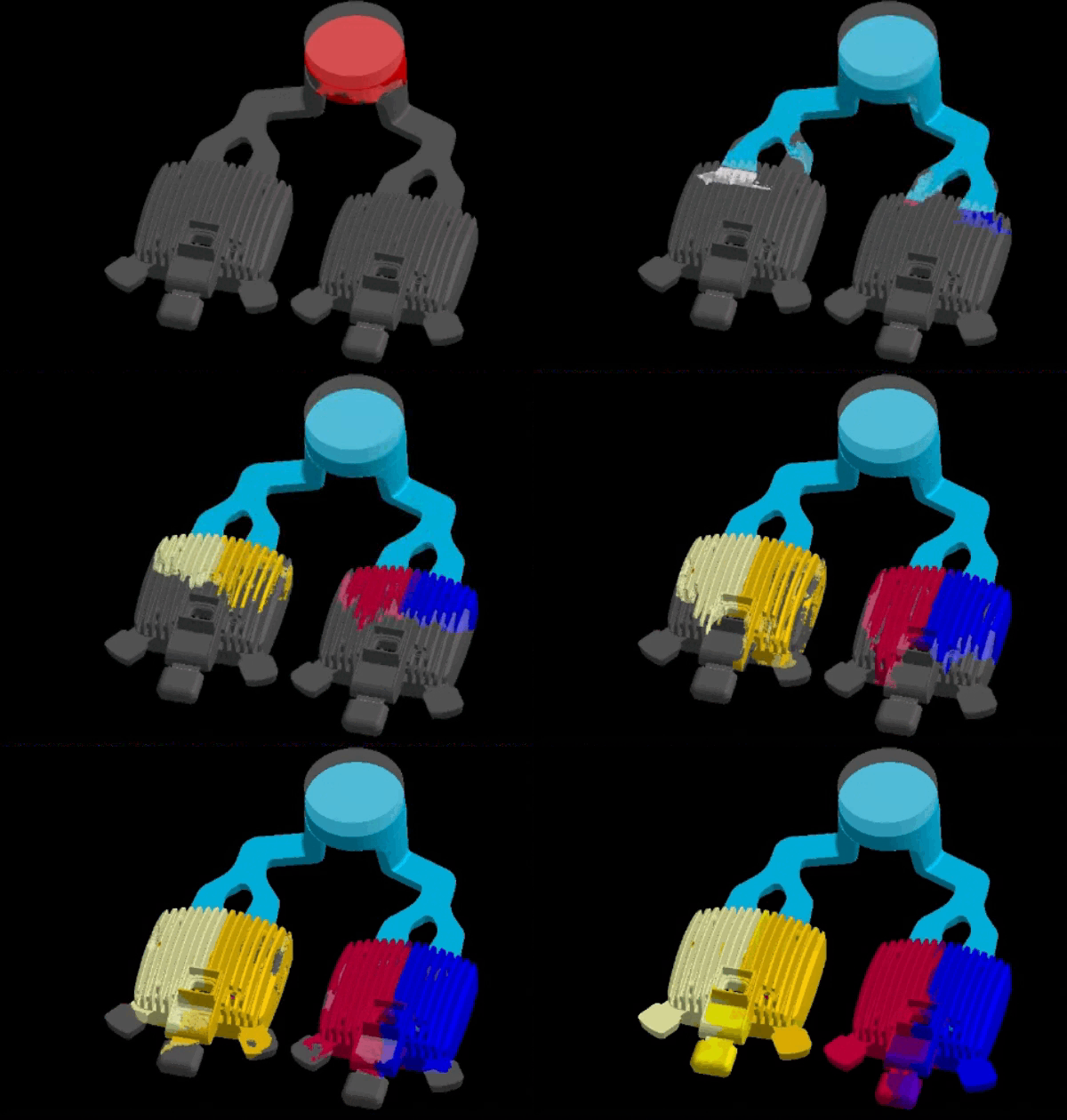
Subsequently, leveraging years of mold development experience, technical engineers finalized a 2-cavity mold design. They performed mold simulation and mold flow analysis to predict and optimize various challenges and process parameters, and established preliminary Process Flow Charts and Control Plans.
Finally, the plan was gradually validated, and issues were identified and resolved in the subsequent practical stages.
Practice Validation & Optimization
Starting from mold manufacturing, the project entered the actual production phase. Our company proceeded according to the initial Process Flow Chart, established the Control Plan, and applied FMEA tools for risk analysis and assessment of various potential failure modes. The main key issues encountered during the actual manufacturing process were as follows:
A. Replaceable Pin Design Optimizes Square Hole Challenge
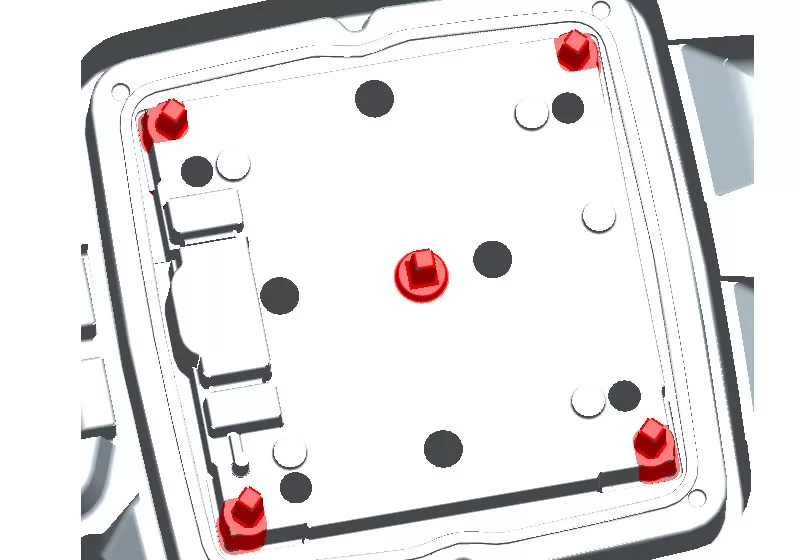
This Heavy Equipment Work Light housing aluminum casting features a distinctive square hole design, which presented the following challenges:
1. Square holes demand higher dimensional accuracy and consistency.
2. While an integrated design suits square holes, pins within a solid mold core can bend or damage during prolonged die-casting, leading to damage of the entire core. This approach is less economical and maintainable.
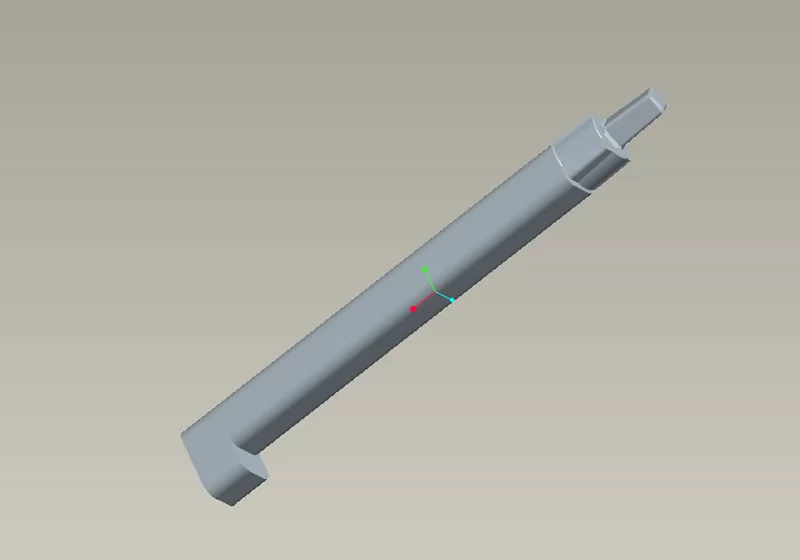
To address this, the development team decided to implement an insert-based, replaceable pin design. With this design, if a pin is damaged, it can simply be extracted and replaced without scrapping the entire mold core, significantly improving cost-effectiveness.
In subsequent production, this replaceable pin design proved highly effective. Furthermore, to ensure pin dimensional consistency, we adopted a strategy of replacing pins in sets, guaranteeing both replacement and dimensional uniformity.
B. Added Mold Undercut Optimizes Sticking Issue
During sampling, inspection engineers found sticking on some castings, all located above the parting line, with a statistical problem rate reaching 32%.
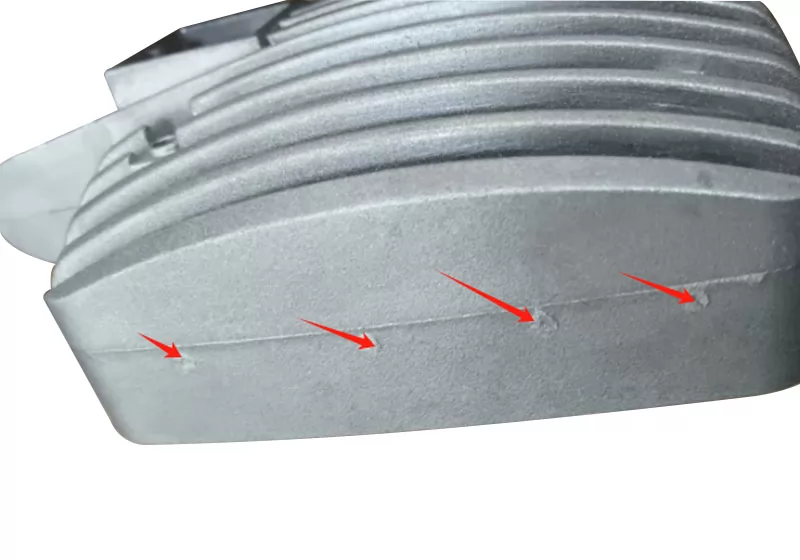
After review, the technical team decided to add an undercut design at the corresponding position on the upper mold. Practice proved this design very effective, eliminating the sticking issue entirely.
C. Developed Dedicated Trimming Die to Improve Efficiency
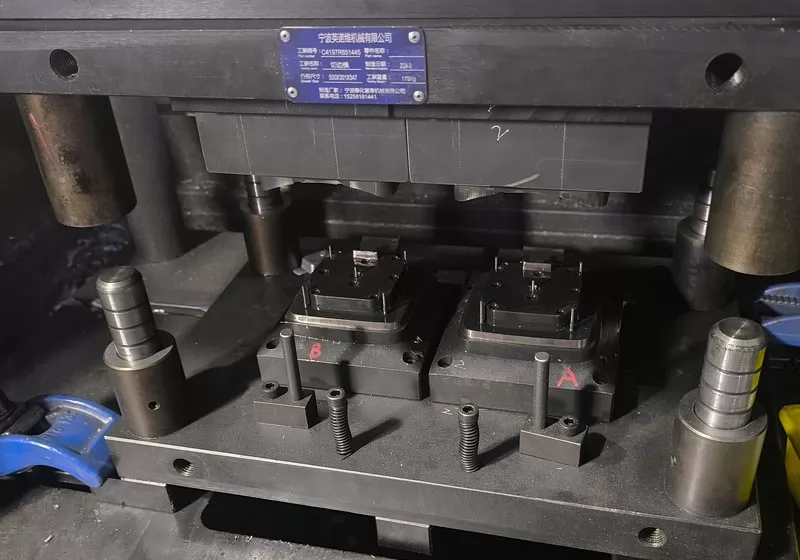
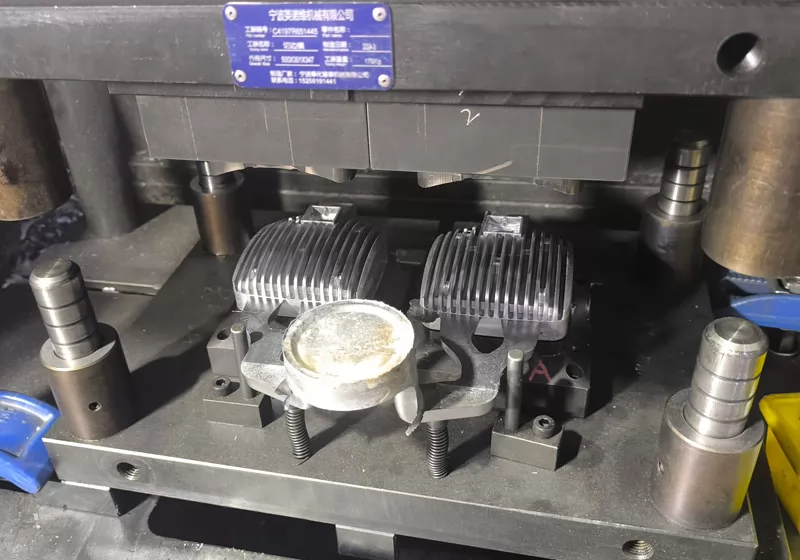
Product development involves not only quality control but also focus on production efficiency and cost control. For this work light, the team explored efficiency improvements across various aspects, the most significant being the development of a dedicated trimming die. This die allows for one-time removal of gates and burrs, reducing subsequent processing steps and greatly enhancing production efficiency.
D. Exceeded Standard Salt Spray Test Ensures Corrosion Resistance Requirement
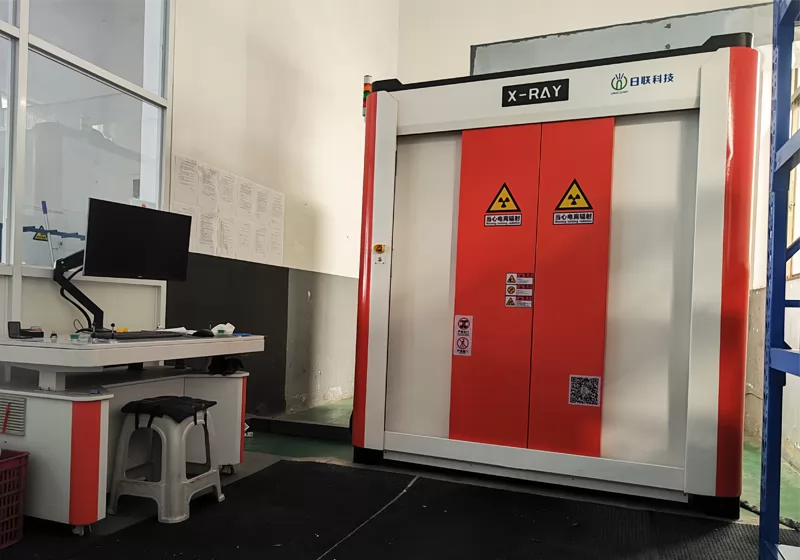
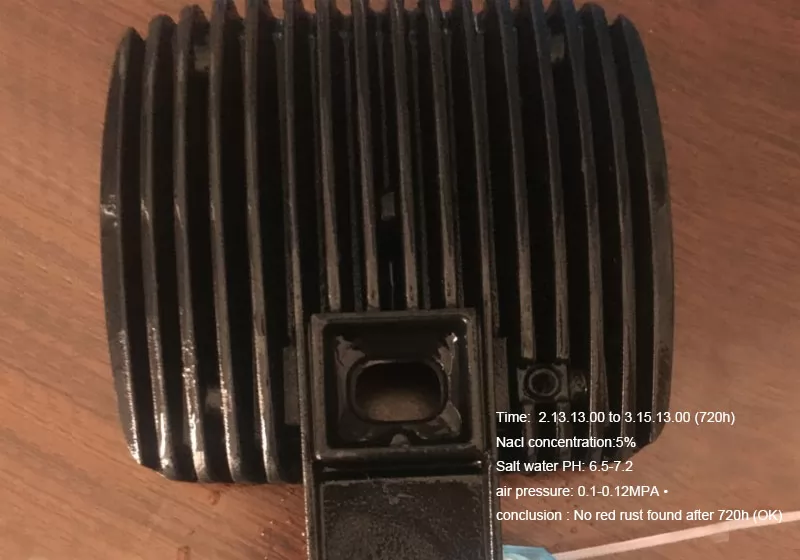
Heavy equipment work light housing are typically used in outdoor construction sites and similar environments, leading to strict customer requirements for corrosion resistance. Besides the inherent corrosion resistance of the material, the external surface also undergoes Powder Coating. To better guarantee performance, the customer specified a salt spray test requirement of 600 hours. We actually conducted the test for over 720 hours, and the practical conclusion was that no red rust appeared, verifying that the product quality exceeded technical specifications.
Quality Control
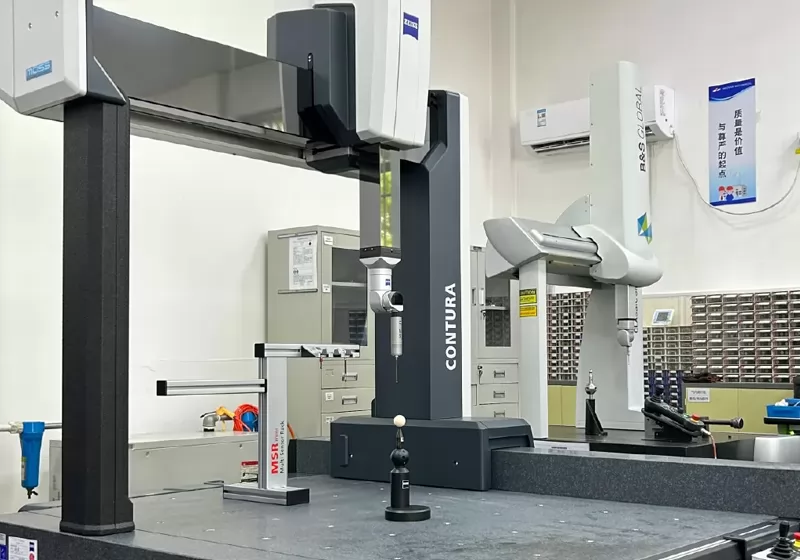
The entire development process was a systematic procedure of identifying and controlling quality risks while continuously optimizing the process. The heavy equipment work light housing project team leveraged rich experience and solid technology to conduct technical reviews and repeated verification at every process step, systematically identifying and tackling potential risk points. The team strictly adhered to the IATF 16949 quality system, implementing the full APQP process requirements to achieve full-process quality control. Throughout the process, various standardized documents and practices such as FMEA, SPC, MSA, and Control Plans were established and executed to prevent potential process risks, quality risks, and control quality variation. Finally, PPAP documentation was established and approved by the customer, laying a solid foundation for formal mass production.
The process included first-article inspection, in-process inspection, and outgoing inspection, establishing complete inspection data retention to ensure all quality data is traceable and verifiable.
Results and Evaluation
Finished Product Metrics:
1. Dimensional Accuracy: All met according to ISO 2768-mK requirements.
2. Surface Quality: Free from any visible defects; met standards.
3. Assembly Quality: Customer satisfied.
5. PPAP completed and approved by the customer.
The development of this aluminum die-cast Heavy Equipment component by Innovaw, with its relatively high technical difficulty and stringent comprehensive performance requirements, served as a test of the manufacturer's overall capabilities. Relying on profound expertise in high-pressure die casting, precision CNC machining capabilities, and an excellent quality management system consistently implemented throughout the process, we successfully overcame the challenges and delivered a high-quality product that met and even exceeded customer expectations. This fully demonstrates our casting development team's professional capability for systematic problem analysis and rapid closed-loop improvement in developing complex structural components.
Production Process
Mould making→Melting→High Pressure Die Casting→Cutting the sprue and riser→Deburring→Machining→Powder Coating→Packaging & inspection
FAQs
Q1. Why is ALSI12 used for this heavy equipment work light housing, and how does it contribute to corrosion resistance?
ALSI12 is a near-eutectic aluminum-silicon alloy with excellent fluidity and good corrosion resistance, making it well-suited for outdoor heavy equipment applications such as trucks and bulldozers. Its high silicon content improves castability for the dense fin geometry on this housing, while its natural oxide layer provides a base level of corrosion protection. Combined with the powder coating surface finish, the completed housing exceeded the customer's 600-hour salt spray requirement—testing continued beyond 720 hours with no red rust observed.
Q2. What is the challenge of producing square holes in a die casting mold, and how was it solved?
Square holes require tighter dimensional accuracy and consistency than round holes, and their geometry creates uneven stress concentration on the mold pins during repeated injection cycles. In a solid integrated mold core design, a damaged square pin means scrapping the entire core—a costly outcome. This housing uses an insert-based replaceable pin design instead: if a pin is damaged, it can be extracted and swapped individually without affecting the core. Pins are also replaced as a matched set to maintain dimensional uniformity across all square hole features (tolerance: 3.6±0.1mm).
Q3. What causes casting sticking on this housing, and how was it eliminated?
During sampling, sticking defects were found on 32% of castings, all located above the parting line. This type of sticking occurs when the casting adheres to the upper mold half during ejection rather than releasing cleanly to the lower side. The root cause was insufficient mechanical draft at that region. The solution was to add an undercut design at the corresponding upper mold location, which creates a deliberate geometry that locks the casting to the lower mold half and ensures reliable, consistent release during ejection—eliminating the sticking issue entirely.
Q4. Why does this work light housing use powder coating rather than anodizing or other surface treatments?
Powder coating is the preferred finish for heavy equipment components exposed to harsh outdoor environments—construction sites, mining, and similar conditions—because it forms a thick, impact-resistant polymer layer that provides far superior mechanical protection compared to anodizing. It also offers excellent UV resistance and can be applied in colors suited to equipment branding. For this housing, powder coating in combination with the inherent corrosion resistance of ALSI12 achieved more than 720 hours of salt spray endurance, comfortably exceeding the 600-hour specification.
Q5. What is carbon buildup in die casting fins, and why is it a risk on this housing?
Carbon buildup occurs when release agents and organic residues accumulate in narrow mold cavities over repeated casting cycles, particularly in deep, closely spaced fin areas where ventilation and cleaning access are limited. On this housing, the heat sink surface has cooling fins of varying depths with a fin width of just 2.2mm—geometry that concentrates buildup risk and can also lead to localized mold core damage over time. Managing this requires careful selection and dosing of release agents, optimized venting in the fin cavity zones, and periodic mold maintenance protocols built into the production control plan.