Gas Meter Valve Housing Development Case
Project Description
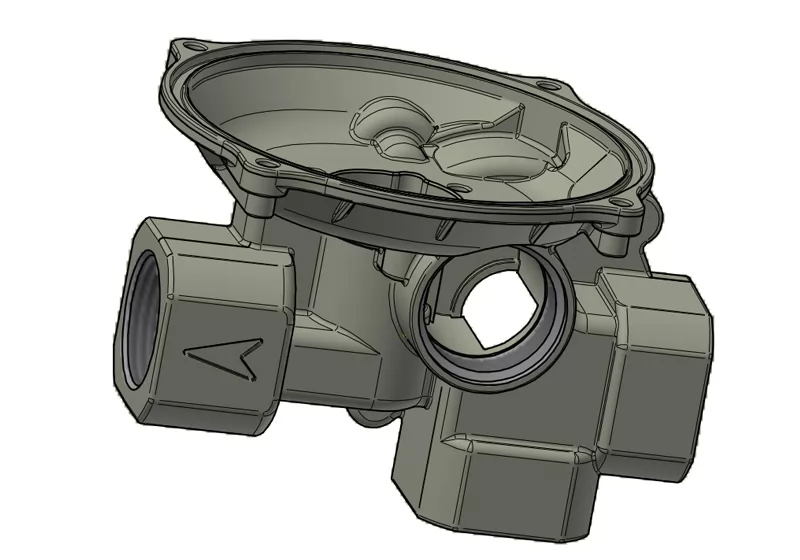
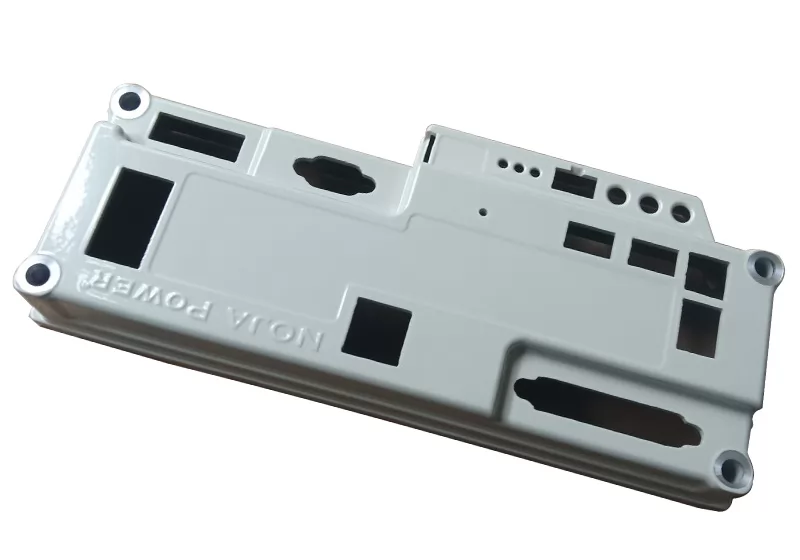
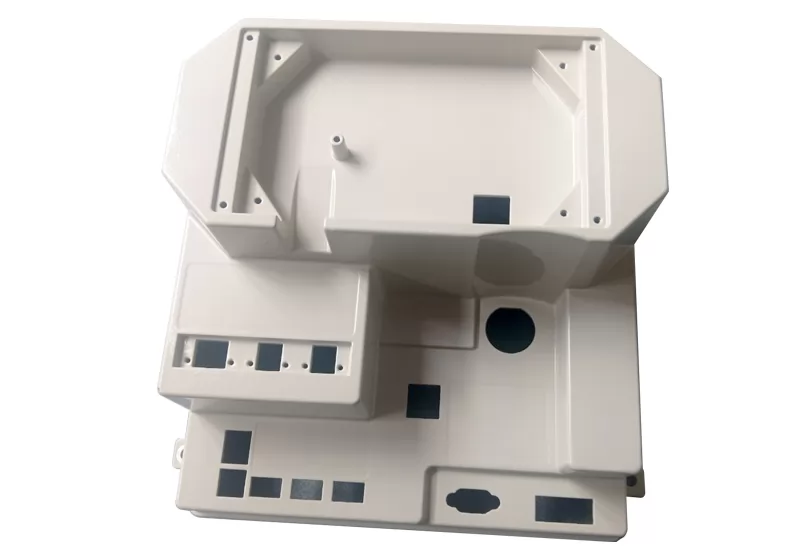
This is a customized gas meter valve housing, whose main function is to connect inlet and outlet ports, support and seal the internal mechanism.
1. Product Standards and Requirements:Material ADC12 aluminum; dimensional tolerance grade ISO 2768-mk; minimum tolerance 0.05; minimum flatness 0.1; no visible surface defects; surface roughness Ra6.3µm; surface powder coating 80-120μm; neutral salt spray test 1000H. PPAP approval must be completed and passed before mass production.
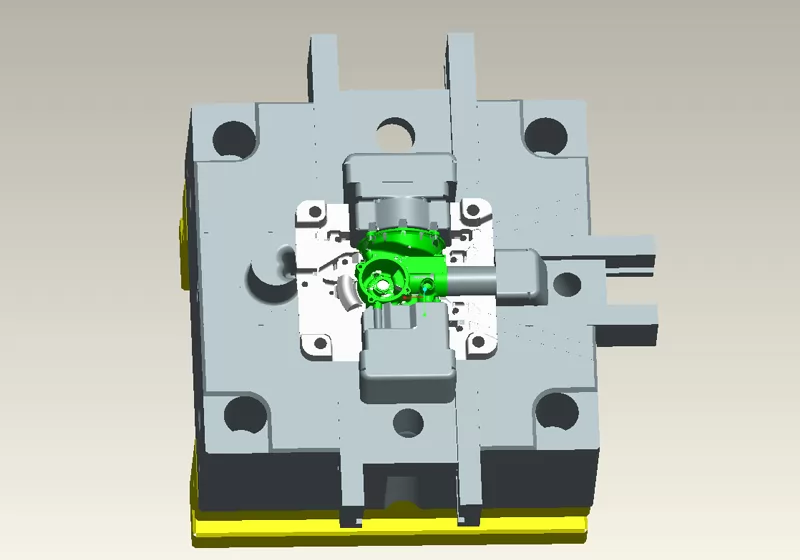
2. Product Challenges:Complex structure, 4-slider mold design; uneven thickness prone to porosity; high corrosion resistance requirement.
Risk Keywords:complex structure, high precision, porosity, assembly accuracy, zero surface defect
The overall project has a certain level of difficulty, particularly testing our mold design capability and quality control capability.
Development Process
For this project, we formed a development team consisting of mold designers, casting engineers, machining engineers, quality engineers, and sales staff. Following the core methodology of APQP (Advanced Product Quality Planning) under the requirements of the international IATF 16949 standard, we carried out a comprehensive product development process centered on quality.
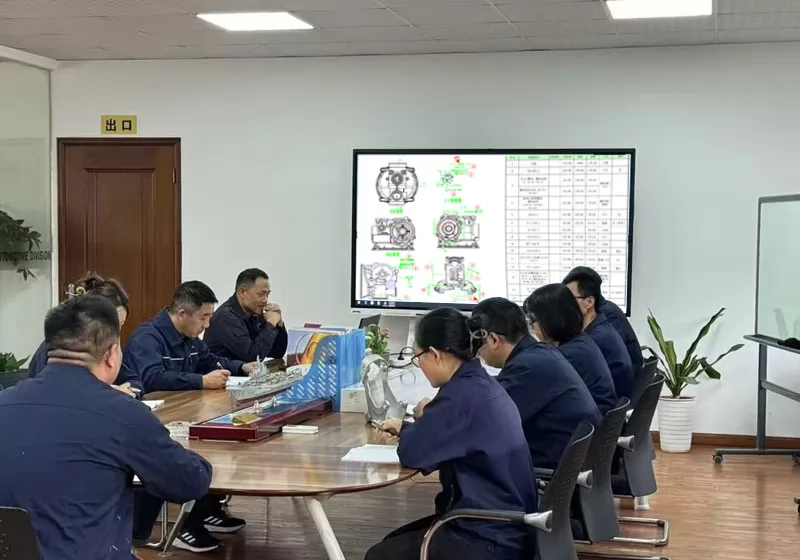
We first conducted DFM analysis, optimizing certain structural details to improve manufacturability, and established mutually agreed technical specifications and quality standards with the customer.
Considering the application environment and performance requirements of this component housing, ACD-12 was selected as the housing material. Based on the material properties and the core design elements of this product, and from the perspectives of technical feasibility, quality stability, and cost control, we finally determined the process route: high-pressure die casting + CNC precision machining, using a 280T high-pressure die casting machine.
Subsequently, technical engineers carried out mold simulation and mold flow analysis to predict and optimize difficulties and process parameters, and established a preliminary process flow chart and process control plan.
Finally, during the subsequent practical procedures, the solution was gradually verified, and problems were identified and resolved.
Practical Verification and Optimization
Starting from mold manufacturing, the project entered the actual manufacturing phase. Our company proceeded according to the initial Process Flow Chart, established the Control Plan, and applied FMEA tools for risk analysis and assessment of various potential failure modes. The main key issues encountered during the actual manufacturing process were as follows:
A. Solving Porosity Problem
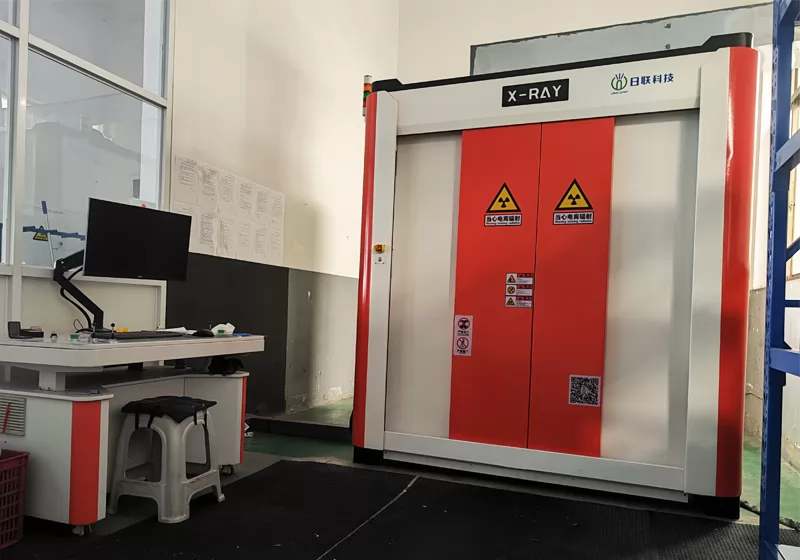
By carefully analyzing the customer’s drawing, it was evident that the product had a complex structure, deep cavities, and large wall thickness variations, leading to potential risks of porosity and shrinkage defects. In the first mold trial stage, quality engineers performed X-ray inspection on the same batch of castings, and porosity was indeed found in specific product areas, with a defect rate of 60%. To address this challenge, we organized a special review, analyzed defect distribution patterns, and combined our years of multi-slider mold development experience to formulate targeted design optimization strategies. The final solution was determined as follows:
1. Strengthen auxiliary venting design on both sides of the mold and optimize gating design.
2. Adjust and precisely control melting and high-pressure die casting parameters, with particular focus on intensification pressure and injection speed. Apply SPC (Statistical Process Control) to key parameter data, collect batch data into the system, analyze with SPC tools, and carry out continuous monitoring and improvement.
After three consecutive rounds of validation trials, 150 additional samples were produced. X-ray inspection confirmed a 100% pass rate, successfully solving the porosity issue.
B. Customized Pressure Test Fixture for Sealing Verification
As a gas valve body aluminum casting, sealing performance is critical. Therefore, strict requirements were imposed on porosity and dimensional accuracy. In addition to X-ray inspection for porosity, we customized a pressure test fixture specifically for this product’s sealing performance verification.
C. Challenge of 1000H Salt Spray Test
For this project, the customer required extremely high corrosion resistance, with a neutral salt spray test of up to 1000 hours. From the selection of the high-pressure die casting process, to resolving porosity problems, and to precision control at subsequent process stages, all efforts were made to achieve corrosion resistance. Finally, at the critical surface treatment stage, we adopted a process of oxidation followed by powder coating. Through close cooperation across all stages, the final 1000-hour salt spray test proved the effectiveness of the preceding work.
Quality Control
The entire development process was a systematic process of identifying and controlling quality risks and continuously optimizing processes. The gas meter valve body project team, with its rich experience and solid technical expertise, carried out technical reviews and repeated verification at every process stage, systematically identifying and overcoming potential risks.
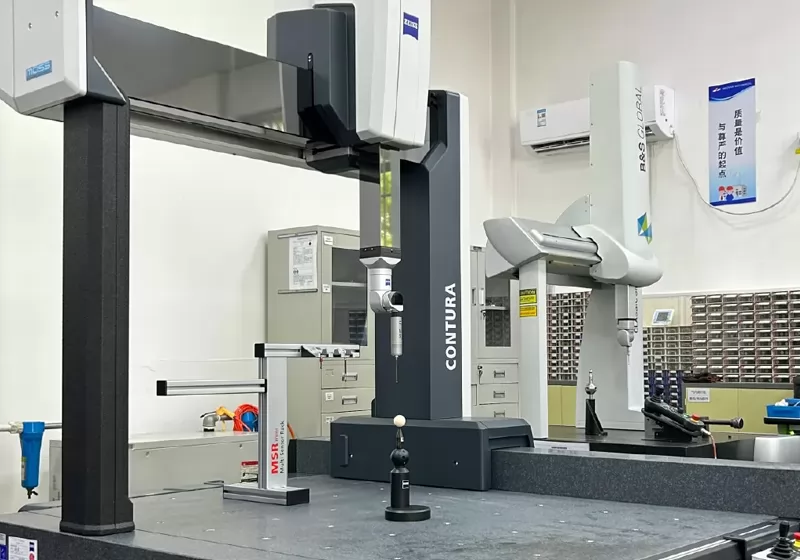
Quality engineers strictly followed the IATF 16949 quality system and implemented the full APQP process requirements to achieve complete quality control. During the process, FMEA, SPC, MSA, and process control plans were established and executed to prevent potential process risks and quality risks, and to control quality variation. Finally, PPAP documents were completed and approved by the customer, laying a solid foundation for mass production.
Inspections were arranged throughout the process: first article inspection, in-process inspection, and final inspection, with complete inspection data records established to ensure traceability and verification of all quality data.
Results and Evaluation
Final Product Indicators:
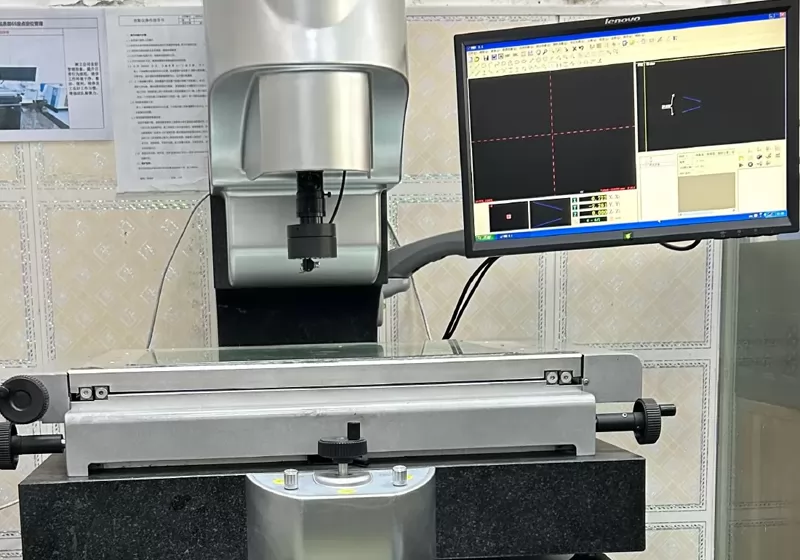
1. Finished product tolerance grade ISO 2768-mk; minimum tolerance 0.05; minimum flatness 0.1 – all meeting standard requirements.
2. Sealing performance passed test.
3. Corrosion resistance test: 1000-hour salt spray, passed.
3. PPAP completed and approved by customer.
The development of this gas meter valve body aluminum casting by Innovaw, with its high technical difficulty and strict comprehensive performance requirements, served as a test of the manufacturer’s overall capability. Through our solid expertise in high-pressure die casting, precision CNC machining, and consistent quality management system, we successfully overcame challenges and delivered a high-quality product that met and even exceeded customer expectations. This fully demonstrated our casting development team’s professional capability in systematic problem analysis and rapid closed-loop improvement for complex structural parts.
Production Process
Mould making→Melting→High Pressure Die Casting→Cutting the sprue and riser→Polishing→Deburring→Shot Blasting→Machining→Powder coating→Packaging & inspection
FAQs
Q1. Why does a gas meter valve housing have stricter sealing requirements than a water circuit housing?
Natural gas leaks are invisible, odorless in pure form, and highly flammable—any sealing failure in a gas valve body creates a safety hazard that water circuit leaks do not. This is why the valve housing requires both X-ray inspection for internal porosity and a dedicated pressure test fixture for sealing performance verification—two independent quality gates that water housings in this series do not require. The 0.05mm minimum tolerance and 0.1mm flatness on sealing faces reflect the precision needed to maintain a gas-tight joint across years of outdoor installation.
Q2. Why does this housing require a 4-slider mold design?
A gas meter valve housing connects inlet and outlet gas ports and houses an internal valve mechanism, with features—ports, mounting bosses, and internal chambers—oriented in multiple directions. Four sliders allow each directional feature to be formed cleanly in the die without undercuts that would trap the casting during ejection. Managing four sliders simultaneously in a compact mold (280T machine) requires precise sequencing and alignment, since any slider timing error or positional deviation directly affects port geometry and mating face quality.
Q3. What does the customized pressure test fixture verify that X-ray inspection cannot?
X-ray inspection reveals internal porosity voids but cannot confirm whether those voids form a connected pathway through the wall under pressure—a casting can pass X-ray yet still leak when pressurized. The pressure test fixture seals all ports and applies internal gas pressure to directly verify that the assembled housing is gas-tight at its operating conditions. This functional test catches leak paths that are structurally insignificant on X-ray but operationally critical in a gas metering application.
Q4. Why does this valve housing use anodizing followed by powder coating, rather than powder coating alone?
Gas meters are typically installed outdoors for 10+ years in rain, humidity, and atmospheric pollutants. Powder coating alone relies on adhesion to the aluminum surface—any micro-defect in adhesion becomes a corrosion initiation point. Anodizing first converts the aluminum surface into a hard oxide layer that is chemically bonded to the substrate, creating a stable intermediate layer that dramatically improves the powder coating's adhesion and durability. This dual-treatment approach is what enables the housing to pass the 1000-hour neutral salt spray test—the most demanding corrosion requirement across all products in this series.
Q5. Why is the 1000-hour salt spray requirement so much higher than the 240–600 hours seen on other products in this series?
Gas meters are utility infrastructure components with decade-long service lives, installed permanently outdoors with no scheduled replacement. Unlike work light housings or bicycle parts that can be inspected and replaced periodically, a gas meter valve body must maintain its structural and sealing integrity for the full service life without intervention. The 1000-hour salt spray requirement reflects this long-term outdoor infrastructure duty cycle—roughly equivalent to several years of continuous corrosive exposure—and drives every upstream process decision from alloy selection and porosity control through to the dual surface treatment strategy.