Product Description
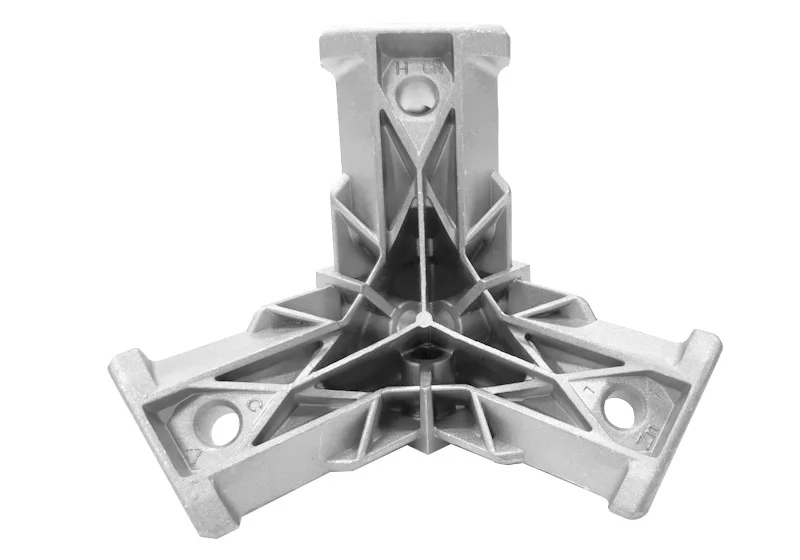
This is a zinc alloy corner connector, a component of architectural door and window systems. This cast corner connector is used in building door and window connection systems, serving as a critical structural connector for architectural doors and windows.
Its primary functions include:
1. Enabling three-way (90°) connections in door and window systems, ensuring the overall frame structure forms a rigid unit to prevent loosening or misalignment.
2. Transmitting assembly forces between different structural components, allowing smooth integration of varied materials or shapes within the system.
3. Supporting pulley or hinge systems to bear the weight of door/window sashes, ensuring smooth operation without sagging.
4. Maintains structural stability.
This zinc alloy corner connector casting not only possesses outstanding mechanical strength and precision but also offers excellent corrosion resistance, lightweight properties, superior protective performance, and convenient installation/maintenance. The finished product fully meets customer design objectives, providing a higher-performance, more reliable solution for this type of building equipment design.
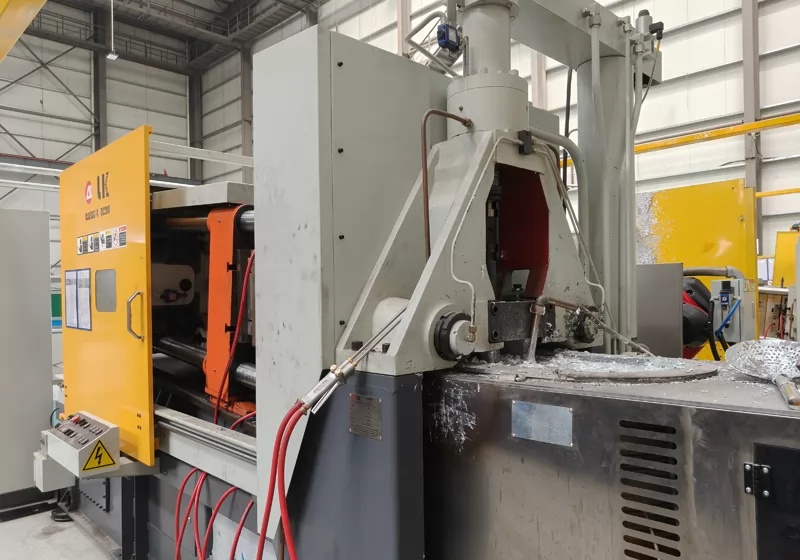
This zinc alloy corner connector casting adopts the zinc high-pressure die casting one-piece molding process, and the surface adopts the vibration grinding process, which has the characteristics of high precision, small tolerance, small wall thickness, high production efficiency, low material loss, light weight but high strength, which is a perfect fit for the mass production needs of this door and window accessory.
Production Process
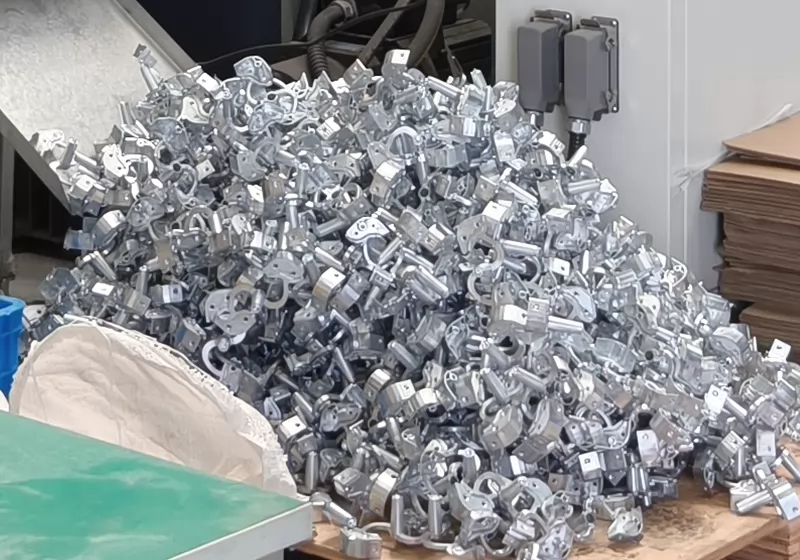
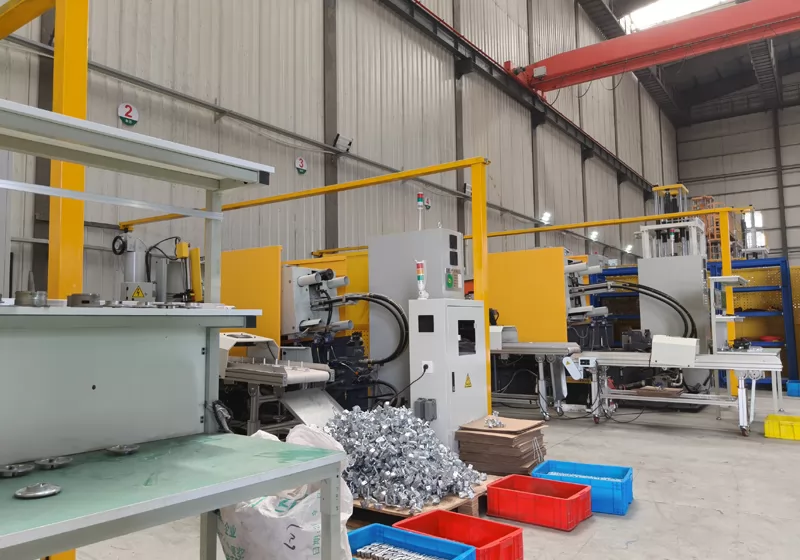
Mould making→Pressure Die Casting→Cutting the sprue and riser→Grinding→Vibratory Finishing-→Packaging & inspection
Production Video
Product story
As a key component used in building door and window systems, door and window fittings are required to have the following key characteristics.
high strength and hardness, good wear resistance, excellent dimensional stability, good corrosion resistance, assembly friendliness and other characteristics to adapt to different working environments. This was the basis for the customer's requirements for the zinc alloy casting of this connecting bracket casting.
As a long-standing customer who has cooperated with Innovaw for many years, the customer has full trust in Innovaw. After receiving the customer's requirements and drawings, we first conducted a DFM analysis of the product design to ensure that the product design meets the functional requirements, while reducing costs, improving productivity and minimizing defects during the manufacturing process.
During the analysis process, INNOVAW's professional engineers analyzed the product design in all aspects, from mold layout, extraction angle, part marking, etc., and put forward reasonable opinions and solutions from the production point of view, and finally the customer accepted our opinions and improved them, so that the final product was produced and delivered smoothly.
FAQs
Q1. What is a three-way 90° corner connector, and why is it structurally critical in a door or window frame?
A corner connector joins three frame members meeting at a right-angle corner—typically two horizontal and one vertical profile—into a single rigid node. In a door or window system, the corners are the primary stress concentration points where racking forces from wind load, sash weight, and operational forces converge. A weak or dimensionally imprecise corner joint allows the frame to rack (deform into a parallelogram), breaking the glass seal, misaligning the locking mechanism, and eventually causing structural failure of the opening.
Q2. Why is this corner connector a perfect cube (85.6 × 85.6 × 85.6mm), and what does that mean for the mold?
The perfectly equal dimensions reflect that the three arms of the connector must accept identical frame profiles in each of the three perpendicular directions—ensuring the connector is truly universal at any corner orientation without requiring different part numbers for different positions. For the mold, a symmetric cubic geometry means three slider directions of equal depth and geometry, which simplifies balanced cavity filling and makes slider timing more predictable than asymmetric multi-slider designs. However, the substantial 621g mass at this compact size means the die must handle high injection pressure to fill all three arms uniformly.
Q3. How does the 621g weight of this corner connector compare to the connecting bracket, and what does it indicate?
At 621g versus the connecting bracket's 450g, despite a similar overall footprint, the corner connector is 38% heavier—reflecting that it forms a solid three-way node rather than a flat bracket profile. The additional mass means more zinc is present at the geometric center where all three arms intersect, creating a dense central hub that resists the multi-directional forces converging at the corner joint. This inherent mass also contributes to the damping of vibration transmitted through the frame from wind or operational impact.
Q4. What angular precision is required at the 90° interfaces of this connector, and why does it matter?
Any deviation from true 90° at the connector's arm interfaces accumulates across all four corners of a door or window frame, causing the overall opening to be out of square. Even a 0.5° angular error at each corner adds up to 2° of total racking—enough to prevent smooth sash operation, misalign the locking points, and create visible gaps at the frame-to-wall interface. The zinc die casting process, with its precise mold cavity geometry, consistently replicates the 90° arm angles within the CT8 tolerance class, making it well-suited to this geometric accuracy requirement.
Q5. How does the symmetric cubic form affect solidification and potential shrinkage during zinc die casting?
The thick central hub where the three arms intersect creates a thermal mass that solidifies later than the thinner arm walls. Without adequate gating and intensification, this hub zone is prone to centerline shrinkage as the surrounding metal solidifies first and contracts inward. The symmetric geometry actually helps here—gates can be positioned to feed all three arms and the central hub equally, and the uniform arm cross-sections cool at similar rates, reducing the thermal gradient problem. The 2mm minimum wall thickness on the arm ends also means those sections solidify quickly, helping drive feeding pressure toward the hub.
Share your thoughts
Showing
6
of
0
reviews