Product Description
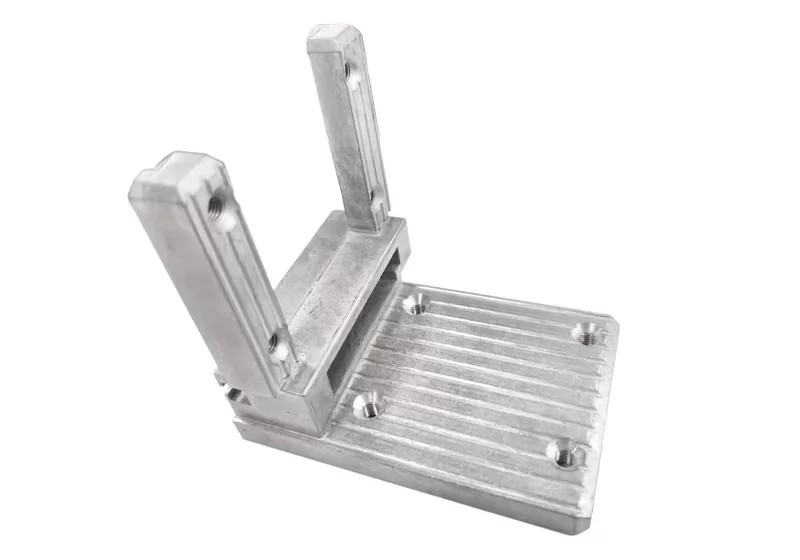
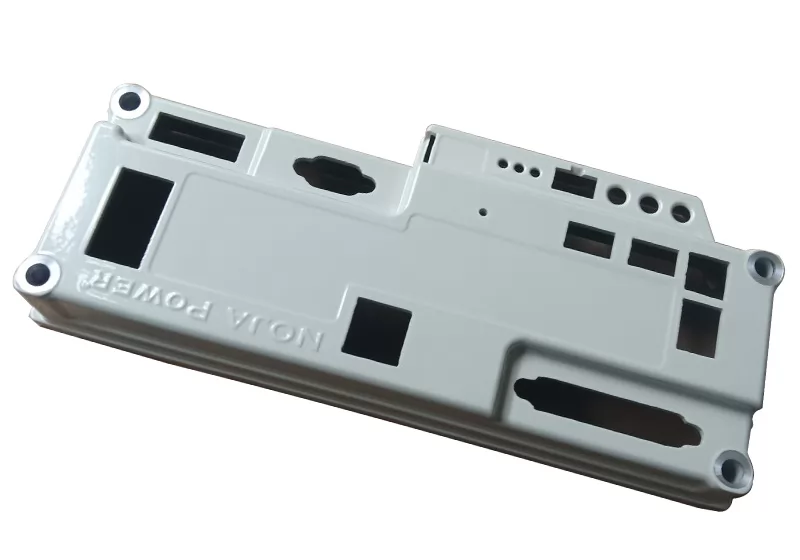
This is a zinc alloy casting used on architectural door and window systems. This door and window connection bracket casting, used on architectural door and window connection systems, is a key structural connector for architectural doors and windows .
Its main functions are:
1. connecting different door and window components to ensure that the overall frame structure forms a rigid whole, preventing loosening or misalignment.
2. transfer the assembly of different structural components, so that components of different materials or shapes in the system can be smoothly combined.
3. support the pulley or hinge system to carry the weight of the door or window sash and ensure smooth operation without sagging.
4. maintains structural stability.
This finished door and window connecting bracket casting not only has excellent mechanical strength and precision, but also has good corrosion resistance, light weight, good protection, and is also easy to install and maintain. The finished product fully meets the customer's design objectives, providing a higher performance and reliable solution for this type of construction equipment design.
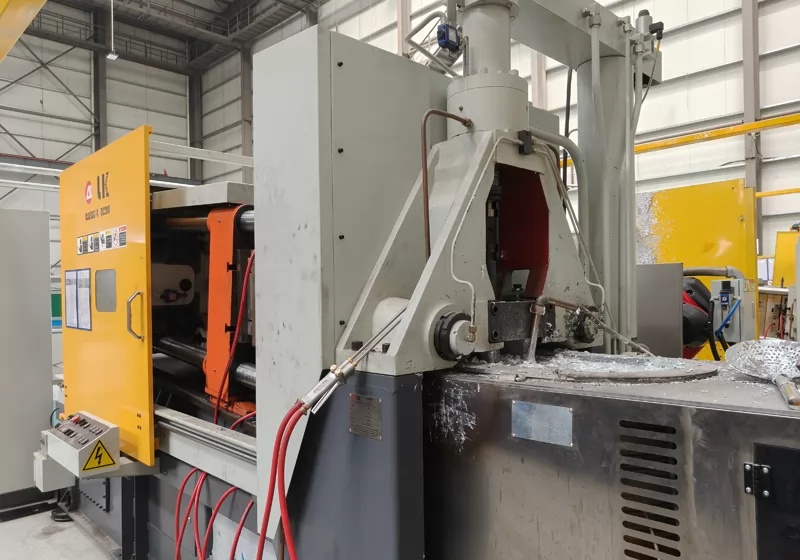
This connecting bracket casting adopts the zinc high-pressure die casting one-piece molding process, and the surface adopts the vibration grinding process, which has the characteristics of high precision, small tolerance, small wall thickness, high production efficiency, low material loss, light weight but high strength, which is a perfect fit for the mass production needs of this door and window accessory.
Customized zinc high-pressure die castings are not only well reflected in this door and window handle castings, but also can be widely used in building and home, industrial automation control equipment, instruments and other products. No matter what kind of specification or design, it can get a good matching application.
Production Process
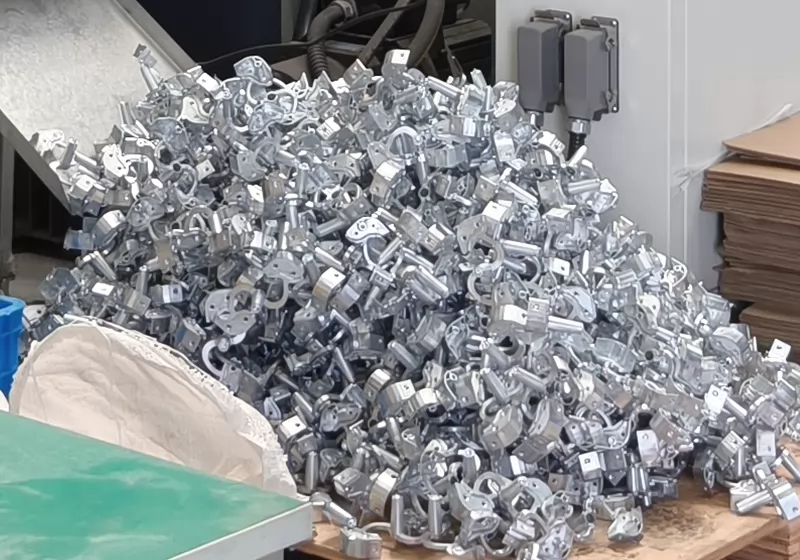
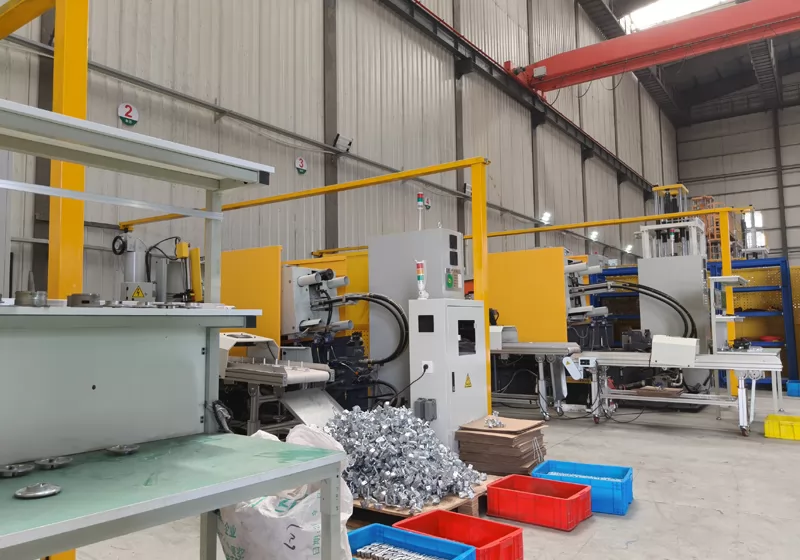
Mould making→Pressure Die Casting→Cutting the sprue and riser→Grinding→Vibratory Finishing-→Packaging & inspection
Production Video
Product story
As a key component used in building door and window systems, door and window fittings are required to have the following key characteristics.
high strength and hardness, good wear resistance, excellent dimensional stability, good corrosion resistance, assembly friendliness and other characteristics to adapt to different working environments. This was the basis for the customer's requirements for the zinc alloy casting of this connecting bracket casting.
As a long-standing customer who has cooperated with Innovaw for many years, the customer has full trust in Innovaw. After receiving the customer's requirements and drawings, we first conducted a DFM analysis of the product design to ensure that the product design meets the functional requirements, while reducing costs, improving productivity and minimizing defects during the manufacturing process.
During the analysis process, INNOVAW's professional engineers analyzed the product design in all aspects, from mold layout, extraction angle, part marking, etc., and put forward reasonable opinions and solutions from the production point of view, and finally the customer accepted our opinions and improved them, so that the final product was produced and delivered smoothly.
FAQs
Q1. Why is Zamak 2 zinc alloy chosen over aluminum for this door and window bracket?
Zamak 2 has significantly higher hardness and yield strength than standard aluminum die casting alloys, making it better suited for a load-bearing bracket that must resist the sustained static load of a door or window sash plus repeated dynamic forces from opening and closing cycles. It also offers superior wear resistance at hinge pivot points and pulley interfaces—important for a component that articulates thousands of times over its service life. Its excellent fluidity in zinc die casting also enables the 2mm minimum wall thickness needed for the bracket's compact geometry.
Q2. What structural loads must this connecting bracket resist in a door or window system?
The bracket simultaneously carries the dead weight of the door or window sash (which can be significant for large glazed panels), transfers lateral wind load from the frame to the structural wall, and absorbs the impact loads from slamming. At hinge and pulley support locations, it also endures concentrated bearing stress from the rotating elements. Unlike a static structural bracket, the door and window bracket experiences fatigue loading from every open-close cycle, making dimensional stability and freedom from internal defects essential for long-term reliable operation.
Q3. What advantages does zinc die casting offer over aluminum die casting specifically for this bracket geometry?
Zinc alloys have lower melting points than aluminum, allowing die casting at lower temperatures with less thermal shock to the mold—extending mold life significantly for high-volume architectural hardware production. Zinc's superior fluidity at casting temperature enables sharper corners, finer details, and thinner walls (2mm on this bracket) than are reliably achievable in aluminum HPDC. The higher density of zinc (approximately 6.6 g/cm³ vs 2.7 g/cm³ for aluminum) also contributes to the bracket's 450g weight at this compact size, providing the mass and rigidity the structural role demands.
Q4. Why is vibratory finishing the appropriate surface treatment for this zinc bracket without any subsequent coating?
Zinc alloys have inherent corrosion resistance through natural zinc oxide passivation, sufficient for interior architectural applications where the bracket is concealed within the door or window frame and not directly exposed to weather. Vibratory finishing removes sprue remnants, sharp edges, and flash uniformly across the bracket's complex geometry—including recessed features and internal corners—producing a smooth, consistent surface ready for assembly. Avoiding a coating layer also eliminates thickness variation at precision-fit interfaces such as hinge pins and pulley mounts, where dimensional control directly affects the smooth operation of the mechanism.
Q5. How does the ISO 8062-CT8 casting tolerance grade suit a door and window bracket application?
CT8 is a mid-range casting tolerance grade that suits the dimensional requirements of architectural hardware—tighter than general structural castings, but without the extreme precision demands of automotive or precision instrument components. For a door and window bracket, the critical dimensions are the hinge pin bore, the mounting hole positions, and the mating face geometry, all of which are either machined to tighter tolerances after casting or rely on the assembly's adjustment range to accommodate minor variation. CT8 directly from the die casting process is sufficient for the non-machined features, making the process lean and cost-effective at the production volumes typical of architectural hardware.
Share your thoughts
Showing
6
of
0
reviews