Project Brief
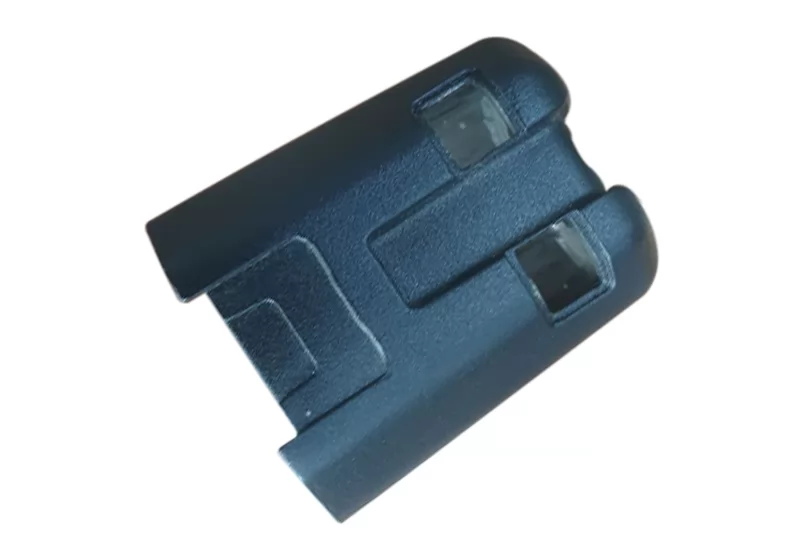
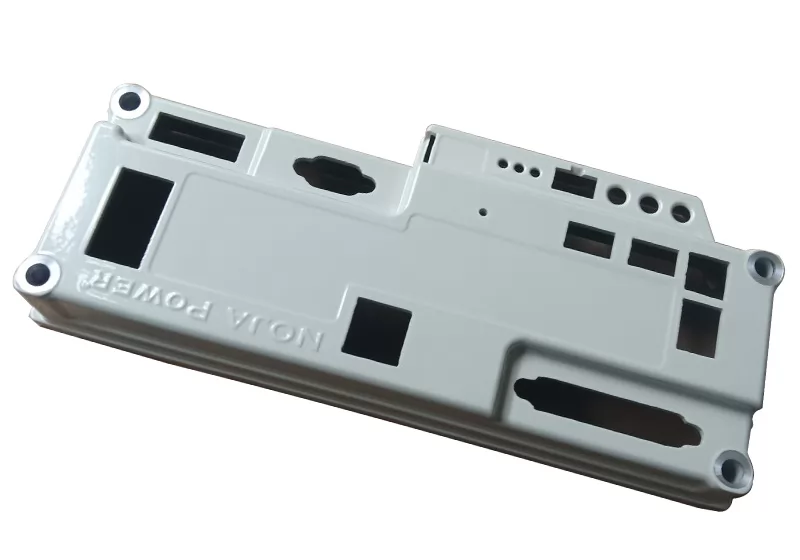
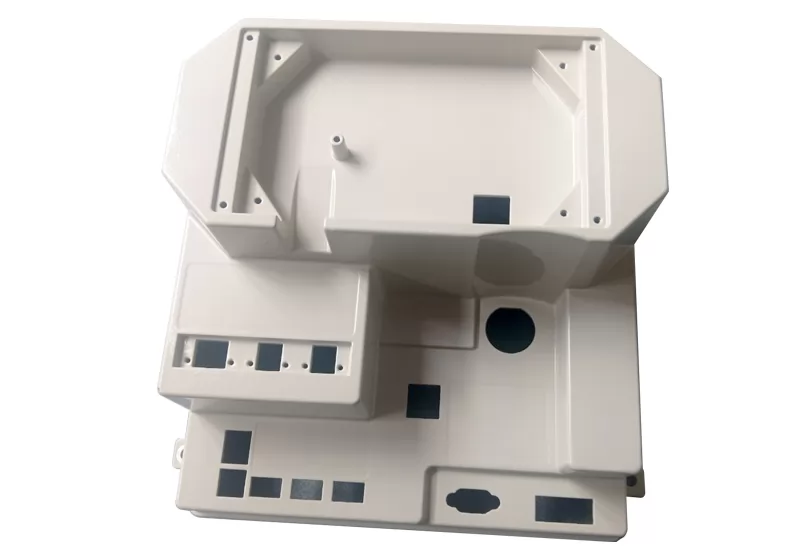
This is a component of a custom bicycle battery case made of aluminum alloy, serving the critical function of protecting internal components and requiring precision assembly.
1. Product Standards & Requirements: Material: K-ALLoy; General dimensional tolerance grade: ISO 8062-CT3; Flawless appearance (no visible defects); Surface roughness: Ra6.3µm; Exterior: black fine texture powder coating, thickness 100±20µm; Neutral salt spray test: 240 hours. PPAP approval must be completed and passed before formal mass production.
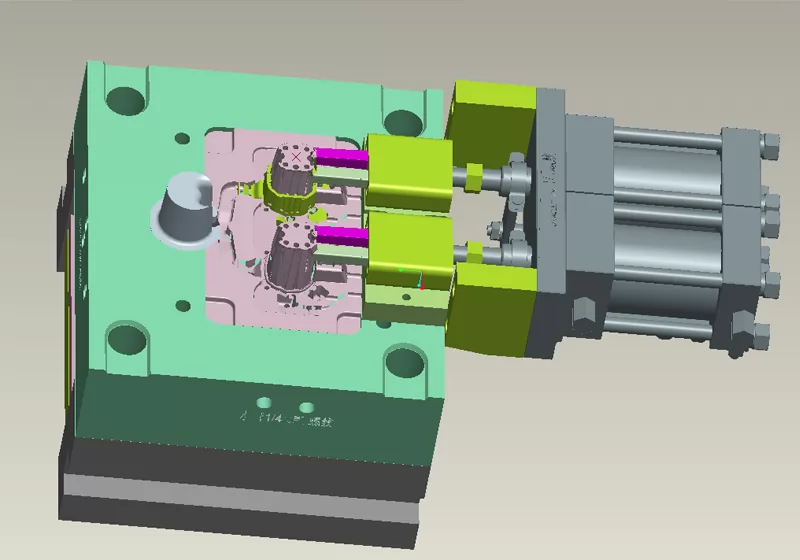
2. Product Challenges: The product has an unconventional, unique structure, posing difficulties in mold design. High appearance requirements involve both A-side and B-side surfaces.
This Bicycle Battery Case casting not only boasts exceptional machining precision and surface finish but also exhibits outstanding thermal conductivity, corrosion resistance, lightweight properties, and convenient installation and maintenance capabilities. The final product fully meets the customer's design objectives, providing a higher-performance, more reliable solution for this category of components.
Production Process
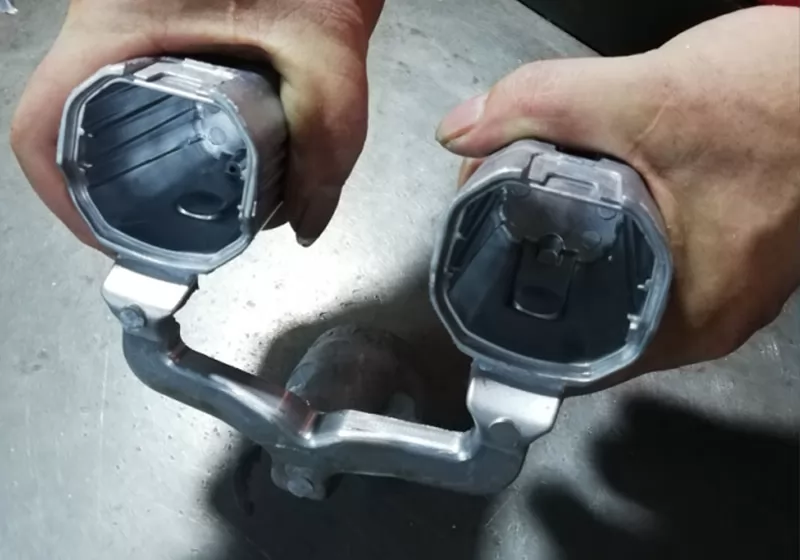
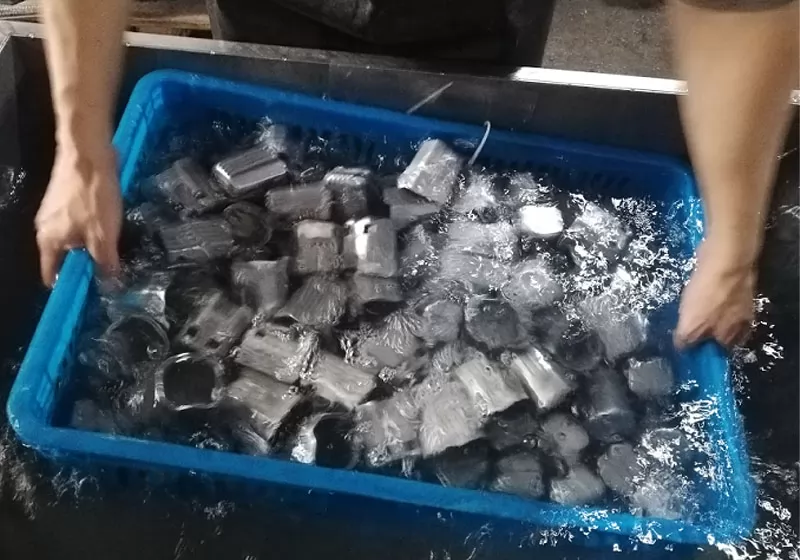
Mould making→Melting→High Pressure Die Casting→Cutting the sprue and riser→Deburring→Shot Blasting→Machinine 1→Machinine 2→Machinine 2→Clean→Packaging & inspection
FAQs
Q1. What protection functions must a bicycle battery case casting provide beyond basic enclosure?
An e-bike battery case must shield the lithium battery cells from mechanical impact during riding on rough terrain, prevent moisture and mud ingress that could cause short circuits, dissipate heat generated during charging and discharging, and maintain its geometry under the compressive force of the battery retention mechanism. The aluminum casting contributes to all four: structural rigidity resists impact, the sealed parting line and mating surfaces control moisture pathways, aluminum's thermal conductivity assists heat dissipation, and dimensional stability ensures the case clamps correctly without warping.
Q2. Why does this battery case use HPDC without a subsequent CNC machining step?
The near-cubic form (66×56×53mm) with relatively uniform 2.8mm walls and no high-precision bearing or threading features means the as-cast blank can meet the ISO 8062-CT3 tolerance requirements directly from the die, without needing machining to correct distortion or achieve interface precision. Eliminating CNC also removes the risk of machining through the dense cast surface into more porous subsurface material—important for a housing where internal density affects both structural integrity and moisture resistance.
Q3. How does the near-cubic geometry of this case affect mold design compared to flat bicycle parts?
Unlike the thin, planar lever or housing parts in the bicycle series, this case has significant depth in all three directions (66×56×53mm), meaning the internal cavity is deep relative to the part footprint. This requires longer core pins to form internal features and careful venting design at the deepest points where gas tends to trap during fill. The roughly equal depth and width also means the parting line runs through the middle of all four sides—making parting line appearance management critical on a part where all exterior surfaces are consumer-visible.
Q4. What sealing and assembly precision requirements apply to the mating surfaces of this battery case?
The case mates with a cover or frame component, and the interface must be flat and consistent enough to compress a gasket or O-ring uniformly around the full perimeter—any flatness deviation or parting line step disrupts the seal and creates a moisture ingress point. The precision assembly requirement means critical mating surfaces must be free of excess material, flash, or coating buildup that would cause uneven seating. This is why both A-side and B-side appearance approval is required: the exterior surfaces that look clean also happen to be the mating surfaces that must seal correctly.
Q5. What thermal management role does an aluminum battery case play for an e-bike battery?
Lithium battery cells generate heat during both charging and high-load discharging, and elevated internal temperatures accelerate capacity degradation and increase thermal runaway risk. The aluminum case conducts heat from the cells to the outer surface where it dissipates to ambient air—functioning as a passive heat spreader. This is one reason aluminum is strongly preferred over plastic for e-bike battery housings: plastic is thermally insulating and traps heat, while aluminum's conductivity actively manages the thermal environment inside the battery pack, extending cell life and improving safety.
Share your thoughts
Showing
6
of
0
reviews