Product Overview
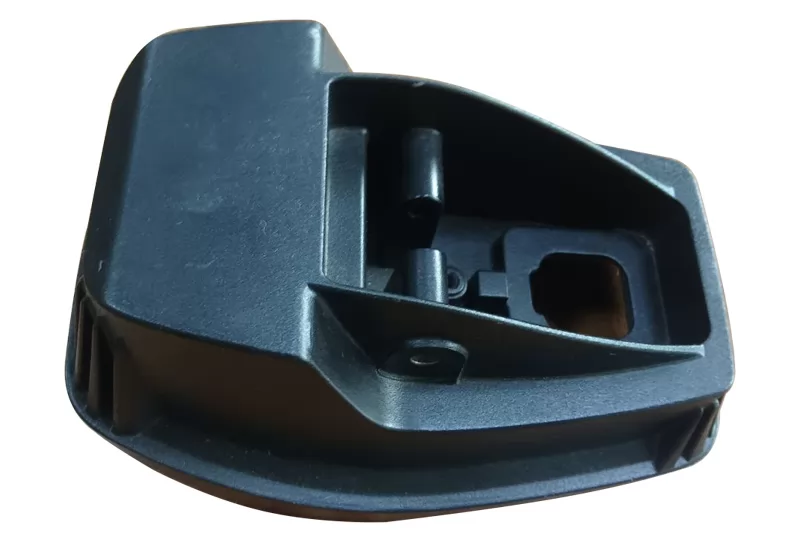
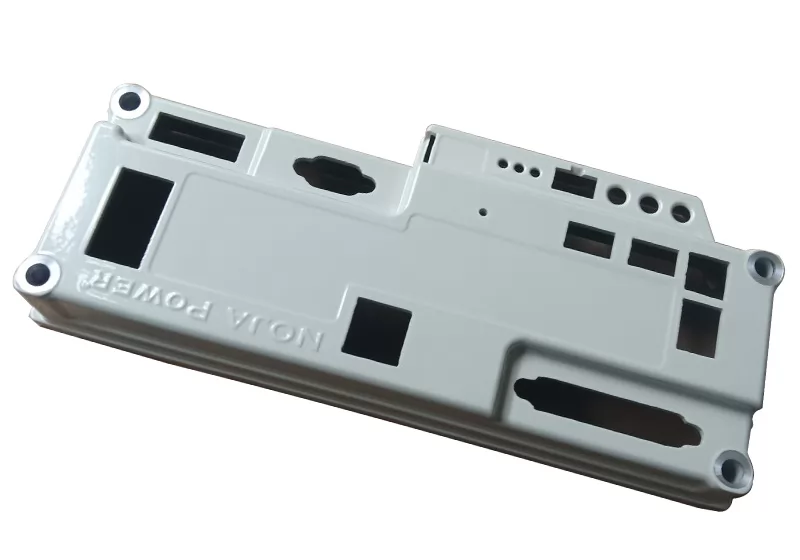
As an LED work light housing for automotive applications, it is commonly used as a lighting component in various engineering trucks. The LED housing not only protects the internal LED assembly but also serves multiple functions, including thermal management and mechanical support.
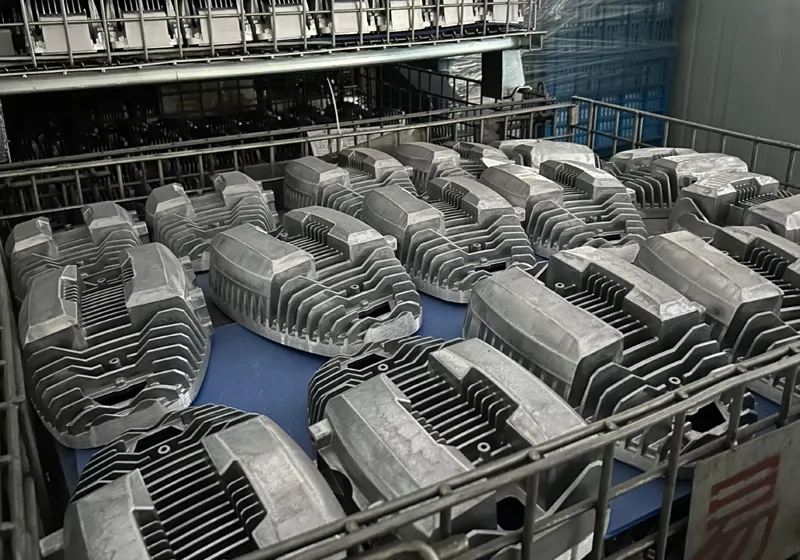
This aluminum alloy LED work light housing is manufactured using high-pressure die-casting combined with high-precision CNC machining, and features a powder-coated finish. It offers not only outstanding performance and precision but also excellent thermal conductivity, corrosion resistance, a lightweight structure, and robust protection. It also offers ease of installation and maintenance.
The finished product fully meets the customer’s design objectives, providing a higher-performance and more reliable solution for components in this category. The product can also be widely applied to various types of engineering vehicles, mining machinery, agricultural machinery, and other mechanical equipment.
Material Options
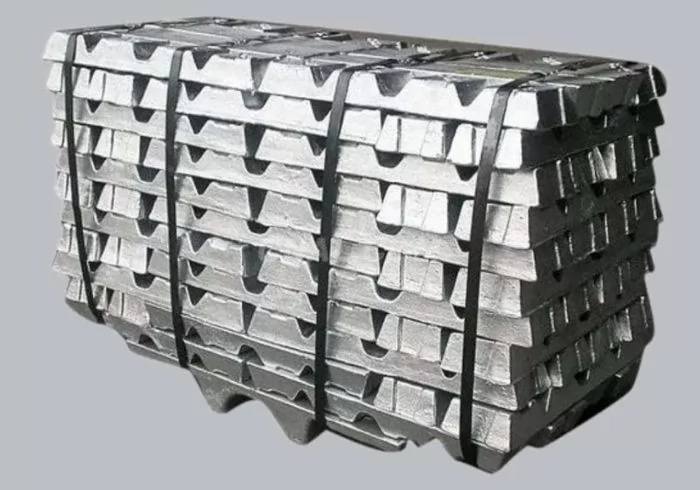
The housings for LED work lights used on construction vehicles are typically made of high-performance aluminum alloys, which must offer excellent castability, heat dissipation, structural strength, and corrosion resistance.
Common material options include:
-
AlSi12—Excellent castability, suitable for products with intricate heat dissipation structures, such as the automotive LED work light housings featured in this product.
-
ADC12 Aluminum Alloy – —Excellent casting fluidity, high strength, good thermal conductivity, and well-balanced overall properties.
-
A380 Aluminum Alloy – Good strength and dimensional stability.
-
ADC10 Aluminum Alloy – Suitable for structural components requiring high mechanical properties.
-
AlSi10Mg Aluminum Alloy – High strength, superior corrosion resistance, heat-treatable, and stable thermal conductivity.
Applications
This aluminum alloy LED work light housing is widely used in various LED light modules that require structural support, assembly, protection, and heat dissipation.
Typical applications include:
-
Construction vehicles
-
Mining machinery
-
Excavation equipment
-
Agricultural machinery
Key Advantages
Our aluminum alloy mechanical LED work light housings offer several key advantages for high-performance LED work light applications:
-
High dimensional accuracy achieved through precision die-casting and CNC machining.
-
Excellent heat dissipation capabilities support high-power LED electronic modules.
-
A lightweight aluminum alloy structure with high mechanical strength not only protects the internal lighting assembly but also provides structural support for the entire unit.
-
Excellent corrosion resistance and a long service life in industrial environments.
-
Stable mass production capabilities backed by a rigorous quality control system.
Project Brief
1. Product Standards & Requirements: Material ALSI12; Customer requires full dimensional compliance with drawing tolerances (ISO 2768-mk grade), including minimum dimensional tolerance of ±0.1mm, flatness of 0.5mm, concentricity of 0.5mm; 600-hour salt spray testing; PPAP approval must be completed and passed prior to formal mass production.
2. Product Challenges: The 600-hour salt spray test requires the casting to be free of porosity and shrinkage porosity. Additionally, the surface treatment process demands high precision to prevent powder coating defects.
Production Process
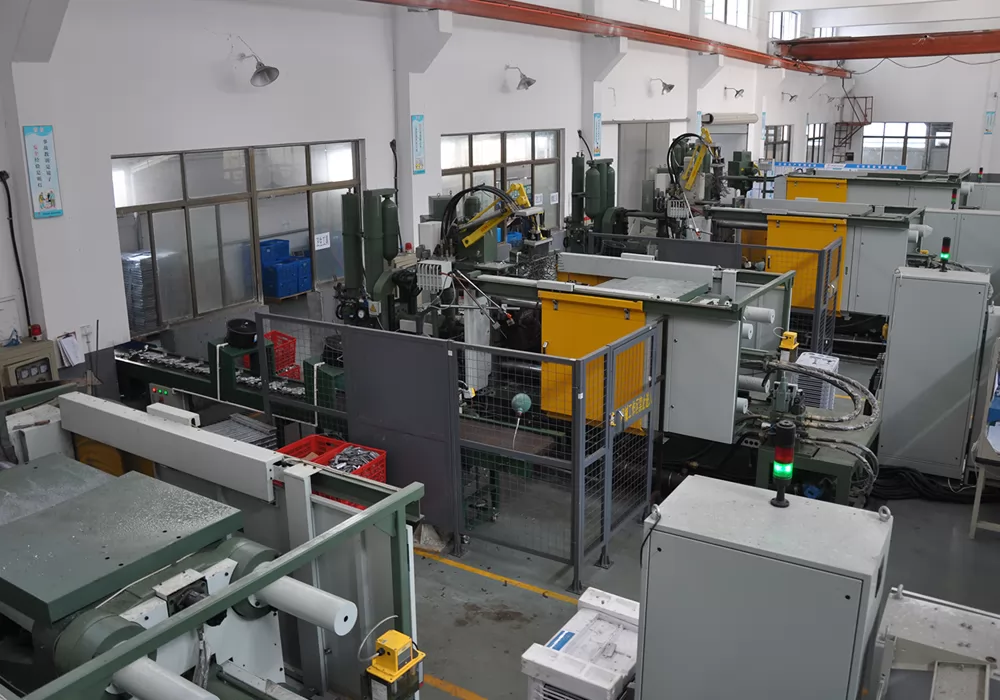
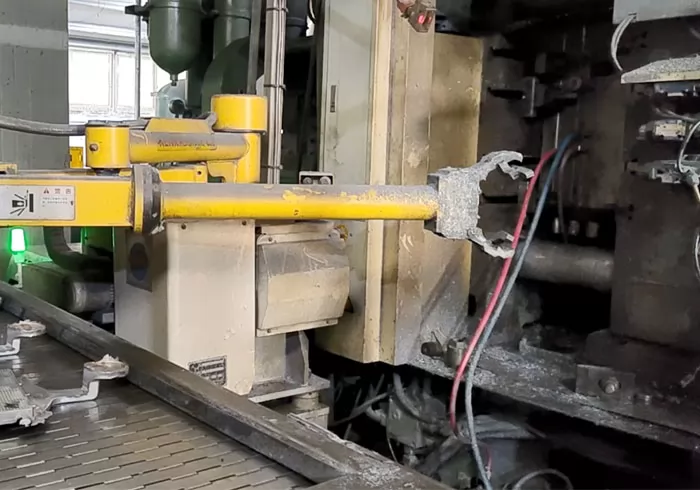
Mould making→Pressure Die Casting→Cutting the sprue and riser→Grinding→CNC Machining→Power Coating→Packaging & inspection
Production Show
FAQs
Q1. Why is ALSI12 chosen for this automotive LED work light housing?
ALSI12 is a near-eutectic aluminum-silicon alloy with excellent fluidity and castability, making it well-suited for thin-walled housings with a minimum wall thickness of 2mm. Its good thermal conductivity supports LED heat dissipation, while its natural corrosion resistance provides a solid base for the powder coating that achieves the required 600-hour salt spray performance.
Q2. Why does the 600-hour salt spray requirement place strict demands on internal casting quality?
Porosity and shrinkage defects inside the casting create pathways for moisture to penetrate through the powder coating layer, causing corrosion to develop from within. Achieving 600-hour salt spray performance therefore requires not just a good surface finish, but a dense, defect-free internal structure—controlled through optimized gate design, injection parameters, and process monitoring during die casting.
Q3. What does this housing's elongated form factor (162 × 105 × 906mm) mean for die casting?
At 906mm in length with a 2mm minimum wall thickness, this is a slender, large-format casting that is inherently prone to uneven fill, deformation, and flatness deviation. Maintaining the required 0.5mm flatness across such a length demands careful gating strategy, controlled injection speed, and mold temperature management to ensure uniform solidification along the entire part.
Q4. What functions does this housing serve beyond protecting the LED assembly?
In addition to protecting the internal LED light assembly, the housing acts as the primary thermal management component—conducting heat away from the LEDs—and provides the structural mounting interface for installation on engineering trucks. The concentricity requirement of 0.5mm on key features reflects the precision needed for the optical and mechanical alignment of the light assembly within the housing.
Q5. Why is powder coating used as the surface finish for this work light housing?
Engineering trucks operate in demanding outdoor environments where the housing is exposed to mud, moisture, UV, and mechanical impact. Powder coating forms a thick, uniform polymer layer that resists all of these far better than paint or anodizing, while also covering minor surface irregularities. For this part, it is the surface treatment layer that enables the casting to pass the 600-hour salt spray test.
Share your thoughts
Showing
6
of
0
reviews