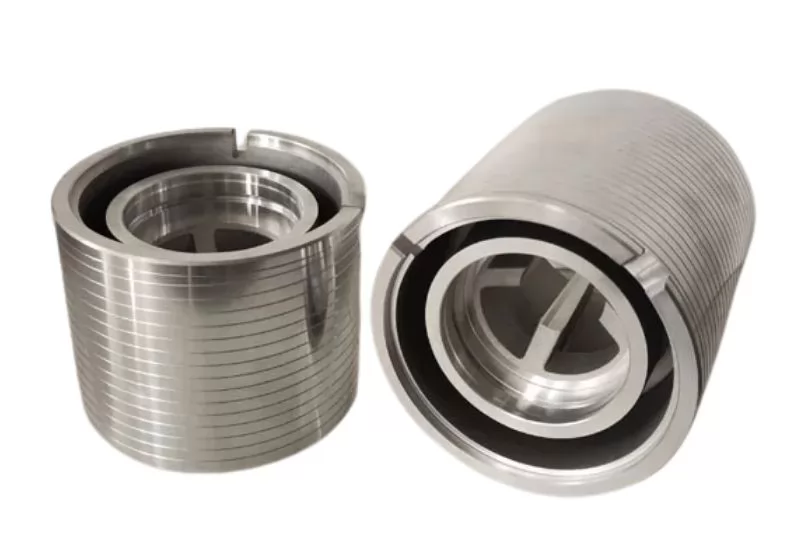
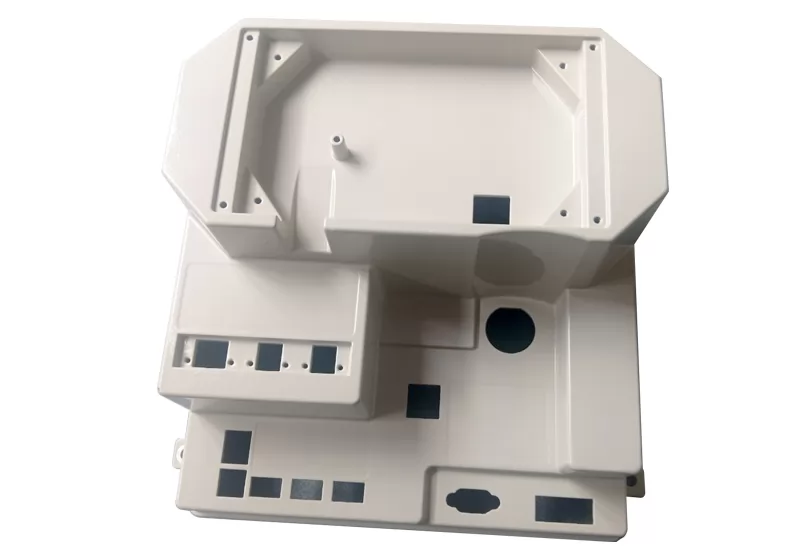
This is a custom-designed LED work light housing, commonly used in lighting assemblies for agricultural machinery such as harvesters, seeders, and other farm equipment. The LED housing not only protects the internal LED assembly but also serves multiple functions including thermal management and mechanical support.
1. Product Standards & Requirements: Material ADC12; Customer requires full dimensional compliance with drawing tolerances (ISO 2768-mk grade), including minimum dimensional tolerance of ±0.1mm and flatness tolerance of 0.2mm; Salt spray test for 240 hours must be completed and pass PPAP approval before formal mass production.
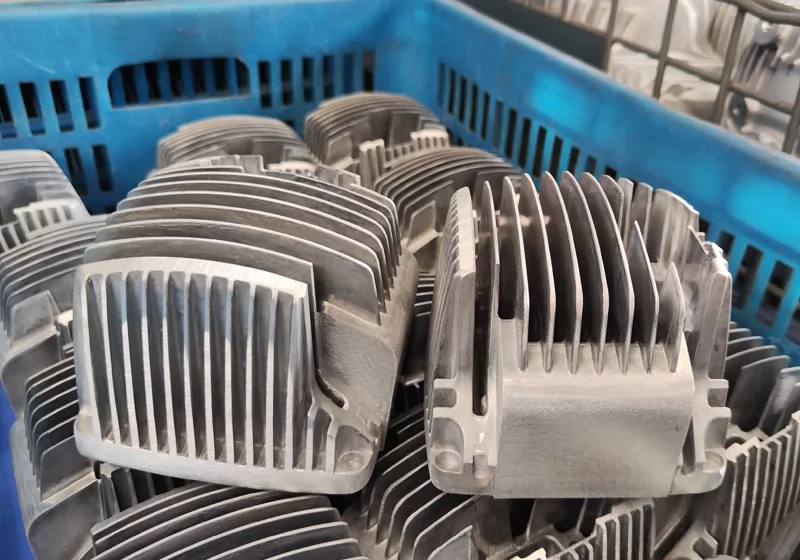
2. Product Challenges: The heat dissipation shell for this construction machinery work light features densely packed fins of varying depths. Its geometric structure predisposes localized carbon buildup and mold adhesion, demanding stringent die-casting parameters. The powder coating process is highly demanding, prone to defects.
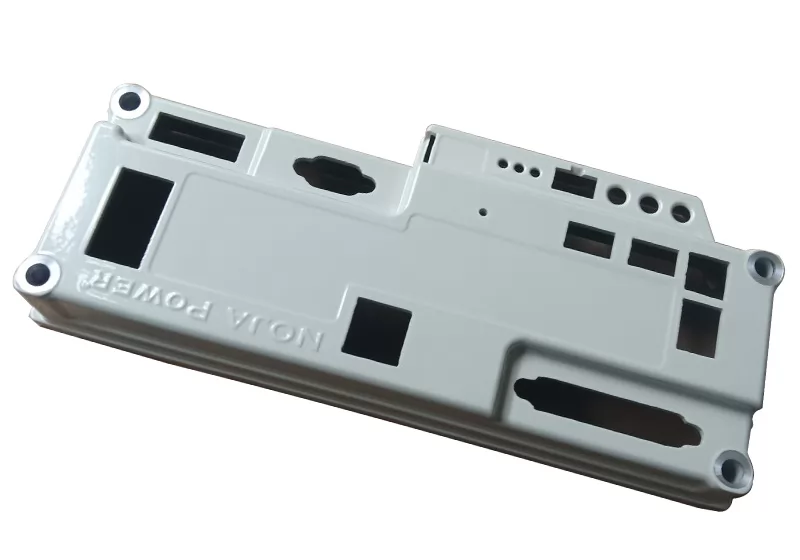
This finished aluminum die-cast housing for agricultural machinery LED work lights not only delivers outstanding performance and precision but also offers excellent thermal conductivity, corrosion resistance, lightweight construction, and robust protection. It further facilitates easy installation and maintenance. The final product fully meets the customer's design objectives, providing a higher-performance and more reliable solution for this category of components.
Production Process
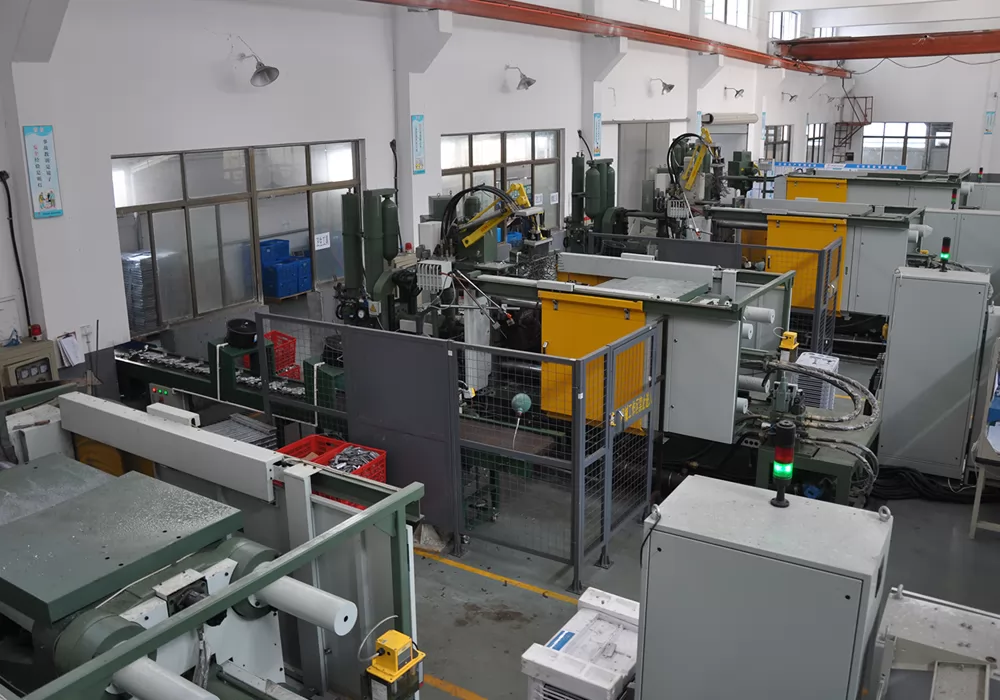
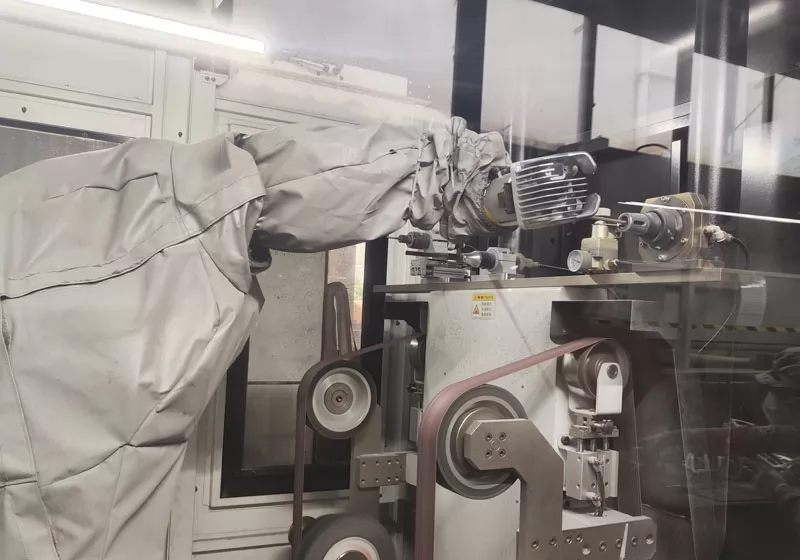
Mould making→Pressure Die Casting→Cutting the sprue and riser→Grinding→CNC Machining→Power Coating→Packaging & inspection
Production Video
FAQs
Q1. What specific demands does agricultural machinery place on a work light housing compared to other applications?
Agricultural equipment such as harvesters and seeders operates in environments combining high vibration, dust, crop debris, chemical fertilizers, and pesticide exposure—a more corrosive mix than typical construction or automotive environments. The housing must maintain structural integrity and IP sealing under these conditions across long seasonal operating hours, which drives the requirements for ADC12 material, 4mm minimum wall thickness, and 240-hour salt spray validation.
Q2. Why does this compact housing (122 × 110 × 70mm) weigh 740g, and what does that indicate about its structure?
At 740g for a relatively compact footprint, this housing is structurally denser than thinner-walled light housings. The 4mm minimum wall thickness and ADC12 material—chosen for strength over pure castability—result in a heavier but more robust part. This reflects the priority of mechanical durability for agricultural machinery, where the housing must withstand impact from stones, soil, and equipment vibration without cracking or deforming.
Q3. Why does the densely packed fin geometry on this housing cause mold adhesion, and how is it managed?
Deep, closely spaced fins restrict release agent penetration and create localized high-temperature zones at fin roots during repeated casting cycles. This causes the aluminum to bond to the mold surface—a phenomenon known as soldering or mold adhesion—leading to surface defects and mold damage. It is managed through tightly controlled injection parameters, optimized release agent dosing, and mold design measures such as adequate draft angles on all fin surfaces.
Q4. What is the significance of the 0.2mm flatness requirement on this housing?
The 0.2mm flatness applies to the sealing surfaces where the LED assembly and gasket interface with the housing. Exceeding this tolerance compromises the IP seal, allowing dust and moisture from agricultural environments to penetrate and damage the LED components. Achieving this on a 740g ADC12 casting requires controlling blank distortion during die casting and precise CNC fixturing to avoid inducing additional warpage during machining.
Q5. Why is powder coating particularly challenging on a housing with variable-depth fins?
Variable fin depths create recesses of different geometries, where electrostatic powder spray struggles to coat uniformly—shallower zones tend to attract excess powder while deep fin roots receive too little, a result of the Faraday cage effect. Achieving consistent film thickness across the entire surface, including fin roots, requires optimized spray angles and gun positioning specific to this housing's geometry to ensure uniform corrosion protection throughout the 240-hour salt spray test.
0
Comments
Share your thoughts
Showing
6
of
0
reviews
Leave a Comment
Your email address will not be published. Required fields are marked *