Custom Aluminum Electric Motor Castings for EV and Industrial Applications
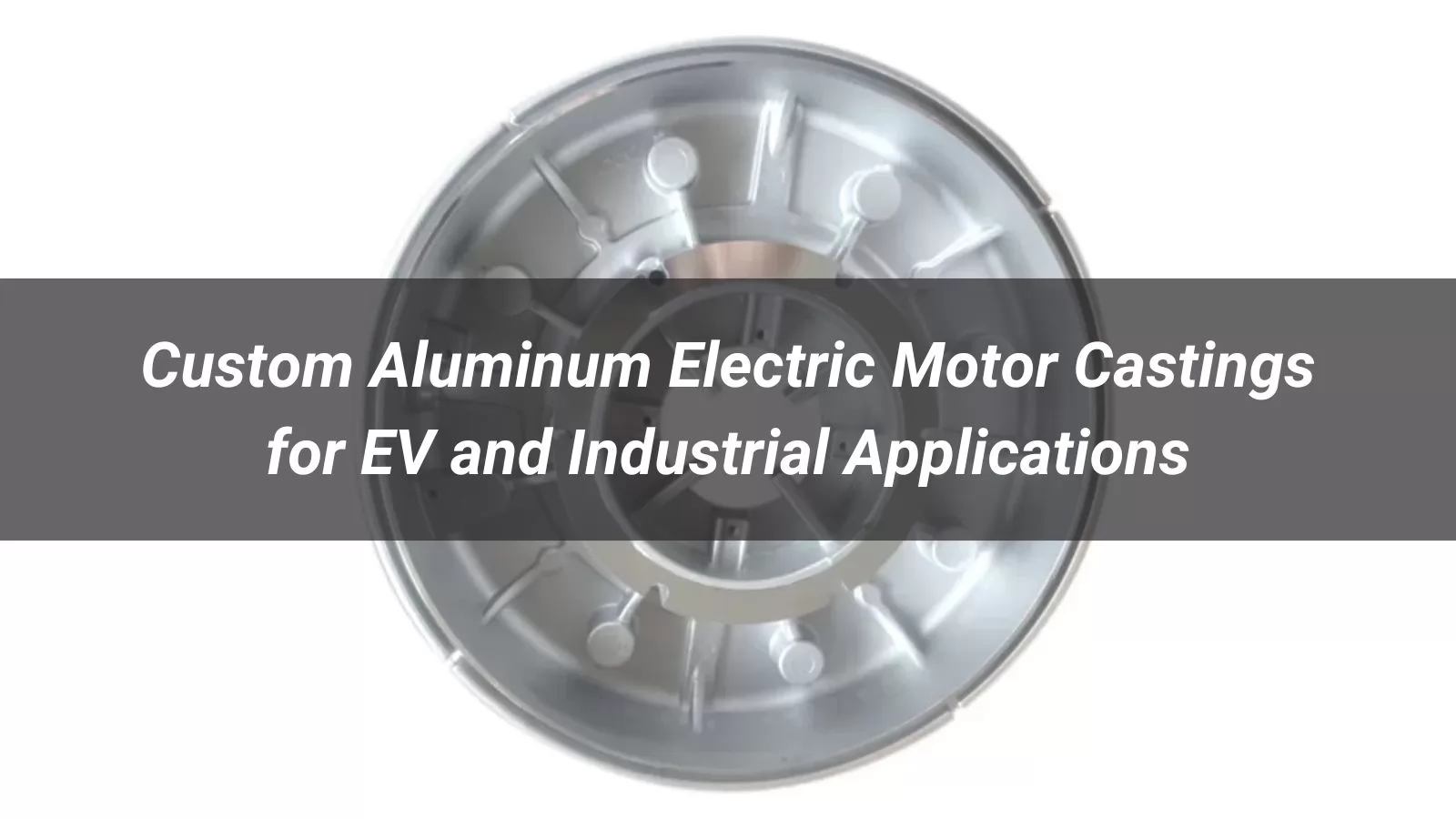
Demand for custom aluminum electric motor castings has grown sharply alongside the EV transition. Global EV production surpassed 17 million units in 2023 — and every motor in every one of those vehicles requires a precision-cast housing that balances weight, thermal performance, and structural integrity.
This guide addresses the decisions that matter most when specifying or sourcing motor housings for EV and industrial programs: alloy selection, casting process trade-offs (LPDC vs HPDC), T6 heat treatment, and what a reliable custom program looks like from drawing to production. It's written for:
- Mechanical and thermal engineers designing motor housings for EV drivetrains
- Procurement teams evaluating casting suppliers for new or existing programs
- Program managers comparing process options against cost, timeline, and quality targets
Getting the process and supplier selection right early determines whether a motor housing program hits its targets or spends months in rework — read on to see how each decision point connects.
Table of Contents
- Why Aluminum Has Become the Default Choice for EV Motor Housings
- What Design Challenges Come with Thin-Wall Motor Housings?
- Low-Pressure vs High-Pressure Die Casting: Which Process Fits Your Project?
- T6 Heat Treatment and Its Role in Motor Casting Performance
- How We Handle Custom Orders: From Drawing to First Article
- Quality Standards We Apply to Every Motor Casting
- Why Source Custom Electric Motor Castings from China?
Why Aluminum Has Become the Default Choice for EV Motor Housings
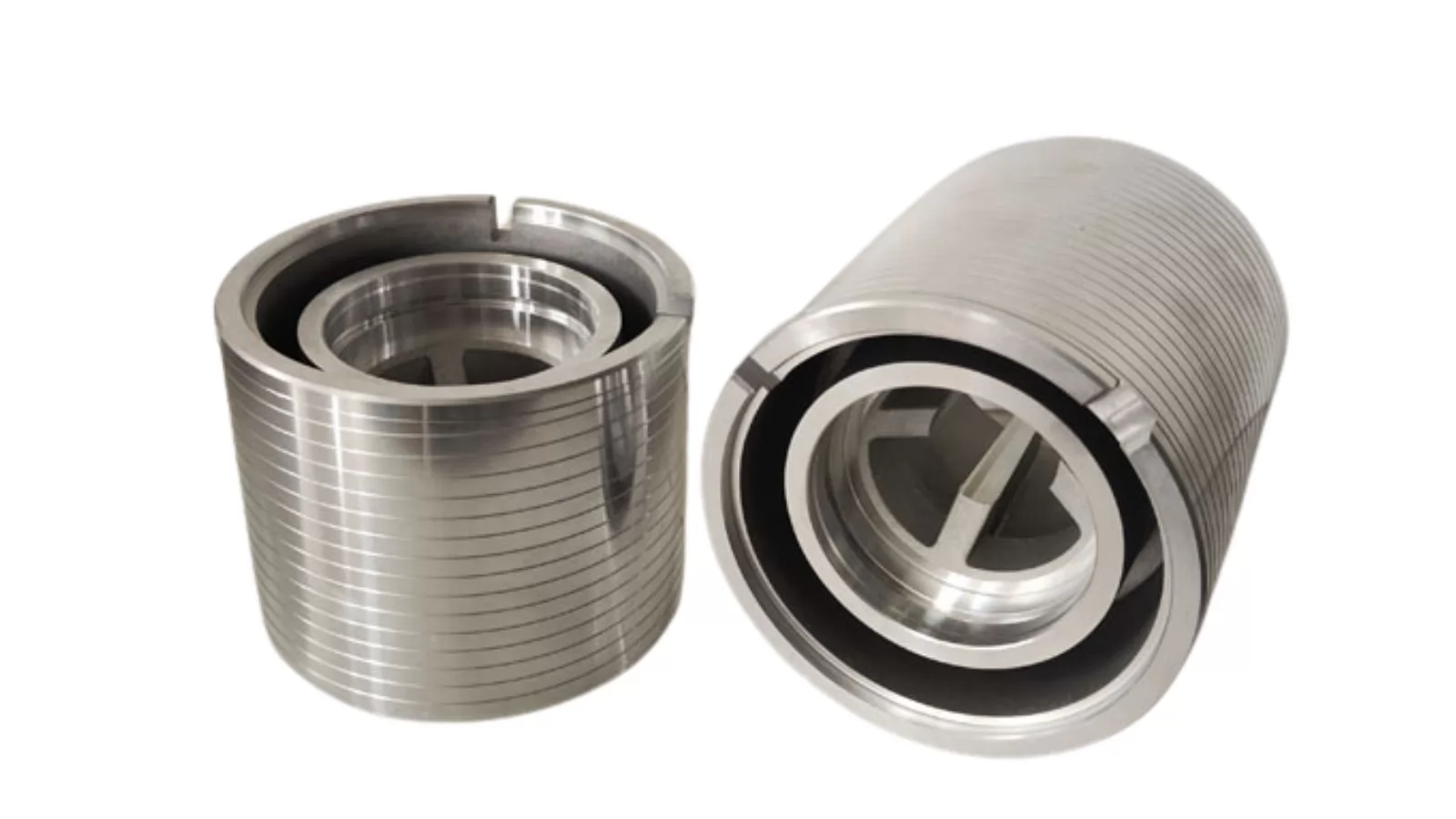
EV motors spin at 10,000–20,000 RPM. They generate intense heat. They need to stay light. And they have to survive decades of vibration and thermal cycling.
One material keeps showing up in every serious electric motor casting design: aluminum alloy.
Here's why engineers keep choosing it.
Weight Is a First-Order Problem in EVs
In a gasoline car, a heavier engine block is just inconvenient. In an EV, every extra kilogram costs range.
Aluminum weighs roughly 2.7 g/cm³. Cast iron? 7.2 g/cm³. That's nearly three times heavier for the same volume.
A Tesla Model 3 rear motor housing weighs around 8 kg in aluminum. The equivalent in cast iron would push past 21 kg — adding over 13 kg to a single drivetrain component.
Multiply that across the full powertrain, and the impact on battery range becomes hard to ignore.
Heat Exits Faster Through Aluminum
Aluminum conducts heat at roughly 150–200 W/m·K. Steel sits around 50 W/m·K.
That gap is critical. A motor housing isn't just structural — it's a heat sink. The faster heat moves out of the stator and into the cooling jacket, the longer the motor can run at peak load.
In high-performance EVs like the BYD Seal or BMW i4, the aluminum motor housing doubles as the primary thermal interface between the stator laminations and the liquid cooling circuit. Thin walls, precision-cast internal channels, tight tolerances — all made practical because aluminum machines and casts predictably.
Not All Aluminum Is the Same
The alloy choice changes everything. Here's how the most common options compare for motor housing applications:
Each alloy suits a different production method and performance target.
| Alloy | Process | Tensile Strength | Best For |
|---|---|---|---|
| ADC12 (A383) | High-pressure die casting | ~310 MPa | High-volume, complex geometry |
| A356 | Low-pressure / gravity casting |
~230 MPa (as-cast) ~310 MPa (T6) |
Structural housings, T6 heat treatment |
| 6061 | Forging / CNC machining | ~310 MPa (T6) | Small-batch, tight-tolerance parts |
For most custom EV motor housings, A356-T6 hits the best balance of strength, porosity control, and dimensional stability — especially when the design calls for integrated cooling channels or thin walls below 3 mm.
Aluminum Casts the Shapes That EV Motors Actually Need
Modern EV motor housings aren't simple cylinders. They carry:
- Internal helical or spiral cooling passages
- Precision bearing seats (tolerances within ±0.02 mm)
- Integrated mounting flanges and connector bosses
- Wall thicknesses as thin as 2.5 mm in some sections
Aluminum flows into complex molds at relatively low temperatures (~680°C). It solidifies quickly, holds fine detail, and responds well to post-cast machining.
Real-world example: A European Tier 1 supplier switched from a fabricated steel housing to a low-pressure aluminum casting for their 800V axial flux motor program. Result: 34% weight reduction, cooling performance improved by 18%, and part count dropped from 7 to 1.
That kind of consolidation — fewer parts, better performance, lower mass — is exactly what EV programs are chasing right now.
What Design Challenges Come with Thin-Wall Motor Housings?
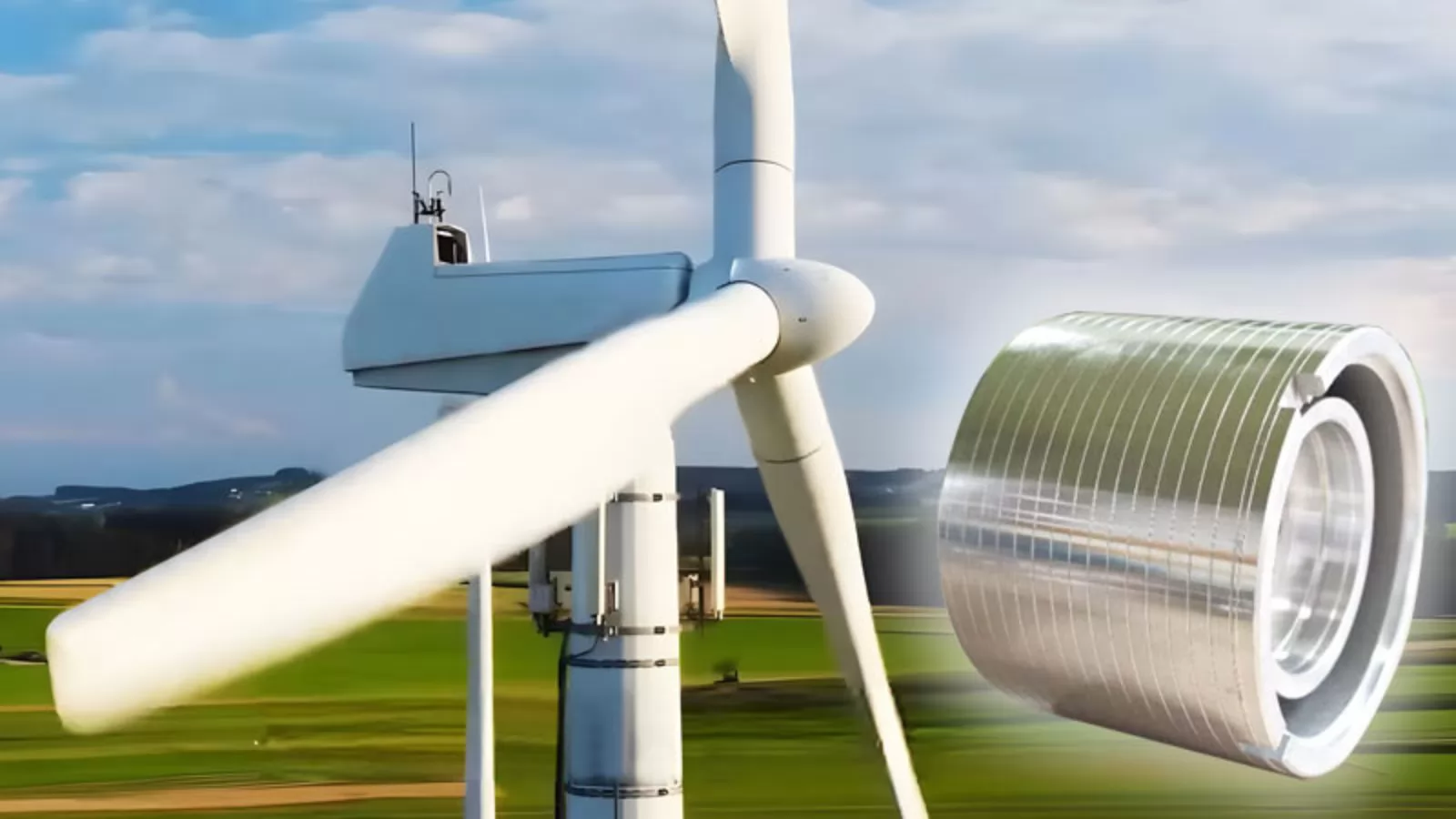
Thin walls save weight. But they make everything else harder.
When wall thickness drops below 3 mm, the casting process, the alloy, and the tooling all have to work together precisely — or the part fails before it reaches the motor.
Metal Has to Fill Fast, Cool Evenly
Thin sections cool faster than thick ones. If molten aluminum reaches a thin wall too slowly, it solidifies mid-fill — creating cold shuts, misruns, or surface defects.
Gate location, runner design, and fill speed all have to be calculated for the specific geometry. A housing with 2.5 mm walls in one section and 8 mm flanges in another needs a carefully staged fill sequence. These are among the most common die casting defects teams encounter on thin-wall programs.
One common failure mode: a motor housing with integrated cooling channels that showed consistent porosity at the same location across 200+ castings. Root cause — a 2.8 mm wall directly opposite a thick flange, creating a shrinkage hot spot. Resolved by adding a localized chill in the tool.
Integrated Cooling Channels Add Complexity
Most EV motor housings run liquid cooling through cast-in passages — no separate jacket required.
These channels typically run 4–8 mm wide, with walls as thin as 2–3 mm separating the coolant from the stator bore. Casting them requires:
- Salt cores or sand cores to hold the channel geometry during fill
- Post-cast pressure testing (typically 5–10 bar) to confirm no leakage paths
- X-ray or CT inspection at first article to verify wall integrity
Any porosity in those walls becomes a coolant leak under thermal cycling — which is why core quality and alloy selection aren't optional here.
Bearing Seats and Bore Coaxiality
The stator bore and both bearing seats have to stay coaxial — typically within 0.05 mm total runout — or the rotor clearance suffers and vibration increases.
Aluminum castings move during cooling. Residual stress, non-uniform wall sections, and uneven die temperatures all introduce distortion.
Controlling this requires:
- Consistent die temperature (±5°C across the tool face)
- Defined ejection temperature to minimize post-eject warpage
- Stress relief or T6 heat treatment before final machining
Sealing Faces Need More Attention Than People Expect
Motor housings bolt to inverter housings, gearboxes, and end shields. Every mating face is a potential leak path for coolant or contamination.
As-cast surfaces typically achieve Ra 6.3–12.5 μm. Most sealing applications require Ra 1.6–3.2 μm — meaning every critical face needs post-cast machining.
When thin walls sit close to a sealing face, machining stock has to be planned into the casting from the start. Leave too little, and you're cutting into structural material.
Low-Pressure vs High-Pressure Die Casting: Which Process Fits Your Project?
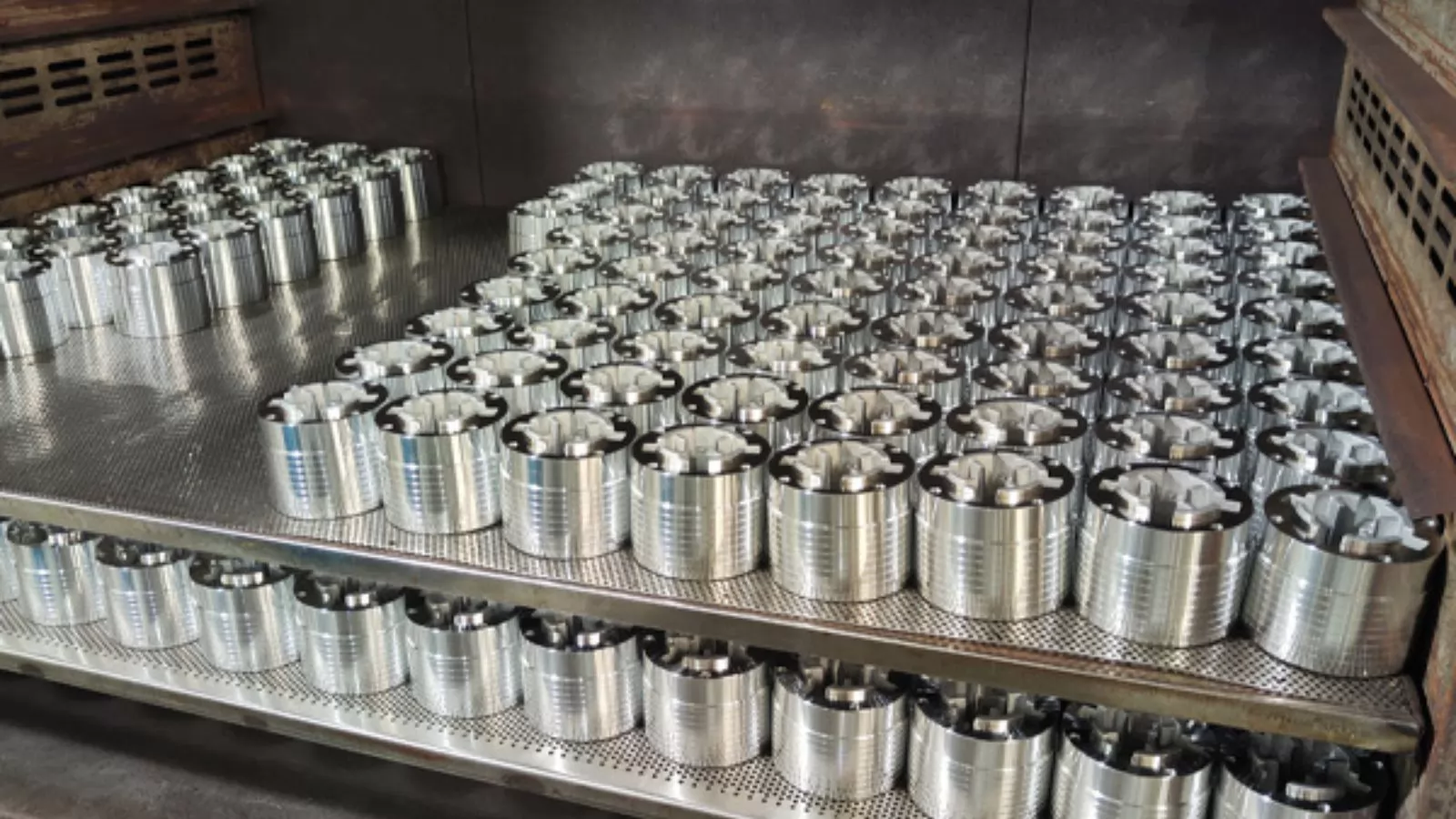
Both processes use permanent steel dies. Both produce aluminum castings. But the results — and the trade-offs — are very different.
Choosing the wrong process early costs money in tooling, rework, or scrapped first articles.
How Each Process Works
The fundamental difference is how metal enters the die.
| Low-Pressure Die Casting (LPDC) | High-Pressure Die Casting (HPDC) | |
|---|---|---|
| Fill method | Pressurized gas pushes melt upward (0.3–1.5 bar) | Hydraulic plunger injects at high speed (500–1500 bar) |
| Fill speed | Slow, laminar flow | Fast, turbulent fill |
| Porosity level | Low — suitable for heat treatment | Higher — T6 typically not applicable |
| Cycle time | 3–8 minutes | 30–90 seconds |
| Tooling cost | Moderate | Higher |
| Part size | Medium to large | Small to medium |
Understanding these differences helps clarify which process matches your part requirements — not just your budget.
When Low-Pressure Casting Makes Sense for Motor Components
LPDC is the process of choice when the casting needs to be heat-treated — specifically T6.
Because metal rises slowly and fills the die from the bottom up, trapped gas is minimized. The result is a dense, low-porosity casting that can go through solution heat treatment without blistering or deforming.
LPDC suits motor housings that:
- Require T6 treatment for structural strength (A356-T6 tensile: ~310 MPa)
- Have integrated cooling channels with thin surrounding walls
- Are medium-to-large in size (typically 200 mm bore and above)
- Run in lower annual volumes (5,000–50,000 parts/year)
A 400V passenger EV rear motor housing — 320 mm OD, integrated spiral cooling jacket, 2.8 mm minimum wall — is a typical LPDC application. The part requires T6 to meet NVH targets, and volumes sit at around 30,000/year. HPDC tooling cost would be hard to justify, and the porosity from HPDC would prevent heat treatment anyway.
When High-Pressure Die Casting Is the Right Call
HPDC wins on cycle time and per-part cost at scale.
When annual volumes exceed 100,000 parts, the faster cycle time and higher automation compatibility of HPDC typically offset the higher tooling investment. It also handles complex, thin-section geometry well — provided T6 heat treatment isn't required.
HPDC suits motor-related components that:
- Don't require post-cast heat treatment (end shields, brackets, inverter housings)
- Have relatively uniform wall sections (easier to manage turbulent fill)
- Need high cosmetic or dimensional consistency across large runs
- Run at high volumes (100,000+ parts/year)
| Application | Recommended Process | Key Reason |
|---|---|---|
| EV motor housing (structural) | LPDC + T6 | Low porosity required for heat treatment |
| Motor end shield | HPDC | High volume, no T6 needed |
| Inverter housing | HPDC | Complex thin-wall geometry, large runs |
| Industrial motor frame (>5 kW) | LPDC or gravity casting | Lower volume, structural requirements |
Still unsure which process fits your design? Share your drawing and annual volume — we'll give you a direct recommendation.
T6 Heat Treatment and Its Role in Motor Casting Performance
As-cast aluminum is softer than it needs to be for most motor housing applications. T6 heat treatment changes that.
T6 is a two-stage process: solution heat treatment followed by artificial aging. It's not cosmetic — it restructures the alloy at a microstructural level.
| A356 As-Cast | A356-T6 | |
|---|---|---|
| Tensile strength | ~170 MPa | ~310 MPa |
| Yield strength | ~85 MPa | ~260 MPa |
| Hardness (Brinell) | ~55 HB | ~90 HB |
That's nearly double the strength from the same alloy — with no change to part geometry or weight.
What the Process Actually Involves
Solution treatment heats the casting to ~540°C, holding it long enough to dissolve alloying elements into a uniform solid solution. Then it's quenched rapidly — usually in water — to lock that structure in place.
Artificial aging follows at ~155–165°C for 4–8 hours. This controlled precipitation hardening is what drives the strength increase.
Timing and temperature control matter. Over-aging softens the part. Uneven quenching introduces distortion — a particular concern for thin-wall housings with integrated cooling channels.
When T6 Is and Isn't Necessary
T6 is worth specifying when the housing carries structural load, needs to hold tight bearing fits over a wide temperature range, or has to meet NVH targets in high-speed motors.
It's not compatible with HPDC parts — the entrapped gas from high-pressure injection causes blistering during solution treatment. T6 is a LPDC or gravity casting process.
For brackets, end shields, and non-structural covers, as-cast or T5 aging is usually sufficient.
How We Handle Custom Orders: From Drawing to First Article
_1775787186_WNo_1600d900.webp)
Custom motor castings aren't catalog items. Every project starts with a specific geometry, a specific alloy, and a set of requirements that have to be met before production begins.
Here's how we move from your files to a verified first article.
Step 1 — DFM Review Before Any Tool Is Cut
We review your 3D model and 2D drawings for castability before quoting tooling.
We're looking for wall sections that are too thin to fill reliably, draft angles that will cause die sticking, isolated thick sections that will shrink, and features that are better machined than cast.
If we find issues, we flag them with specific suggestions — not just a rejection. Most DFM feedback is returned within 3 business days.
A recent project came in with 1.8 mm walls on the cooling jacket outer skin. We recommended increasing to 2.5 mm in two areas and adding a localized gate. Casting yield went from an estimated 60% to over 92% before the first trial.
Step 2 — Tooling Design and Mold Flow Simulation
Once DFM is signed off, we move to tool design. For complex motor housings, we run mold flow simulation before committing steel to verify fill pattern, predict shrinkage, and confirm the cooling circuit layout in the die.
Simulation catches problems that experience alone misses — especially on new geometries with asymmetric wall sections or unconventional gating requirements.
Tool lead time: typically 4–7 weeks depending on complexity. We use H13 tool steel as standard for EV motor housing dies.
Step 3 — Trial Casting and Process Development
First trials focus on process stability, not part perfection. We're establishing:
- Fill pressure and speed parameters
- Die temperature profile across zones
- Cycle time and ejection timing
- Initial dimensional baseline against your nominal
Trial parts are sectioned, X-rayed, and dimensionally mapped. We typically run 2–3 trial shots before locking parameters.
Step 4 — First Article Inspection (FAI)
Before any production parts ship, we complete a full FAI package. This covers every dimension on the drawing — not just the critical ones.
| Inspection Item | Method | Standard |
|---|---|---|
| All drawing dimensions | CMM (ZEISS / Hexagon) | 100% of GD&T callouts |
| Internal porosity | X-ray / CT scan | ASTM E505 or customer spec |
| Cooling channel integrity | Pressure test (water/air) | Typically 8–10 bar, 3 min hold |
| Mechanical properties | Tensile test on witness bars | Per alloy spec (e.g. A356-T6) |
| Surface condition | Visual + profilometer | Ra per drawing callout |
FAI report is submitted for your approval before production release. No production run starts without sign-off.
Step 5 — Production Handoff and Process Control Plan
Once FAI is approved, we document everything into a process control plan: locked parameters, inspection frequency, reaction steps for out-of-spec results, and traceability requirements.
Every production batch ships with a material certificate, dimensional report, and heat treatment record where applicable.
Typical total lead time from drawing receipt to FAI approval: 6–10 weeks for a new motor housing tool.
Quality Standards We Apply to Every Motor Casting
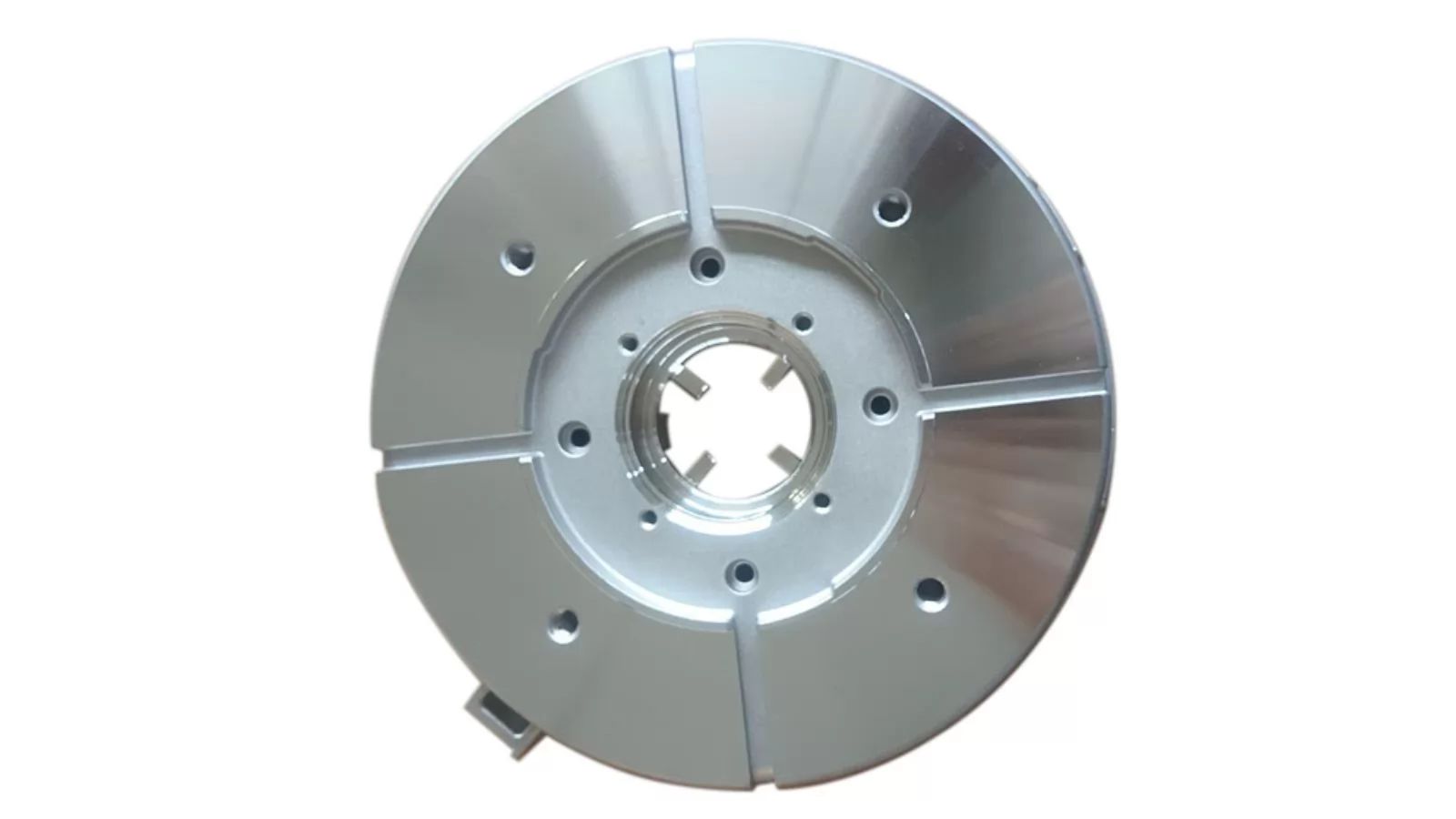
Quality on motor castings isn't a checklist — it's built into the process.
Here's what happens before any casting leaves our facility.
Material Starts Here
Every aluminum ingot is spectrometer-verified on arrival. We check against the alloy certificate and reject batches outside composition tolerance before they reach the furnace.
Melt cleanliness is monitored during production — degassing and flux treatment are standard for motor housing alloys to minimize hydrogen porosity.
In-Process Checks
We don't wait for the end of a production run to find problems.
- Die temperature logged every cycle
- First-off and last-off parts dimensionally checked each shift
- Visual inspection at ejection for cold shuts, misruns, and surface defects
- Random CMM sampling at defined intervals
Final Inspection and Release
Critical dimensions are verified on CMM before shipment. Cooling channel castings are pressure-tested 100% — every part, not a sample.
For IATF 16949-aligned programs, we provide full PPAP documentation on request: control plan, APQP, MSA, and capability studies (Cpk ≥ 1.67 on critical dimensions).
Parts ship with full traceability — heat number, die cavity ID, production date, and inspection records linked to each batch.
Why Source Custom Electric Motor Castings from China?
It's a fair question — and the answer has changed significantly in the last decade.
China's aluminum casting industry has moved well past low-cost, low-complexity work. For EV motor components specifically, several structural advantages make Chinese suppliers hard to ignore.
Tooling Costs Are Genuinely Lower
A complex motor housing die — H13 steel, multi-cavity, with slides — typically costs $15,000–$35,000 in China. The equivalent tool from a European or North American supplier often runs $50,000–$100,000+.
That gap matters most at the program development stage, when design iterations are frequent and tooling revisions are inevitable.
One EV startup running three motor variants through development cut their tooling budget by 58% by moving die work to China — while keeping final machining and assembly local. The savings funded two additional prototype iterations.
Aluminum Supply Chain Depth
China produces over 60% of the world's primary aluminum. Foundries operate close to smelters, with short, stable supply lines for ingot and master alloys.
For high-specification alloys like A356 used in T6 motor housings, this means consistent material availability — not the allocation constraints that affect suppliers in other regions.
Direct EV Program Experience
China's domestic EV market is the largest in the world. BYD, NIO, Li Auto, SAIC — their supply chains have spent the last 5–8 years solving exactly the manufacturing problems that EV motor castings present.
Thin walls. Integrated cooling. T6 heat treatment. IATF-aligned quality systems. These aren't new challenges for Chinese foundries focused on this segment — they're daily production.
Faster Iteration for Development Programs
Tool modifications — adding a rib, adjusting a cooling channel, changing a draft angle — typically turn around in 1–2 weeks in China versus 4–6 weeks in many Western markets.
For programs still in active development, that speed compounds across multiple revision cycles.
What to Verify Before Committing
Lower cost doesn't eliminate risk. Before placing a motor casting program, it's worth confirming:
- Does the supplier have direct experience with T6 heat-treated LPDC castings?
- Can they provide X-ray and CMM reports from comparable programs?
- Do they operate under IATF 16949 or an equivalent quality system?
- What's their process for managing engineering changes mid-production?
The suppliers that can answer those questions with documentation — not just assurances — are the ones worth working with.
Conclusion
EV motor housings demand more from a casting than most structural components. Thin walls, integrated cooling, tight tolerances, and T6 heat treatment requirements all have to be addressed before the first production part runs.
Choosing the right alloy, the right process, and the right supplier early prevents the kind of rework that derails program timelines.
If you're reviewing a motor housing design or re-sourcing an existing program, send us your drawings. We'll give you a direct assessment — process recommendation, DFM feedback, and a quote — without the back-and-forth.
0
Comments
Leave a Comment
Your email address will not be published. Required fields are marked *
Name can't be empty
Email error!
Message can't be empty
😍
😜
😳
😌
😄
😘
😝
😒
😃
😚
😚
😛
😟
😧
😀
😉
😓
😱
😤
😣
😂
😥
😩
😠
😢
😭
😰
😨
😡
😆
😪
😅
😐
😇
😋
😴
👿
😕
😏
😷
😵
😟
😮
😯
😑
👧
👴
😧
😬
😾
👶
👱
👵
👸
🙀
👺
👦
👩
👨
😽
😿
🙈
💩
💥
💤
😼
😹
🙉
🔥
✨
💦
👎
✌
👆
👈
💪
💹
👍
👊
💴
💶
💷
💸
👉
💵
🙏
🌎
🏧
👏
💳
👇
💑
🙆
🙅
💁
👫
👭
🙎
🙇
👑
👔
Submit Comment
Most Popular
-
 Jan 30, 2026Aluminum Die Casting Cost Breakdown: From Material to Machining
 -
 Oct 22, 2025Top 10 Aluminium Die Casting Manufacturers and Suppliers in the World
 -
 Oct 29, 2025Top 10 Aluminium Casting Foundries and Companies in China
 -
 Nov 26, 2025Top 10 Aluminium Low Pressure Die Casting Manufacturers in the World 2026


Laster Blogs
-
 Apr 10, 2026Custom Aluminum Electric Motor Castings for EV and Industrial Applications
 -
 Apr 09, 2026Custom Aluminium Marine Castings: Alloy Selection, Corrosion Protection, and Sourcing Guide
 -
 Apr 08, 2026Custom Automotive Aluminum Castings from China - What Buyers Need to Know
 -
 Mar 31, 2026Cost of Investment Casting: What Buyers and Engineers Need to Know


Send RFQ Today
Name can't be empty
Email error!
Send Your Message
Note: If you are looking for a job, please send an email to it2@innovaw.com