What Is Zamak? A Complete Guide to Zinc Die Casting Alloy
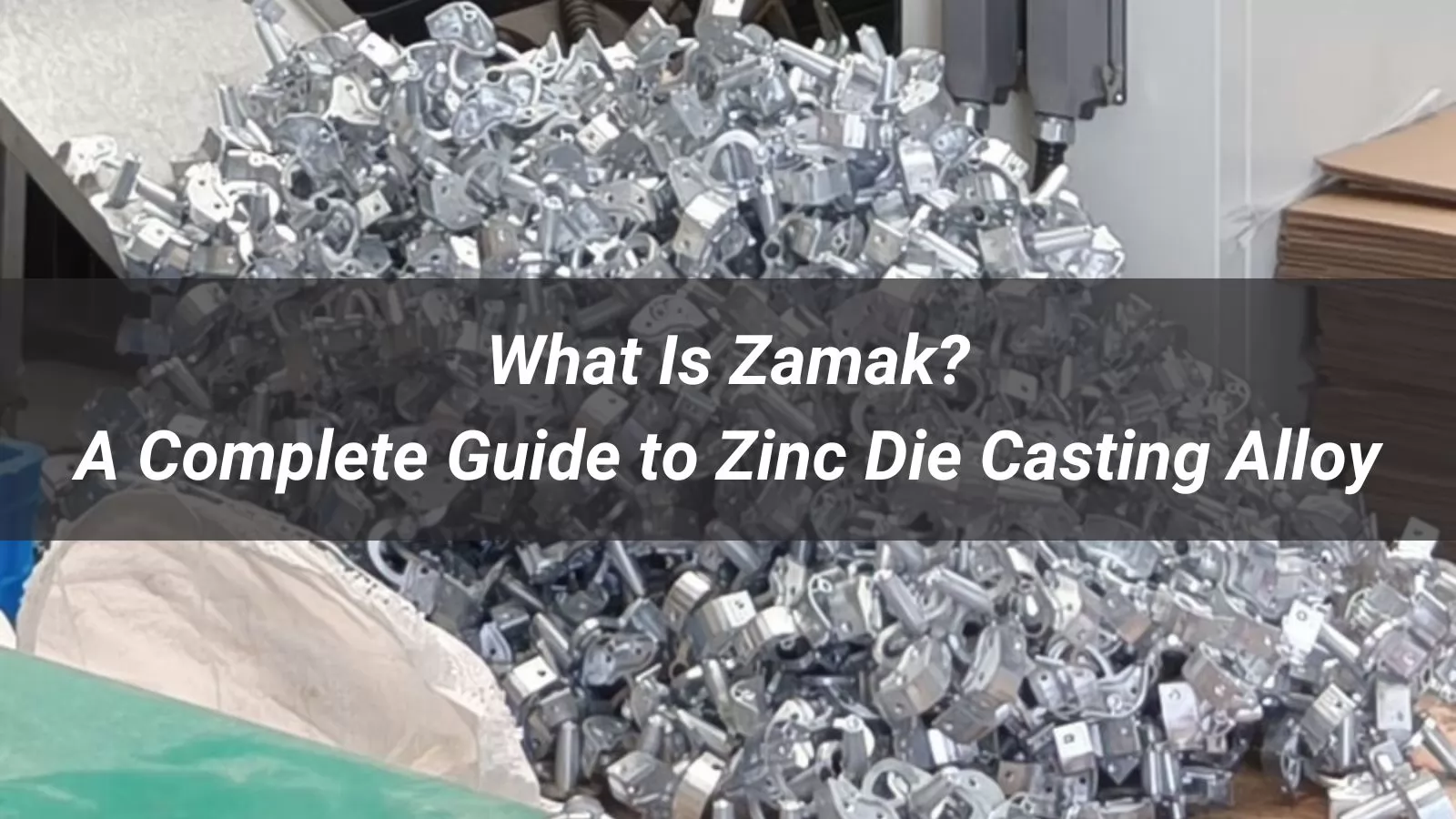
Across the global manufacturing industry, what is zamak has become one of the most searched questions among product designers and procurement engineers alike. That curiosity is well-founded — zamak quietly sits at the heart of billions of everyday products, from automotive door handles to luxury fashion hardware, yet remains largely unknown outside professional circles.
At its core, zamak is a family of zinc-based die casting alloys composed of zinc, aluminium, magnesium, and copper. With global zinc alloy die casting demand continuing to grow — driven by lightweighting trends in automotive, premiumization in consumer goods, and cost pressure across electronics manufacturing — understanding this material has never been more commercially relevant. This guide is written for:
- Product designers and engineers evaluating materials for new components
- Procurement and sourcing professionals comparing casting alloy options
- Brand owners in fashion, hardware, or consumer goods seeking reliable manufacturing solutions
- Anyone new to die casting who needs a clear, practical foundation
From alloy composition and grade selection to the full zinc die casting process, surface treatments, and industry applications, this guide covers everything you need to make an informed material decision — read on to find out whether zamak is the right fit for your next project.
Table of contents
- Introduction
- The Origin of Zamak: Name, History & Evolution
- Chemical Composition: What's Inside Zamak?
- Zamak Grades Comparison
- Key Properties of Zamak Alloys
- The Zamak Die Casting Process
- Surface Treatment Options
- Advantages & Limitations of Zamak
- Applications Across Industries
- Zamak vs. Other Die Casting Alloys
- Frequently Asked Questions
- Conclusion
Introduction: The Unsung Alloy in Everyday Manufacturing
_1773984016_WNo_1600d900.webp)
Look closely at the door handle you grip every morning, the zipper pull on your jacket, or the buckle on a luxury handbag — chances are, you are holding a piece of zamak metal without knowing it.
So, what is zamak? It is a family of zinc-based alloys engineered for high-pressure die casting, combining strength, dimensional precision, and excellent surface finish at a cost that few competing materials can match.
This guide covers everything from its composition and grades to applications and material comparisons — whether you are an engineer evaluating materials or simply curious about what zamak is used for.
The Origin of Zamak: Name, History & Evolution
"Zamak" is an acronym rooted in the German language: Zink · Aluminium · Magnesium · Kupfer (copper). You may also see it spelled "zamac" in French and Portuguese-speaking markets — both refer to the same alloy family.
It was first developed in the late 1920s by the New Jersey Zinc Company, with a clear goal: to overcome the brittleness of earlier zinc alloys and create a material that melted cleanly, flowed well into molds, and held tight tolerances after solidification. The patent followed in 1929.
Adoption was rapid. By the 1930s, automotive, toy, and hardware manufacturers were already replacing brass and steel components with zamak parts — without sacrificing surface quality or structural performance. Over the following decades, the alloy family expanded into multiple grades, each tuned for specific applications. What started as a cost-driven substitute has since become a precision engineering material trusted in demanding industries worldwide.
Chemical Composition: What's Inside Zamak?
Zamak material is built on a zinc-dominant base — typically 95–96% zinc — with three alloying elements added in precise proportions. Each one plays a distinct role:
- Aluminium (3.5–4.3%) — improves fluidity during casting and enhances overall strength
- Magnesium (0.03–0.06%) — refines grain structure, increases hardness, and reduces intergranular corrosion
- Copper (0–1.25%) — raises tensile strength and wear resistance; amount varies by grade
Beyond these three, trace impurities such as iron (Fe), lead (Pb), and tin (Sn) are tightly controlled — even small deviations can degrade fluidity, surface finish, and long-term dimensional stability. This is why alloy purity is a non-negotiable factor in zamak die casting quality.
Zamak Grades: A Complete Comparison
The zamak family covers five main grades, each sharing the same zinc-aluminium-magnesium-copper foundation but differing in copper content and aluminium ratio — small shifts that produce meaningfully different mechanical profiles.
| Grade | Al (%) | Cu (%) | Tensile Strength | Key Characteristic | Typical Applications |
|---|---|---|---|---|---|
| Zamak 2 | 3.9 | 2.7 | ~359 MPa | Highest strength, least ductile | Gears, structural components |
| Zamak 3 | 3.9 | ≤0.03 | ~283 MPa | Best castability & dimensional stability | Door handles, toys, hardware, electronics |
| Zamak 5 | 3.9 | ~1.0 | ~328 MPa | Higher strength than Zamak 3 | Lock parts, automotive connectors, tools |
| Zamak 7 | 3.9 | ≤0.01 | ~283 MPa | Highest purity, best for thin walls | Fine detail parts, thin-walled castings |
| Zamak 12 | ~10.5 | ≤0.01 | ~404 MPa | High aluminium, superior wear resistance | Heavy-duty parts, pump housings, power tools |
How to Choose the Right Grade
Not sure which grade fits your project? Here is a quick rule of thumb: start with Zamak 3 for general-purpose casting, move to Zamak 5 when mechanical loads increase, and consider Zamak 2 or Zamak 12 only for heavy-duty or high-wear scenarios.
For most general-purpose die casting projects, Zamak 3 is the default starting point — it offers the best balance of castability, surface quality, and cost. Step up to Zamak 5 when parts need to handle higher mechanical loads or wear. Reserve Zamak 2 and Zamak 12 for demanding structural or heavy-duty applications where strength and hardness take priority over ease of casting.
Key Properties of Zamak Alloys
Understanding what zamak metal offers mechanically helps clarify why it suits so many applications — and where its limits lie.
Mechanical & Physical Properties
| Property | Zamak 3 | Zamak 5 | Zamak 12 |
|---|---|---|---|
| Tensile Strength | ~283 MPa | ~328 MPa | ~404 MPa |
| Brinell Hardness | ~82 HB | ~91 HB | ~105 HB |
| Melting Point | 380 – 420°C | ||
| Density | ~6.6 g/cm³ | ||
| Min. Wall Thickness | 0.5 mm | ||
| Dimensional Tolerance | ±0.05 mm | ||
How Zamak Compares to Other Metals
Stacking zamak against other common casting materials helps put its strengths and trade-offs in perspective.
| Material | Melting Point | Density | Tensile Strength | Castability | Relative Cost |
|---|---|---|---|---|---|
| Zamak (Zn alloy) | ~400°C | 6.6 g/cm³ | 283–404 MPa | Excellent | Low |
| Aluminium alloy | ~660°C | 2.7 g/cm³ | 150–310 MPa | Good | Low–Medium |
| Brass (Cu alloy) | ~900°C | 8.5 g/cm³ | 310–450 MPa | Moderate | High |
| Steel | ~1400°C | 7.8 g/cm³ | 400–600 MPa | Poor | Medium |
| Magnesium alloy | ~650°C | 1.8 g/cm³ | 150–250 MPa | Good | Medium–High |
Zamak's low melting point reduces energy consumption and extends mold life significantly compared to aluminium or brass. Its castability is unmatched for complex, thin-walled parts — though its higher density makes it less suitable where weight is a primary constraint. For a detailed side-by-side breakdown, see our guide on zinc vs aluminum die casting.
The Zamak Die Casting Process: Step by Step
Zamak is almost exclusively processed through high-pressure die casting — a method well-suited to its low melting point, excellent fluidity, and fast solidification characteristics.
Step 1 — Mold Design & Manufacturing
The die casting tooling must account for alloy shrinkage, draft angles, cooling channel layout, and venting. A well-designed mold is the single biggest factor in part consistency and mold longevity.
Step 2 — Alloy Melting & Temperature Control
Zamak is melted at around 420°C under carefully controlled conditions. Iron contamination is the primary risk at this stage — even trace amounts reduce fluidity and weaken mechanical properties.
Step 3 — Mold Clamping & High-Pressure Injection
The machine applies a clamping force of 50–100 MPa, then injects molten zamak into the cavity at approximately 15–45 m/s. The entire fill typically completes within 0.01–0.2 seconds — fast enough to reach every corner before solidification begins.
Step 4 — Cooling & Solidification
Zamak solidifies quickly — usually within a few seconds. Cooling channels within the mold control temperature uniformity, minimizing shrinkage, porosity, and warping.
Step 5 — Mold Opening & Part Ejection
Once sufficiently solidified, ejector pins push the casting out of the cavity. Timing and ejection force must be precise to avoid surface damage or dimensional distortion.
Step 6 — Gate Trimming & Scrap Recycling
Runners, gates, and overflow material are trimmed using dedicated dies and immediately fed back into the melt — a closed-loop process that makes zamak essentially 100% recyclable with no material waste.
Surface Treatment Options
One of zamak's most practical strengths is its compatibility with a wide range of surface finishing processes — making it equally at home in functional industrial parts and high-end decorative products.
Pre-Treatment: Cleaning & Preparation
Before any coating is applied, castings go through deburring and surface cleaning. Vibratory finishing removes fine edge burrs, while sandblasting creates a uniform matte texture and improves coating adhesion. These steps directly determine how well subsequent treatments bond and last.
Finishing Options at a Glance
| Treatment | Effect | Typical Use Case |
|---|---|---|
| Electroplating (Ni, Cr, Au) | Metallic sheen + corrosion resistance | Decorative hardware, fashion accessories |
| Powder Coating | Durable color layer, impact resistance | Furniture fittings, outdoor hardware |
| Liquid Painting | Wide color range, smooth finish | Consumer electronics, appliance parts |
| PVD Coating | Premium metallic finish, high hardness | Luxury goods, belt buckles, perfume caps |
| Passivation / Chemical Treatment | Oxidation resistance, base layer prep | Parts requiring further plating or painting |
Zamak's as-cast surface is already smoother than most other die casting alloys, which reduces pre-treatment effort and makes it particularly cost-effective for parts where appearance matters.
Advantages & Limitations of Zamak
No material is universally ideal. Here is an honest breakdown of where zamak excels and where it falls short.
Advantages
- Exceptional castability — fills complex mold geometries with ease; minimum wall thickness down to 0.5 mm
- High dimensional precision — tolerances routinely held to ±0.05 mm, reducing post-machining needs
- Excellent as-cast surface quality — parts often go directly to finishing without additional prep
- Low melting point — reduces energy use and extends mold service life compared to aluminium or brass tooling
- Strong surface finish compatibility — works well with electroplating, powder coating, PVD, and painting
- 100% recyclable — scrap and runners are remelted immediately with no quality loss
- High production efficiency — short cycle times make it well-suited to large-volume runs
Limitations
- Poor heat resistance — mechanical properties degrade above 100–120°C; unsuitable for high-temperature environments
- Higher density than aluminium — at ~6.6 g/cm³, roughly 2.4× heavier; not ideal for weight-critical applications
- Limited outdoor corrosion resistance — bare zamak is susceptible to white rust in humid conditions; surface protection is required
- Porosity risk — high-pressure die casting can introduce micro-porosity, which may affect airtightness or pressure-tight applications
- Lower tensile strength than steel — not suitable for high-impact structural components without careful grade selection
Applications Across Industries
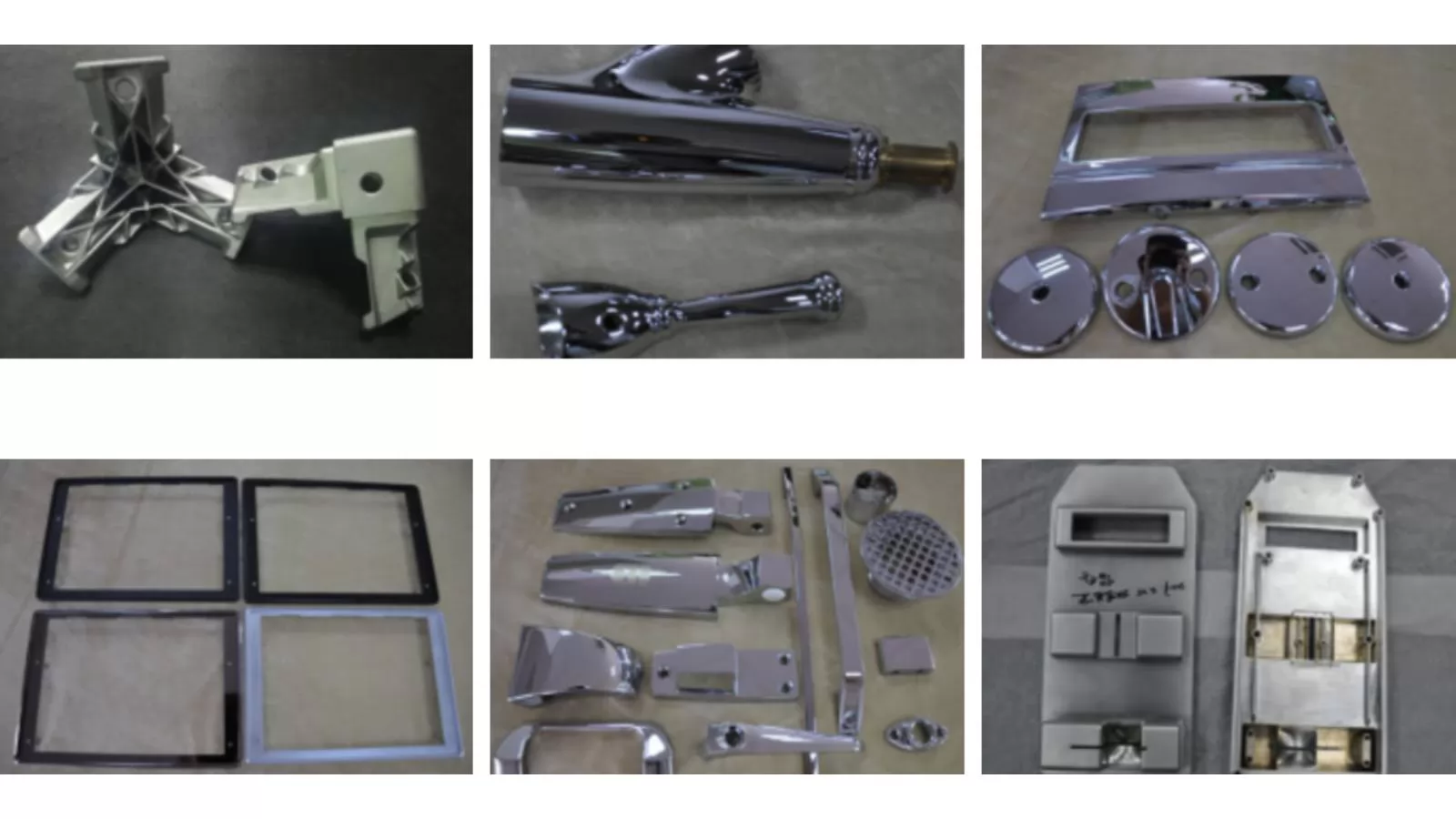
What is zamak used for in practice? The answer spans a surprisingly broad range of industries — anywhere precision, surface quality, and cost efficiency need to work together.
Automotive
Door handles, window regulators, lock cylinders, sensor housings, and interior trim components. Zamak 5 is the preferred grade here due to its higher strength and wear resistance under repeated mechanical use. Browse our automotive castings for reference.
Consumer Electronics & Home Appliances
Laptop hinges, smartphone structural frames, smart home device housings, and appliance control components. The material's dimensional stability and smooth as-cast surface make it well-suited to parts that require tight assembly tolerances and a premium feel.
Building Hardware & Locks
Door locks, hinges, cabinet handles, drawer pulls, and window fittings. This is one of zamak's most traditional application areas — its ability to hold fine detail and accept decorative plating makes it a natural fit for hardware that needs to be both functional and visually appealing. See our door and window castings for examples.
Fashion, Luxury & Consumer Goods
Belt buckles, zipper sliders, handbag hardware, logo plates, perfume bottle caps, and branded accessories. Zamak's compatibility with PVD, chrome plating, and antique finishing processes makes it a material of choice for products where aesthetics drive purchasing decisions.
Plumbing, Toys & Industrial Parts
Faucets, valves, and pipe fittings rely on zamak's corrosion resistance and castability. In the toy industry, die-cast miniature vehicles and action figure components have used zamak for decades. On the industrial side, pump housings, tool components, and precision brackets round out its application profile. View our full range of product cases across industries.
Zamak vs. Other Die Casting Alloys
Choosing between zamak and alternative alloys comes down to a few key trade-offs — weight, strength, cost, and production volume. Here is how the decision typically plays out.
Zamak vs. Aluminium Alloy
Aluminium is significantly lighter (~2.7 g/cm³ vs. ~6.6 g/cm³) and handles higher operating temperatures. However, zamak offers better castability, finer surface detail, longer mold life, and lower per-part cost at high volumes. For parts where weight is not a constraint, zamak is often the more economical choice. For a deeper comparison, read our article on zinc vs aluminum die casting.
Zamak vs. Brass & Steel
Brass delivers superior corrosion resistance and a premium feel, but at significantly higher material and processing cost. Steel offers greater tensile strength but requires much higher casting temperatures and extensive post-machining. Zamak occupies a practical middle ground — strong enough for most applications, far easier and cheaper to process than either.
Zamak vs. Magnesium Alloy
Magnesium is the lightest structural metal and relevant in weight-sensitive applications such as aerospace components. However, it requires more controlled processing, carries higher material costs, and is more prone to corrosion. For most commercial and consumer applications, zamak remains the more practical and cost-stable option.
Quick Selection Guide
| If your priority is… | Consider |
|---|---|
| Complex shapes + high volume + low cost | Zamak 3 |
| Higher mechanical load + wear resistance | Zamak 5 or Zamak 2 |
| Lightweight parts (aerospace, portable electronics) | Aluminium or Magnesium alloy |
| Maximum corrosion resistance + premium appearance | Brass (with higher cost trade-off) |
| Maximum tensile strength | Steel (with higher processing cost) |
Frequently Asked Questions
A quick reference for the most common questions about zamak material.
Q: Is zamak the same as zinc alloy?
Not exactly. Zinc alloy is a broad term covering any alloy with zinc as the primary element. Zamak is a specific, standardized family within that category — defined by its aluminium, magnesium, and copper additions and optimized for die casting.
Q: What is the difference between zamak 3 and zamak 5?
Zamak 3 contains virtually no copper and is the go-to choice for general-purpose casting — offering the best castability and dimensional stability. Zamak 5 adds approximately 1% copper, which raises tensile strength and hardness by around 10–15% but slightly reduces ductility and fluidity.
Q: Can zamak be used outdoors?
With appropriate surface protection — electroplating, powder coating, or painting — zamak performs adequately in mild outdoor conditions. Uncoated zamak will develop white oxidation in humid environments and is not recommended for prolonged direct outdoor exposure.
Q: Is zamak metal safe and RoHS-compliant?
Standard zamak alloys do not contain hazardous substances at levels that trigger RoHS restrictions. However, formulations vary by supplier, so confirming compliance documentation is advisable for regulated markets.
Q: How long do zamak die casting molds last?
Due to zamak's low melting point and low thermal shock on tooling, molds typically last 500,000 to 1,000,000 shots — significantly longer than molds used for aluminium or brass casting. Learn more about our die casting tooling capabilities.
Q: Can zamak parts be welded or soldered?
Welding zamak is generally not practical — the alloy's low melting point and zinc content make it difficult to weld without distortion. Soldering with appropriate low-temperature solders is possible for electrical connections, but mechanical joining methods are typically preferred.
Q: What industries use zamak the most?
Automotive, consumer electronics, building hardware, fashion accessories, plumbing, and toy manufacturing account for the majority of global zamak consumption. Explore how we serve these sectors on our industries page.
Conclusion
Zamak metal has earned its place as one of the most versatile and widely used die casting materials available. Its combination of excellent castability, dimensional precision, surface finish quality, and recyclability makes it a practical default for a broad range of industries — from automotive and electronics to fashion and hardware.
Zamak 3 covers the majority of general-purpose applications. Zamak 5 steps in when mechanical demands increase. And for heavy-duty or high-wear scenarios, Zamak 2 and Zamak 12 provide the additional strength required. The key is matching grade to application early in the design process — a decision that has a direct impact on part performance, tooling life, and total production cost.
If you are evaluating zamak for an upcoming project or need guidance on grade selection and surface treatment options, contact our engineering team — we are ready to help.
0
Comments
Leave a Comment
Your email address will not be published. Required fields are marked *
Name can't be empty
Email error!
Message can't be empty
😍
😜
😳
😌
😄
😘
😝
😒
😃
😚
😚
😛
😟
😧
😀
😉
😓
😱
😤
😣
😂
😥
😩
😠
😢
😭
😰
😨
😡
😆
😪
😅
😐
😇
😋
😴
👿
😕
😏
😷
😵
😟
😮
😯
😑
👧
👴
😧
😬
😾
👶
👱
👵
👸
🙀
👺
👦
👩
👨
😽
😿
🙈
💩
💥
💤
😼
😹
🙉
🔥
✨
💦
👎
✌
👆
👈
💪
💹
👍
👊
💴
💶
💷
💸
👉
💵
🙏
🌎
🏧
👏
💳
👇
💑
🙆
🙅
💁
👫
👭
🙎
🙇
👑
👔
Submit Comment
Most Popular
-
 Jan 30, 2026Aluminum Die Casting Cost Breakdown: From Material to Machining
 -
 Oct 22, 2025Top 10 Aluminium Die Casting Manufacturers and Suppliers in the World
 -
 Nov 26, 2025Top 10 Aluminium Low Pressure Die Casting Manufacturers in the World 2026
 -
 Nov 21, 2025Top 10 Precision Aluminium Investment Casting Factories and Manufacturers in China


Laster Blogs
-
 Mar 25, 2026Die Casting Porosity Guide: Causes, Types, Standards and How to Reduce It
 -
Mar 24, 2026Top 10 Precision Aluminium Investment Casting Factories and Manufacturers in China
-
 Mar 24, 2026Top 9 High-Precision Zinc Pressure Die Casting Manufacturers in China
 -
 Mar 24, 2026Top 10 Aluminium Sand Casting Foundries in China for Precision & Industrial Castings


Send RFQ Today
Name can't be empty
Email error!
Send Your Message
Note: If you are looking for a job, please send an email to it2@innovaw.com