Custom Automotive Aluminum Castings from China - What Buyers Need to Know
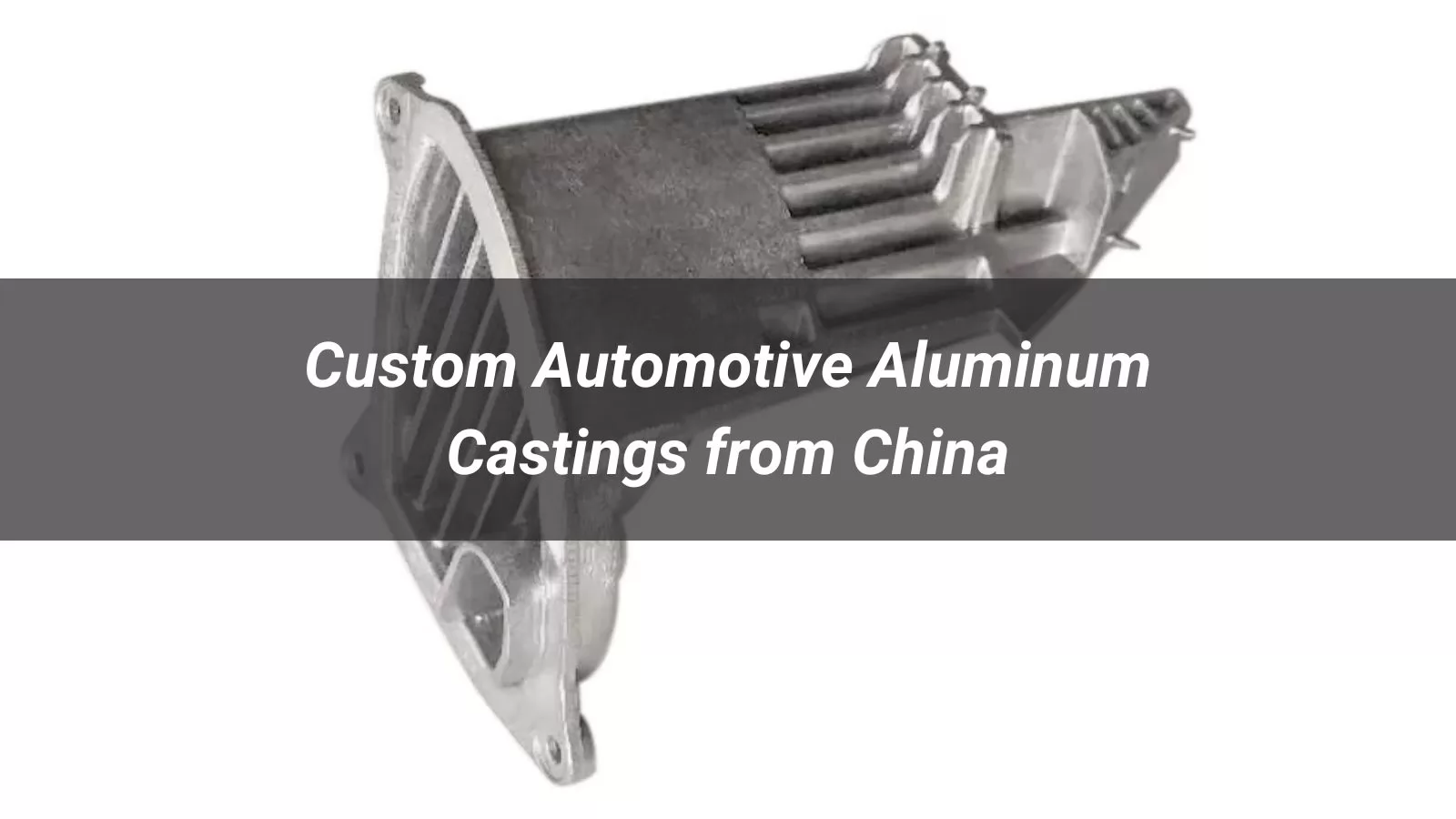
Sourcing custom automotive aluminum castings from China has become a standard move for cost-reduction programs — but the decision is rarely straightforward. Global automotive aluminum casting demand is projected to exceed 35 million metric tons by 2030, driven largely by EV platform expansion and lightweighting mandates. For buyers evaluating Chinese suppliers, the question is no longer whether China can produce the parts. It's whether the supplier can meet the documentation, certification, and process control requirements that automotive supply chains demand.
This guide addresses the questions that matter most before an order is placed: alloy selection, PPAP readiness, lead time realities, and how to screen for quality risks before they reach your production line. It's written for:
- Purchasing engineers managing cost-reduction projects
- Commodity managers qualifying new suppliers for active programs
- Tier 1 and Tier 2 buyers sourcing aluminum castings for EV and ICE platforms
- Program managers working against a fixed Job 1 or PPAP submission deadline
Choosing the right casting supplier shapes every stage that follows — from first sample to mass production. Read on to find out what to look for, what to ask, and what to avoid.
Table of Contents
- Who Actually Searches for Custom Automotive Castings from China?
- Which Automotive Parts Are Typically Cast in Aluminum?
- What Does the Customization Process Actually Look Like?
- Why Does IATF 16949 Matter More Than ISO 9001 for Automotive Parts?
- ADC12, A380 or A356 — Which Alloy for Your Automotive Part?
- What Should Your RFQ Package Include?
- Common Quality Risks in Automotive Castings — and How to Prevent Them
- What Does a Full-Service Automotive Casting Supplier Provide?
- How Long Does It Take from Drawing to First Production Parts?
Who Actually Searches for Custom Automotive Castings from China?
Not casual browsers. People with a real purchasing problem.
Most fall into one of three profiles.
| Buyer type | Typical situation | Core question |
|---|---|---|
| Cost-reduction engineer | Current supplier won't move on price. Manager wants 15–20% cut. | Can a China factory match my quality spec without a PPAP nightmare? |
| New model launch buyer | Program starts in 12–14 months. Castings need to be qualified on time. | Does this factory know APQP? Can they hit the milestone? |
| Sole-source risk manager | One supplier, one critical part. Needs a qualified backup. | How fast can you produce a first sample from my existing drawing? |
Different situations. One shared concern: does this supplier actually understand automotive requirements?
There's also an unspoken question every experienced buyer carries: What happens when something goes wrong?
A porosity issue found at incoming inspection. A dimension drift flagged during an OEM audit. These buyers aren't just sourcing castings — they're evaluating how a supplier handles problems.
They scan fast. They look for certifications, process names, and real part evidence. Vague claims don't hold attention.
Which Automotive Parts Are Typically Cast in Aluminum?
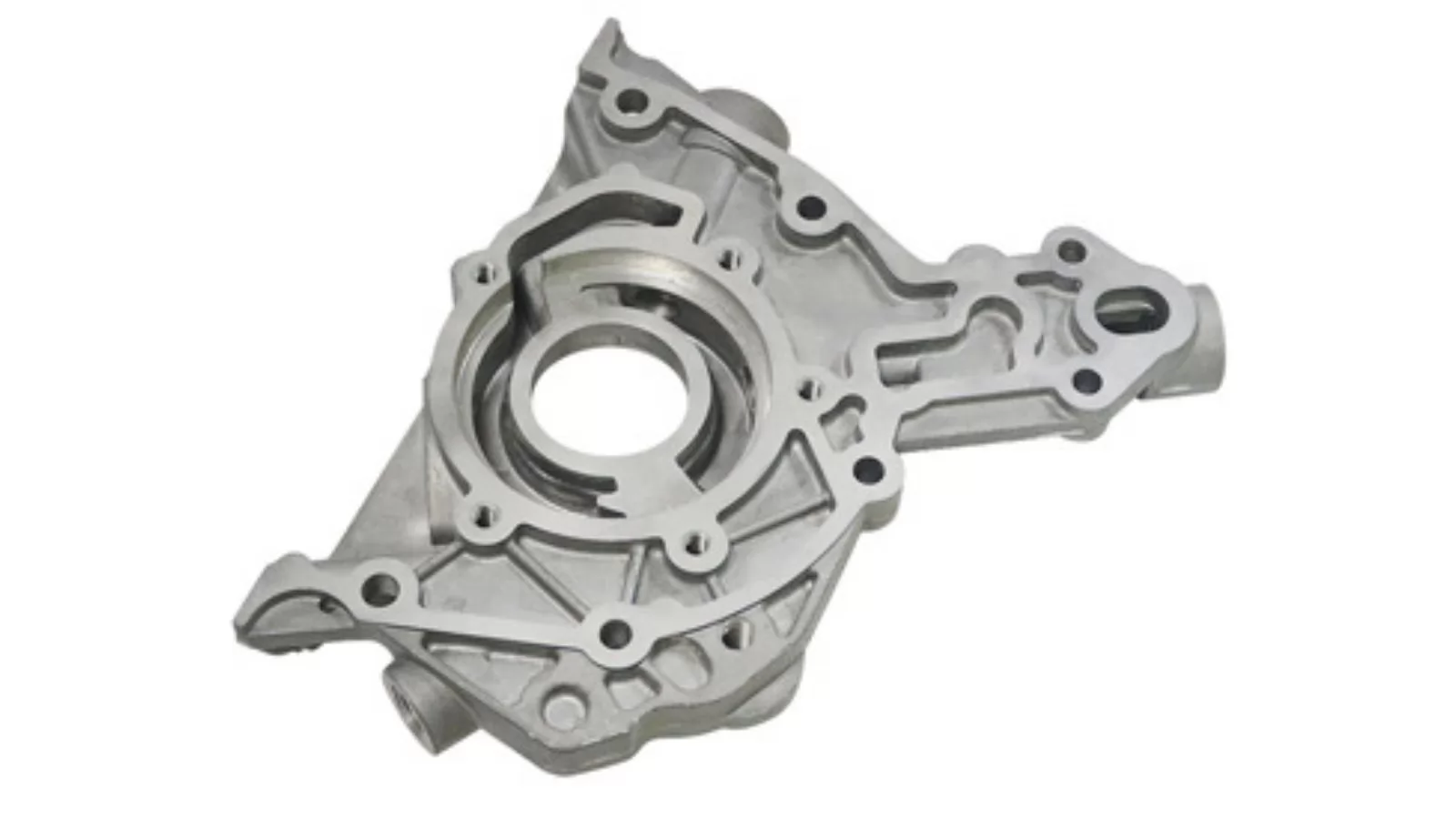
Aluminum castings appear across nearly every system in a modern vehicle. The choice of casting process depends on the part's function, wall thickness, and required mechanical properties.
| System | Typical parts | Common process |
|---|---|---|
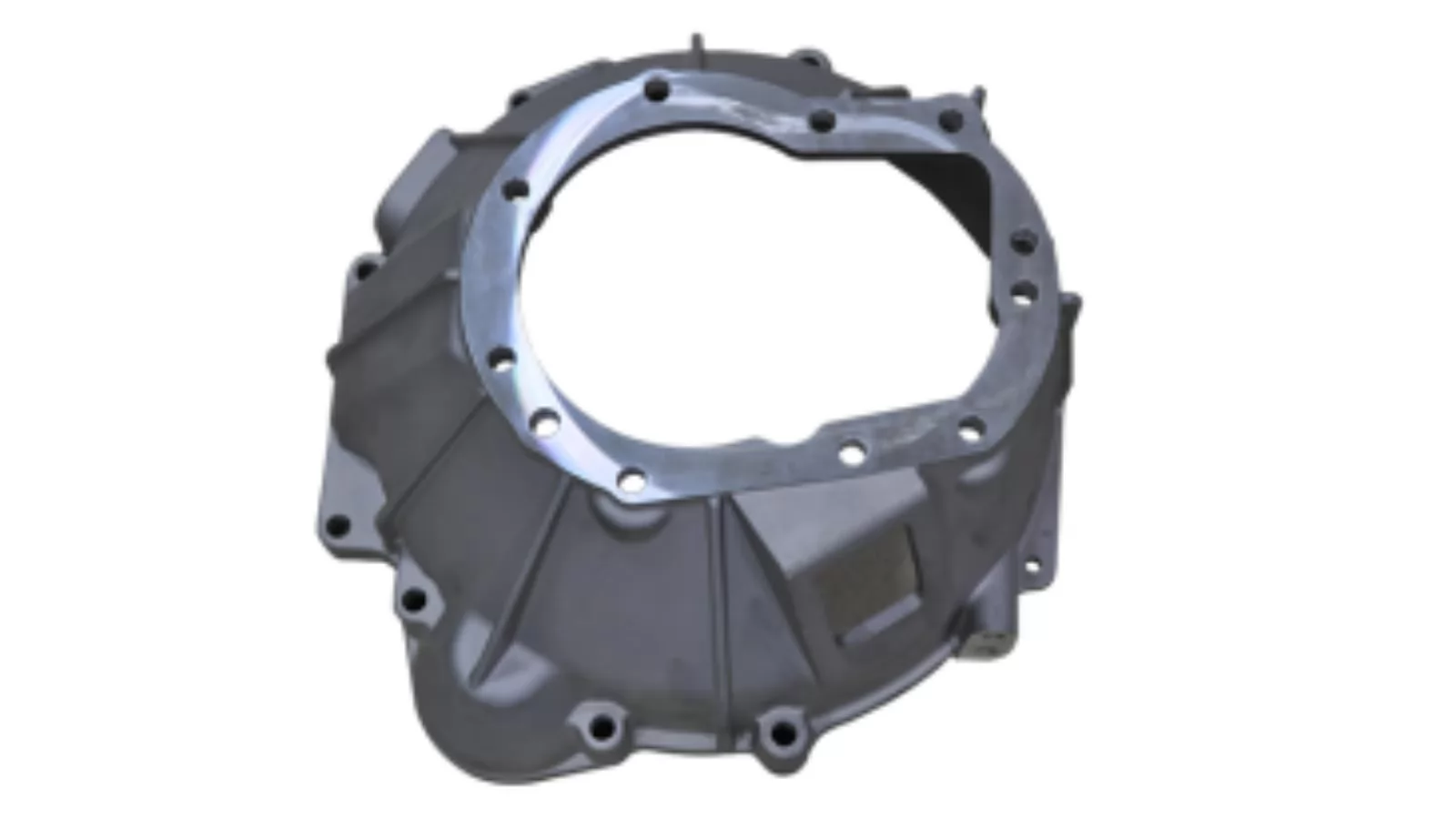
| Powertrain | Gearbox housing, transmission case, oil pump body | High pressure die casting |
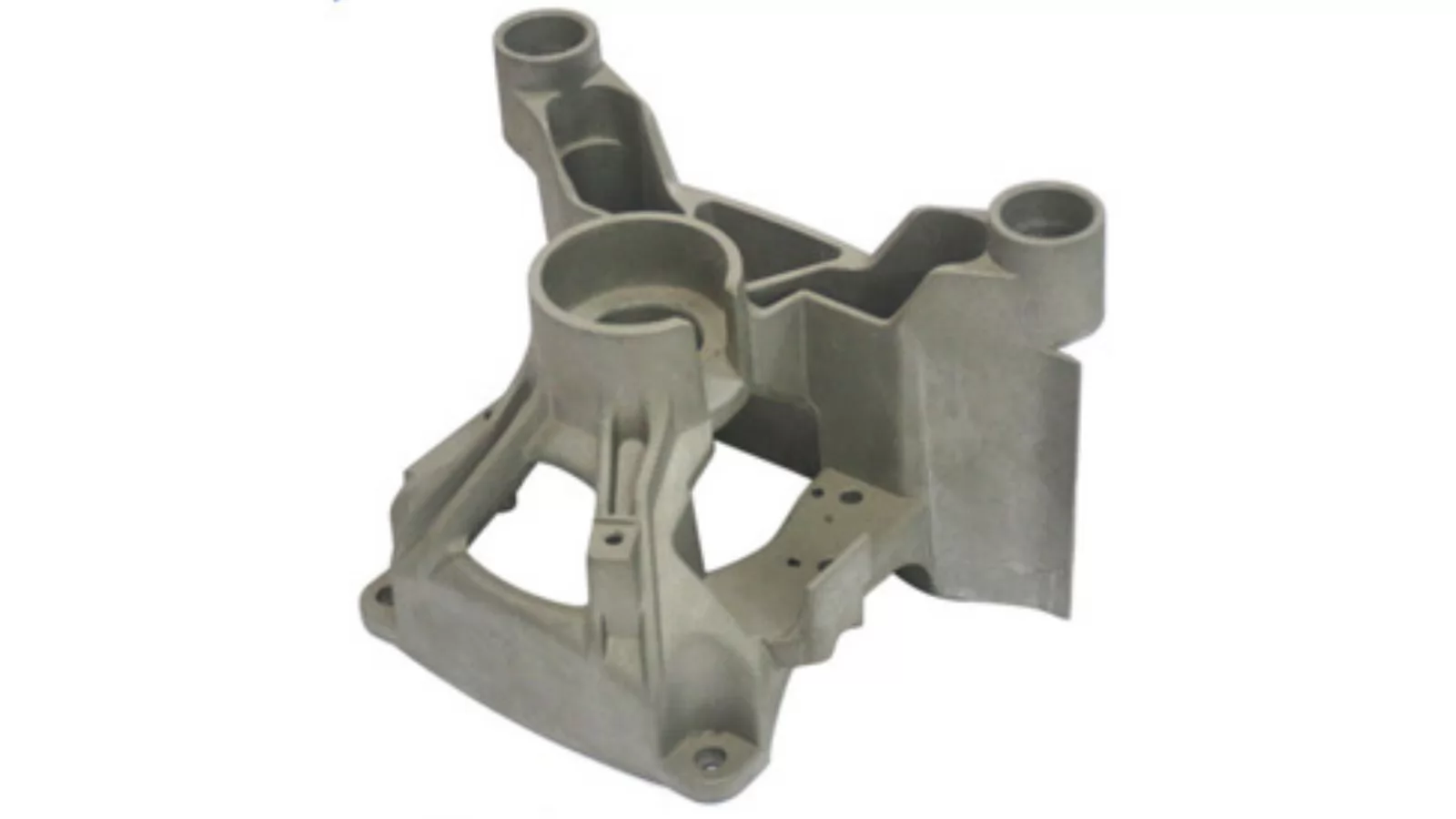
| Suspension | Control arm bracket, knuckle, subframe connector | Low pressure die casting / gravity casting |
| Thermal management | Water pump housing, radiator end tank, thermostat body | Gravity casting / HPDC |
| Electric / EV | Motor housing, OBC enclosure, battery tray cover | Low pressure die casting / HPDC |
| Braking | Brake caliper, master cylinder body | High pressure die casting |
Process selection isn't always obvious from the drawing alone. Wall thickness, porosity tolerance, and heat treatment requirements all influence which casting method delivers the best result at the right cost.
What Does the Customization Process Actually Look Like?
Most buyers submit a drawing and expect a quote. The reality is more structured — especially for automotive parts. Here's how a typical project moves from drawing to production-ready casting.
Step 1 — DFM Review
Before any tooling starts, the factory reviews your 2D/3D files for manufacturability. Common issues flagged: insufficient draft angles, wall thickness inconsistencies, undercuts that require side actions. Catching these early avoids costly mold modifications later.
Step 2 — Mold Design and Tooling
Tooling is built in H13 tool steel for automotive-grade durability. Number of cavities is determined by your annual volume. Cooling channel layout is engineered to control cycle time and shrinkage.
Step 3 — T1 Sample and Dimensional Report
First samples come with a full CMM measurement report. Every critical dimension is checked against your drawing tolerances. Deviations are documented — not hidden.
Step 4 — PPAP Submission
For automotive customers, PPAP documentation is standard output — not an optional add-on. This includes dimensional results, material certifications, process flow diagrams, control plans, and FMEA. Level 3 PPAP is the most common requirement from Tier 1 customers.
Step 5 — Mass Production with SPC
Once PPAP is approved, production runs under Statistical Process Control. Key dimensions are monitored continuously. Out-of-control signals trigger immediate corrective action — not end-of-batch sorting.
Note: The DFM review is where most project delays are prevented. A single unresolved undercut or missing draft angle can add 2–3 weeks of mold correction after T1 samples. Raising these issues before tooling starts costs nothing.
Why Does IATF 16949 Matter More Than ISO 9001 for Automotive Parts?
Both are quality management certifications. But they are not equivalent for automotive supply chains.
| ISO 9001 | IATF 16949 | |
|---|---|---|
| Scope | General quality management, any industry | Specifically designed for automotive supply chains |
| Core tools required | Not specified | APQP, FMEA, MSA, SPC, PPAP |
| Customer-specific requirements | Not addressed | Covers OEM-specific requirements (VW, BMW, Ford, etc.) |
| Audit frequency | Annual surveillance | Annual surveillance + more rigorous recertification |
| Accepted by Tier 1 customers | Sometimes — for non-critical parts only | Standard requirement for safety and structural parts |
In practice, IATF 16949 certification tells you one important thing: the factory already operates with automotive documentation habits built in. They know what a control plan looks like. They can produce an FMEA without being taught what one is. They understand that an 8D report is expected — not optional — when a defect occurs.
For buyers sourcing safety-related or structurally critical castings, an ISO 9001-only supplier introduces process risk that's difficult to manage at distance. The certification gap becomes most visible at the first customer complaint — not during the initial audit.
ADC12, A380 or A356 — Which Alloy for Your Automotive Part?
Alloy selection affects castability, mechanical strength, and post-processing options. These three cover the majority of automotive aluminum casting applications.
| ADC12 (A383) | A380 | A356-T6 | |
|---|---|---|---|
| Primary process | High pressure die casting | High pressure die casting | Low pressure / gravity casting |
| Fluidity | Excellent — fills thin walls well | Good | Moderate |
| Tensile strength (as-cast) | ~310 MPa | ~325 MPa | ~230 MPa (as-cast) / ~310 MPa after T6 |
| Heat treatment | Not recommended | Not recommended | T6 heat treatment standard |
| Weldability | Poor | Poor | Good |
| Typical automotive use | Gearbox housings, brackets, covers | Engine brackets, transmission cases | Suspension components, structural parts |
A practical note on ADC12 vs A380: the two alloys are close in composition and often interchangeable. ADC12 is the dominant standard in China; A380 is more common on North American and European drawings. If your drawing specifies A380, confirm with your supplier whether ADC12 is an accepted equivalent for your application.
For suspension arms, knuckles, or any part requiring post-weld assembly — A356-T6 is typically the right choice, despite the added cost of heat treatment. The improvement in elongation and weldability justifies the premium for structural applications.
What Should Your RFQ Package Include?
An incomplete RFQ leads to inaccurate quotes and wasted rounds of clarification. For automotive castings specifically, suppliers need more information than for general industrial parts.
A complete RFQ package should include:
Technical documents
- 2D drawing with full GD&T callouts and tolerance specifications
- 3D file in STEP or IGES format
- Material specification (alloy grade, heat treatment if required)
- Surface finish requirements (Ra value, any coating or treatment)
Commercial information
- Annual volume forecast and planned release quantities
- Required delivery location and Incoterms
- Target unit price or budget range (optional but speeds up alignment)
- Program timing — when is first sample required, when does mass production start
Quality requirements
- PPAP level required (Level 1 to 5)
- Certification requirements (IATF 16949, RoHS, REACH)
- Any customer-specific requirements (e.g. VW Group, Ford, BMW CSR documents)
- Special inspection or testing requirements (X-ray, pressure test, CMM report)
Suppliers who receive a complete package respond faster and quote more accurately. It also signals that you are an experienced automotive buyer — which tends to attract more serious suppliers.
Common Quality Risks in Automotive Castings — and How to Prevent Them
Quality failures in automotive castings rarely come from a single cause. Most trace back to process gaps that were visible before production started. These are the most frequent issues — and the questions to ask before they become your problem.
1. Porosity
Gas porosity and shrinkage porosity are the most common defects in die casting. They may not be visible on the surface but cause failures after machining or pressure testing.
Ask your supplier: Do you perform X-ray inspection on first samples? What is your porosity acceptance criterion?
2. Dimensional drift between batches
A part measures correctly on T1 samples, then drifts out of tolerance at month 3 of production. This typically happens when process parameters aren't locked down and monitored.
Ask your supplier: Which dimensions are under SPC control? Can you share a sample control chart?
3. Surface treatment adhesion failure
Paint, powder coat, or anodizing peels — often traced to inadequate pre-treatment before coating. Shot blasting or chemical cleaning steps are sometimes skipped under production pressure.
Ask your supplier: What is your pre-treatment process before surface coating? Is it documented in the control plan?
4. Slow response to non-conformances
Not a casting defect — but a supplier behavior risk. The question isn't whether problems will occur. It's how fast and how transparently a supplier responds.
Ask your supplier: Can you show me an example of a completed 8D report from a past customer complaint?
| Risk | Root cause | How to screen for it |
|---|---|---|
| Porosity | Improper injection speed, venting, mold temperature | Request X-ray inspection criteria and sample reports |
| Dimensional drift | No SPC, worn tooling not flagged | Ask for SPC plan and control chart examples |
| Coating adhesion failure | Skipped pre-treatment steps | Review control plan for surface treatment line |
| Slow problem response | No structured corrective action process | Request a sample 8D report from a past complaint |
These questions don't require a factory visit to ask. A supplier's willingness — and ability — to answer them tells you a great deal before any casting is produced.
What Does a Full-Service Automotive Casting Supplier Provide?
_1775618902_WNo_1600d900.webp)
A casting supplier and a full-service casting supplier are not the same thing. The difference matters when you are managing a tight program timeline or coordinating across multiple vendors.
A full-service supplier handles the complete production chain in-house:
| Stage | What it covers |
|---|---|
| Tooling development | Mold design, DFM review, H13 steel tooling, trial and revision |
| Casting | HPDC, low pressure, or gravity casting depending on part requirements |
| Post-casting | Deburring, shot blasting, heat treatment (T6 where required) |
| CNC machining | Precision finishing of mating faces, bores, threaded features |
| Surface treatment | Anodizing, powder coating, e-coating, painting |
| Quality and inspection | CMM dimensional report, X-ray, pressure testing, PPAP documentation |
| Export and logistics | Packaging, export documentation, direct shipment to your facility |
When these steps are split across multiple suppliers, coordination risk increases. Lead times extend. Quality accountability becomes unclear. A single supplier controlling every step simplifies both the process and the paper trail.
For automotive buyers managing PPAP submissions and ongoing production releases, a fragmented supply chain creates a specific problem: when a defect occurs, no single supplier owns the root cause. Traceability breaks down exactly when you need it most.
How Long Does It Take from Drawing to First Production Parts?
This is one of the most common questions — and one of the least honestly answered in supplier marketing. Timelines vary by part complexity, but the structure is consistent.
| Stage | Typical duration | Key dependencies |
|---|---|---|
| DFM review and mold design | 1–2 weeks | Complete 3D file and drawing required at start |
| Tooling manufacture | 4–6 weeks | Part size, number of cavities, side actions |
| T1 samples + dimensional report | 1–2 weeks after tooling | CMM capacity, number of critical dimensions |
| Customer review and mold correction | 1–3 weeks | Number of revision rounds required |
| PPAP preparation and submission | 2–3 weeks | PPAP level, customer-specific requirements |
| Mass production start | Upon PPAP approval | Customer sign-off |
In a straightforward case — clean drawing, single-cavity tool, no heat treatment — the total time from drawing submission to PPAP approval runs approximately 10–14 weeks.
More complex parts add time at predictable points:
- Multi-cavity tooling adds 1–2 weeks to the tooling stage
- T6 heat treatment adds 1 week to sample preparation
- Level 3 PPAP with customer-specific requirements adds 1–2 weeks to submission
- More than one mold correction round adds 2–3 weeks per cycle
The single biggest cause of delay is an incomplete drawing package at the start. Missing tolerances, unresolved GD&T callouts, or late material specification changes push every downstream stage. If you have a firm program milestone — a Job 1 date or a PPAP submission deadline — work backward from that date before issuing the RFQ.
Conclusion
Sourcing automotive aluminum castings from China requires more than a competitive price. The right supplier needs to demonstrate IATF 16949 certification, a structured PPAP process, and in-house capabilities that cover tooling, casting, machining, and surface treatment under one roof. Alloy selection, DFM review, and SPC-controlled production are not optional extras — they are baseline expectations for any automotive supply chain.
Before placing an order, a complete RFQ package, a realistic timeline of 10–14 weeks to PPAP approval, and a clear understanding of common quality risks will significantly reduce the chance of costly surprises. The questions outlined in this guide can be asked before a single part is cast — and the answers will tell you more about a supplier's capability than any marketing page.
0
Comments
Leave a Comment
Your email address will not be published. Required fields are marked *
Name can't be empty
Email error!
Message can't be empty
😍
😜
😳
😌
😄
😘
😝
😒
😃
😚
😚
😛
😟
😧
😀
😉
😓
😱
😤
😣
😂
😥
😩
😠
😢
😭
😰
😨
😡
😆
😪
😅
😐
😇
😋
😴
👿
😕
😏
😷
😵
😟
😮
😯
😑
👧
👴
😧
😬
😾
👶
👱
👵
👸
🙀
👺
👦
👩
👨
😽
😿
🙈
💩
💥
💤
😼
😹
🙉
🔥
✨
💦
👎
✌
👆
👈
💪
💹
👍
👊
💴
💶
💷
💸
👉
💵
🙏
🌎
🏧
👏
💳
👇
💑
🙆
🙅
💁
👫
👭
🙎
🙇
👑
👔
Submit Comment
Most Popular
-
 Jan 30, 2026Aluminum Die Casting Cost Breakdown: From Material to Machining
 -
 Oct 22, 2025Top 10 Aluminium Die Casting Manufacturers and Suppliers in the World
 -
 Oct 29, 2025Top 10 Aluminium Casting Foundries and Companies in China
 -
 Nov 26, 2025Top 10 Aluminium Low Pressure Die Casting Manufacturers in the World 2026


Laster Blogs
-
 Apr 08, 2026Custom Automotive Aluminum Castings from China - What Buyers Need to Know
 -
 Mar 31, 2026Cost of Investment Casting: What Buyers and Engineers Need to Know
 -
Mar 28, 2026Top 10 Aluminium Casting Foundries and Companies in China
-
 Mar 28, 2026Top 10 Precision Aluminium Investment Casting Factories and Manufacturers in China


Send RFQ Today
Name can't be empty
Email error!
Send Your Message
Note: If you are looking for a job, please send an email to it2@innovaw.com